Following the recent summit of the Shanghai cooperation organization, held in the Chinese Tianjin port, the planet seems to have woken up in a reality where the world order replies under a new umbrella. We are not just talking about a “authoritarian club” against the “Democracy Club” – geopolitical cleavage is already a fact, not just a debate.
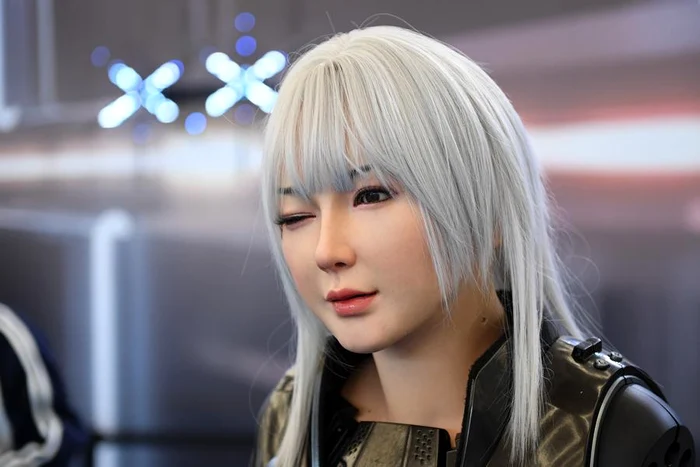
Chinese humanoid/photo robot: x
But beyond alliances and rhetoric, the force that silently transforms the global balance is a less visible one: the industrial, technological, educational and algorithmic force of China, says in Zerkalo Nedeli, Iurii Tișkun, associate professor, at the Department of Political Sciences and International Relations, within the National University of Liov.
Demography has become a research weapon
The program “A family – a child”, initiated by the Chinese Communist Party in the 1980s, was a brutal but efficient social experiment. Today, although China has lost the numerical advantage in front of India and the African continent, it remains before them by the quality of the educated population, oriented towards science and engineering. Every year, 10 million young Chinese people take an admission exam at the University, and in the last two decades, 6 million have been educated abroad-most have returned, turning into the technocratic elites of a new global power.
Only in 2020, China produced seven times more engineers than the US – 1.4 million, compared to 200,000. And when these figures become a basis for applied research, the result is predictable: six of the ten most active research universities in China (according to Leiden Ranking 2024).
While the US reduces scientific funding, China pumps innovation funds with the precision of a state on the verge of a new industrial revolution. And this has direct effects on the whole planet: from the gadgets in the Temu, to the domination on the databases of global artificial intelligence.
Scientific nationalism and … algorithmic espionage
China not only innovates. But it also collects. Systematic. At the planetary level. Its specialists analyze the international scientific literature uninterrupted, identify unregistered patents and attribute them to state companies. The result: a Chinese “patent” meant to saturate international markets and eliminate competition.
At the same time, China imposes clear rules: strategic research remain inside. In order to collaborate with the Chinese academic environment, you must know the language, provide access to databases and bases and, above all, accept a form of controlled sharing of discoveries.
The robot as a demographic solution
Paradoxically, China's demographic decline – with a percentage of the active population that will decrease from 56% to 36% to 2100 – is treated as a regime opportunity. The solution? Total production robotization. The “dark factory” of Xiaomi, fully automated, does not need people, so no light, heating or salaries. It produces a smartphone per second.
In just a few years, China has become the largest car manufacturer in the world, with robotic factories that appeared between 2010 and 2016, spraying the competition in Germany, Japan and the US. And the next wave – the total robotization of electronic and electric production – is already almost completed.
By 2030, China could control half of the global profit resulting from automation (15 thousand billion dollarfi) and most of the 97 million highly qualified jobs that will appear around the robot maintenance. In contrast, 85 million people will become unemployed – not in China, but in the rest of the world, including in Europe.
The following factory: the planet
This industrial revolution is not only a story about technology, but also about the new type of hegemony that China builds – silent, algorithmic, systemic. By gross economic force, but also by subtleties of soft power digital. Chinese artificial intelligence, even if it runs on weaker processors than western ones, is free, efficient and easy to implement in countries that do not allow the luxury of American products.
Exactly Linux replaced Windows on mobile devices, Chinese AI could remove models such as Chatgpt or Claude from many regions. And not because it is better, but because it is free. And … because it comes with hardware, support, training and … supervision.
Data control – XXI's gold
China doesn't necessarily want money. He wants data. Information. Trust. And access. And with each Huawei router, with each Deepseek application, with each server connected to the global network, the Chinese Communist Party collects – to feed an integrated surveillance, prediction and control system.
This infrastructure is not used only for economic efficiency, but for maintaining a perfectly functional social order inside the borders. An order that gradually exports.
The fight to have: The West risks losing not for lack of technology but vision
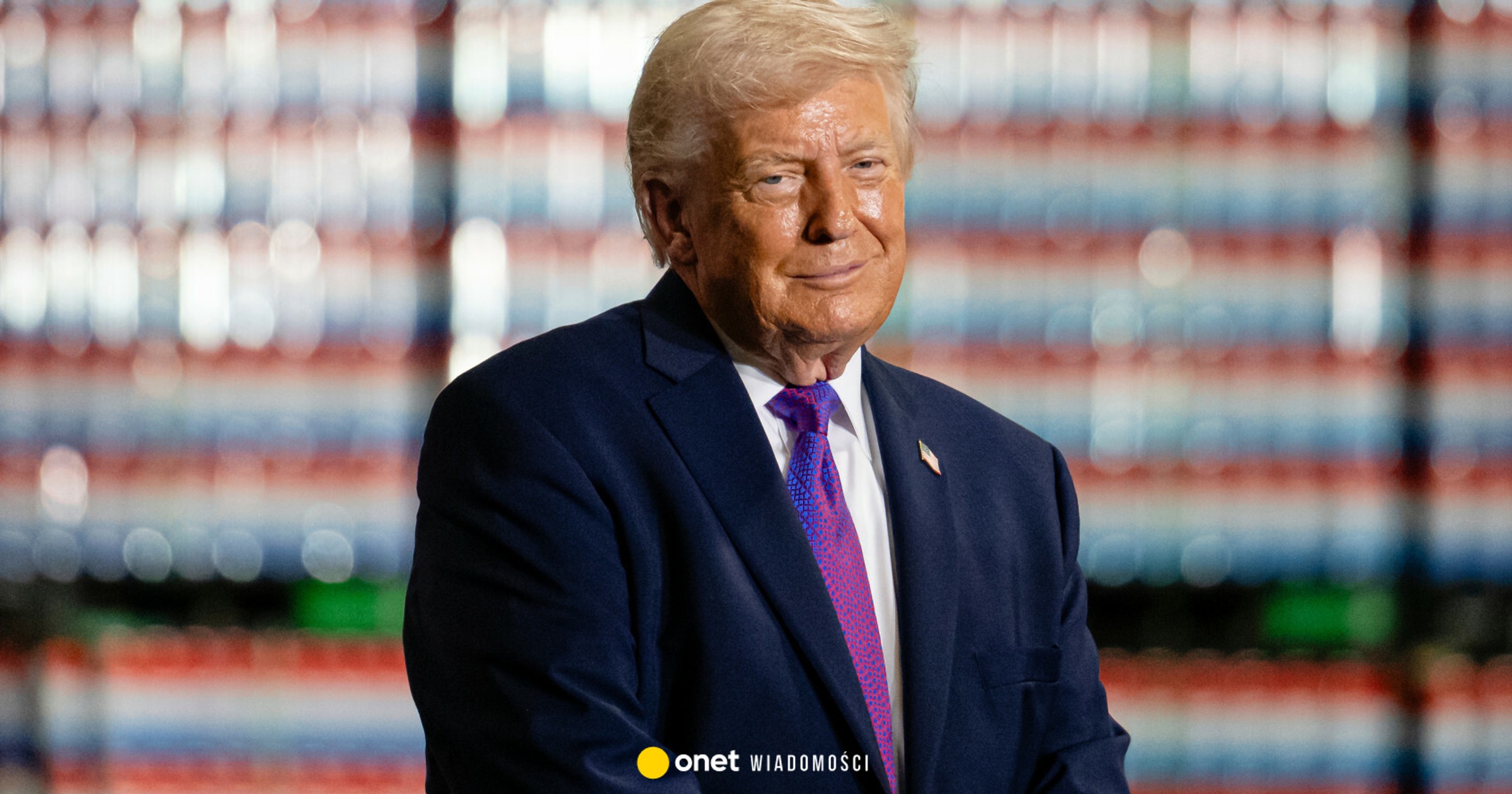
The US could lose this race not because they have weaker chips – on the contrary, they have the best performing. But they do not have a coherent plan for their data. Under the Trump administration, America has become an unpredictable actor, who sabotages his own innovations. Artificial intelligence cannot work without access to coherent data and without a predictable educational policy.
Trump restricts immigration, undermines Silicon Valley, destabilizes currency and markets, but worse: it does not seem to understand the strategic stakes of artificial intelligence. While Beijing knows exactly what he wants. And he plans his future in decades, not in electoral cycles.
An inevitable conflict?
In a context in which both superpowers go to a geopolitical clash, the war seems less a matter of “if” and more than “when and how”. None of them has taken a major war in recent decades. And the result will not depend on the will, but on the industrial capacity.
And here, China has a clear advantage: it produces drones, robots and ammunition on an industrial scale, while the US still hesitates between regulations and protecting the “free market”. And without access to rare metals-also controlled by China-America could enter a war with 20th century technologies.
The world of future is no longer divided between democrats and autocrats. It is divided between those who have given and those who are the data, says Iurii Tișkun.