The mysteries of the last Romanian voivode who beat the Turks. Imitated Mihai Viteazul and ravaged the Ottoman territories

Another ruler tried to follow in the footsteps of Mihai Viteazul. It was the last medieval Romanian voivode who challenged the Fățiș Ottoman power and invaded the Turkish territories from the south of the Danube. Little or almost not known to the general public, he tried to modernize the principalities.
Mihnea III Radu wanted to imitate Mihai Viteazul PHOTO Adevărul
After the death of Mihai Viteazul and until the middle of the 19th century, the Romanians did not dare to rise up against the Ottoman rule. Although, for the most part, with the sight of the history of popularization and almost not known to the general public, there was a mountain voivode who last challenged the Ottoman power with the weapon in hand. Even to imitated Mihai Viteazul and passed the Danube in an attempt to destabilize the power of the Turks in the Balkans. At the same time, he tried to approach the Principalities of Western Europe before they fall into the hands of the Phanariots. He remained known in history as Mihnea III Radu and reigned only one year.
A controversial character, coming from nowhere, arrives on the throne of Wallachia
After the death of Mihai Viteazul, the Ottomans tightened control over the Principalities. They realized that they could not trust the earthly gentlemen and the risk was high. The Romanian voivodes could ally with the western kingdoms or empires to undermine the Ottoman power. For their part, the big boyars were supported by weak candidates, preferred by Turks and easy to control. The great feudal ones preferred peace with the Turks. Almost six decades after Mihai Viteazul's death, Wallachia was a country desolate by the revolts and Doroban against former ruler Constantin Serban and the Turks and the Tatars who came to restore the order.
The great boyars made the law. Whoever lost their support or refused to please them was as lost, that is, he was a defendant to the great vizier and mazilit. In those difficult times, Mihail Radu or Mihnea III Radul, as he will be known in history, arrives on the throne of the Romanian Country. It gets the throne with the help of the Turks. It is brought to the country by an Ottoman contingent, although the boyars did not know who he was and what they were wearing. They had other suitors and, from the beginning, did not see him with good eyes. On June 13, 1658, the new ruler chooses a very bold title that left his future plans. “Io Mihail Radu Ighemon, leader and Archduke of the Transalpine Parties”is shown in the document of June 13, 1658 addressed to the Bishopric of Ramnic. It is said that the country was so desolate and the boyars so hostile that the new gentleman had no place or too many mouths. Bucharest and Târgoviștea were in ruins and people in Bejenie. Mihaa was forced to shoot at the Radu Voda Monastery, where he established, for the beginning, the Court.
Here he made another gesture that suspected of the Turks. Not enough, however, to forget about the bags of yellow paid by Mihnea at the branch. Specifically, the new gentleman, on the flames of Wallachia, put the bicephal eagle, as well as the currency he beat. He behaved as a Byzantine prince, a descendant of the ancient emperors. “A brilliant pump surrounded him. With all his Turkish past he felt the descendant of the Byzantine emperors and he liked so and says”said Nicolae Iorga about Mihnea III. Who was this voivode, however, like nowhere? He himself said he was the son of Radu Mihnea, one of those rulers carried by the Turks with several gentlemen when on one side, when the other of Milcov. Others say that, in fact, Mihnea III was a teacher to invent origins of all kinds. It is said that he was Greek at the origin and that he was the son of an Elin shirt through Iasi. There would have been born there, in 1613. Historians say that they were boyar wicked, being known that most Moldovan or Wallachians came from the feudal ranks, with sympathies and antipathies according to the gentleness of the voivode towards the boyars. It is certain that Mihnea lived in the Turks until the age of 40.
He probably arrived there after the death of his father. In any case, he had made a name in Constantinople, being a voluble character, with a rich imagination, cunning and good connoisseur of foreign languages. “The intriguing voivode of the Romanian discharge, to whom Mihnea is called, in the days of his youth, had been a good boy and, for over 20 years, had been educated with Kodja-Kenan Pasha, the conqueror of the city of Ahisha. Persian and Turkish and said: I will be a true Muslim! ”wrote the Ottoman chronicler Mustafa Naima.
Celebrates according to Lăpușneanu's model
It is certain that once you arrive on the throne of the Romanian Country, Mihnea III does not waste time and a quick and brutal reform begins. He tried to attract his great experienced governors, but at the same time he tried to destroy the opposition of the great feudal. He knew he could never rely on the great boyar families. Especially since he was going to fight with the Ottomans and try to follow in the footsteps of Mihai Viteazul, in order to remove the Wallachia under their control. In the internal level, it is based, like Stefan cel Mare, first of all on the small and medium boyar, eager to affirm and take the place of the great boyars in the governors, but also on the ordinary soldiers, especially those in the infantry body of the Doroban. Mihnea III set up new units of faithful Dorobanți, especially among the peasants. Moreover, he imposed the forced redemption of some Romanian villages (dependent peasants). They could be redeemed and entered the units of newly constituted Dorobanți. The ordinary people were satisfied, they were put to the bir, but at least they escaped the chore and had a better life as soldiers. The boyars, on the other side, were increasingly dissatisfied with the new gentleman because they were left without people. With the money raised from the redemptions, Mihnea III ordered guns in Sibiu. He was setting up an army in full. Externally, to quickly allied with Gheorghe Rakoczi II, the prince of Transylvania, another supporter of the anti-Ottoman revolt. On October 4, 1659, in Târgu Mureș, Mihnea III concludes a friendship treaty with Prince Rakoczi. He even tried to support Gheorghe Rakoczi II, leaving with a great army in Transylvania to trigger the anti-Ottoman revolt. The boyars did not agree with these plans that ruled peace with the Turks.
In addition, the new ruler made the law with them. The great feudal ones went to the Turkish camp and revealed Mihnea III. The voivode, a good connoisseur of Turkish and language morals, knew how to win the Ottoman commanders. Obviously, with the proper golden bags. After that he was counted with the boyars, in the style of Alexandru Lăpușneanu. In July 1659 he made him a festure of reconciliation, promising them he would listen to them. During the meal, the ruler's Dorobanians stuck all the great boyars. Those who escaped were followed by Mihnea's assassins everywhere. Few managed to become unseen through Moldova. Among those killed was the famous Năsturel Udriște backrest, the great Wallachian scholar.
In the footsteps of Mihai Viteazul. Last great anti-Ottoman campaign
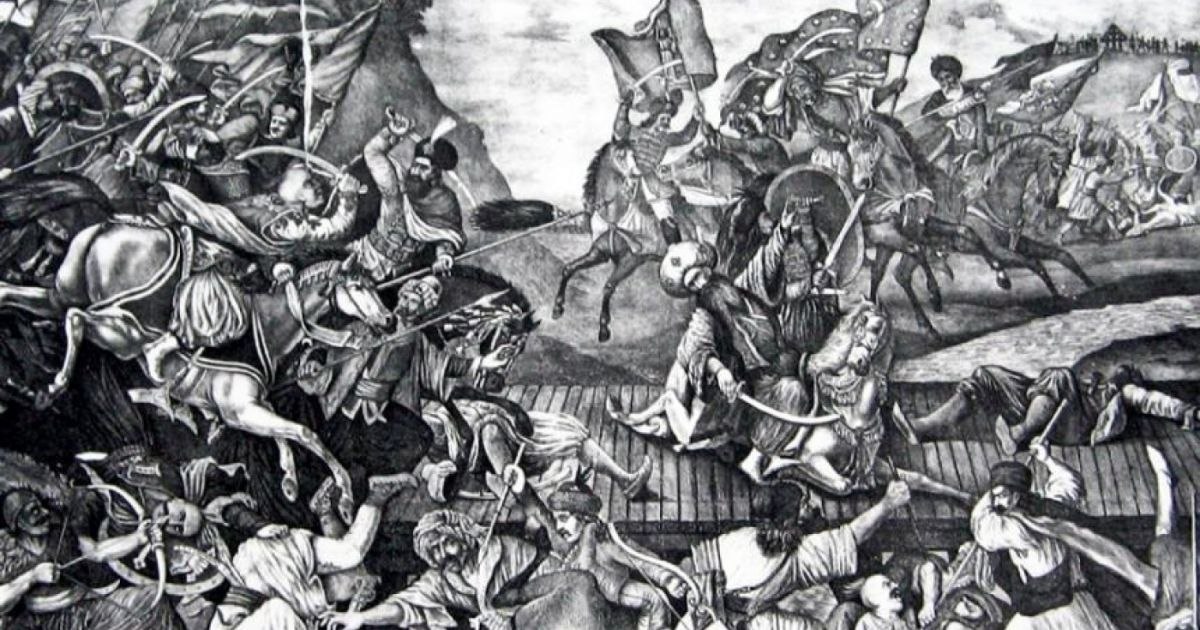
After killing the great boyars, Mihnea III Radul had a free way for his anti-Ottoman plans. The plan was complex. Gheorghe Rakoczi II had to attack with the Transylvanian troops in the Lugoj and Caransebeș area, attracting the Ottoman soldiers. During this time, Constantin Serban, placed on the throne of Moldova, had to resist the Tatars, in order not to attack the Transylvanians and Wallachians from behind, and Mihnea III would hit the Ottomans directly in their South-Danube territories. Mihnea's action was drawn to indigo after that of Mihai Viteazul. Mr. Valah begins the anti -Ottoman uprising, killing, on September 12, 1659, all the Turkish garrisons in the Romanian Country. Several thousand Ottomans were killed. Then, Mihnea III is rapidly on the Giurgiu, Braila, Turnu ray. The Rusciuk and Nicopole south of the Danube passes through the fire and sword.
In Frătești, near Giurgiu, on November 23, 1659, Mihnea III crushes the Turks. In contrast, Gheorghe Rackoczi II is defeated at the Iron Gates, and Constantin Serban did not cope with the Tatars in Moldova. Caught like in a pliers and back and front, Mihnea III is defeated, the peak, in Călugăreni, on Neajlov, by the Ottoman soldiers. Mihnea fled to Râșnov, Transylvania, and then to Satu Mare. On April 5, 1660, while he celebrated with Constantin Serban, the Mazilit voivode of Moldova, Mihnea III fell as reaped. Some assume it was poisoned, others have simply suffered an offense. It is certain that then one of the last medieval Romanian voivodes who tried to shake the Ottoman yoke and approach the country to the West died.