Russian drones in Poland. In times of crisis, the power and opposition in Warsaw speaks on the same language. Why is this not going on in Romania: what George Simion and Călin Georgescu did today


The Liberal government of Polish Prime Minister Donald Tusk, as well as Conservative President Karol Nawrocki and the opposition party that supported, law and justice (PIS), are in contradiction on almost any subject, including foreign policy, but share the same position when it comes to threat to Moscow. In Romania, it is the other way around: George Simion is silent, and Călin Georgescu talks about the fall of Berlin and Bucharest, just when the Russians tested Poland.
We can look for more, but we will not find anything else. The latest reactions on George Simion's Facebook and X pages have no connection with the incursion of Russian drones into Poland, an extremely serious incident.
What happens every two steps from Romania brought Warsaw closer than ever to a military conflict since World War II, as Prime Minister Donald Tusk said.
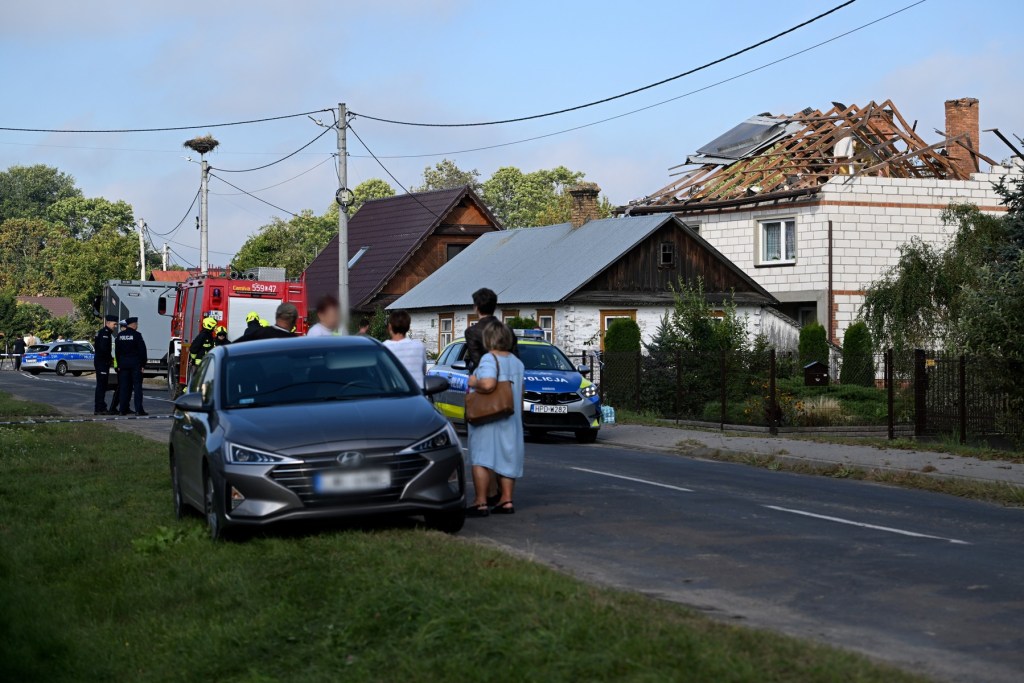
Romania itself raised planes after the Russian drones approached the borders. The president and the government in Bucharest declared solidarity with Poland.
In contrast, the leader of the opposition in Romania, always silent when it comes to such challenges of Moscow, is fighting with the governments of Emmanuel Macron. But Simion mentions neither Poland nor Russia.
Some may take this lack of public position as a desire not to disturb Russia. What is clear, however, is the following thing: even when the drones fell in Romania, the power and opposition did not speak on the same language, which the Poles do.
The Poles, together
For example, Simion is silent although this can demonstrate a lack of solidarity with his conservative allies, the current President Karol Nawrocki and the former prime minister of the Law and Justice Party (PIS), now in opposition, Mateusz Morawiecki.
Simion supported it and was supported by them in the election campaigns that went in parallel this spring.
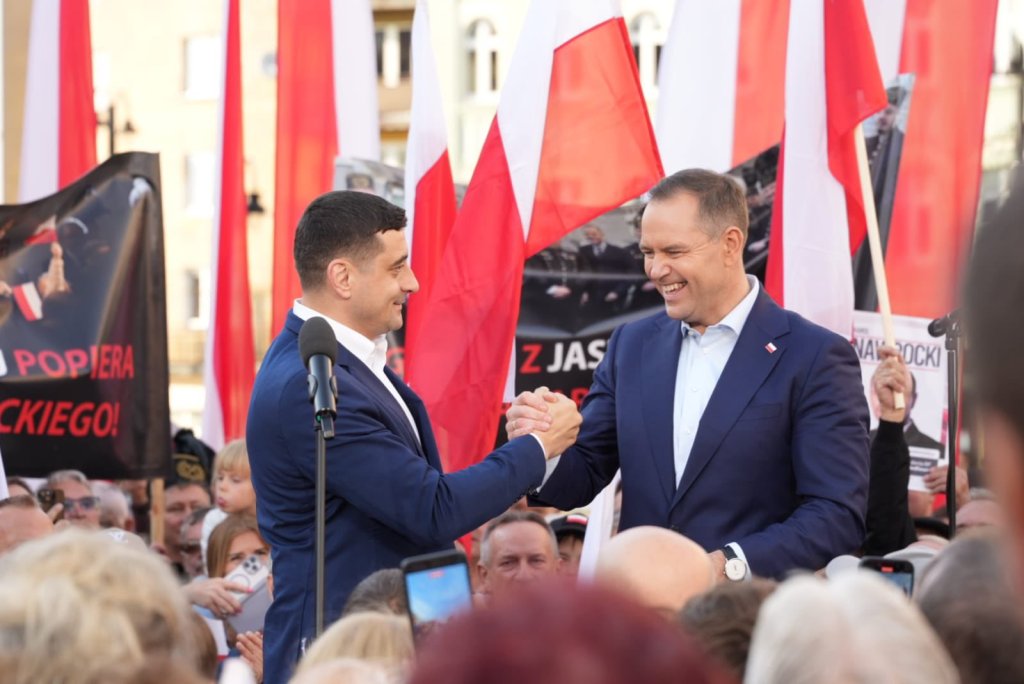
What were they doing on Wednesday?
In Warsaw, Nawrocki and his main rival, Liberal Prime Minister Donald Tusk, have quickly agreed a series of measures after the unprecedented incident on Wednesday morning, including activating Article Four of the NATO treaty.
In a message to Poles, Morawiecki appealed to solidarity. “Together we will defeat the enemy,” he assured.
Georgescu talks about the fall of the West
Different in so many opinions, situations and public policies, Poland's prominent politicians are united in front of Russia. This does not happen in Romania.
On the same day that Europe encouraged Poland, Călin Georgescu spoke about the collapse of Berlin and Brussels, Bucharest and Chisinau, imagining them as “false walls”.
Everything up to Russia
Morawiecki, Nawrocki and Radical Right in Romania share sufficient positions, from Euroscepticism to affinity for the Trump administration, from anti -improve policies to homophobic speech or even to abortion – with sometimes notable differences.
However, they are irretrievably separated when it comes to Russia.
While Poland hunted Russian drones, along with NATO allies, the opposition in Romania voted against the law that allows the army to break the unmanned aircraft entering the country's airspace.
While the opposition in Romania preaches the neutrality of Romania and the good relations with Moscow, aspiring to the “Russian wisdom”, according to the famous expressions of Călin Georgescu, the main political forces in Warsaw, liberals or conservatives, understand the situation of the country and strengthen their army.
Last days, Nawrocki warned that Moscow is ready to attack other states, beyond Ukraine, and that Russia is a constant threat, regardless of its form – Tsarist, Bolshevik or under Vladimir Putin.
No surprise
The position of Polish conservatives on Russia is not surprising.
Since its establishment, PIS has had a firm position against Moscow, anchored in the history of Poland and then fueled by recent events.
The debut of Russia's widespread invasion in Ukraine has even cooled the solid relationship between Polish Conservatives and Viktor Orban's government, who chose to maintain warm relations with Vladimir Putin.
Since then, this relationship has improved, but things are no longer the same.
By the way, even Viktor Orban reacted to the incursion of Russian drones, saying that the violation of the territorial integrity of Poland is unacceptable – although it was avoided to criticize Russia.
Warsaw, under the conservative government, has also offered a strong help to Kiev – even though it has been diminished lately, and the Polish president has been pronounced to reduce the social benefits granted to Ukrainian refugees.
The risks of an internal conflict
Conflicts between Nawrocki and Tusk are already gathering, including foreign policy, and this has been visible on the visit of the Polish president at the White House, when the head of state ironized the instructions offered by Foreign Minister Radosław Sikorski.
The main problem is how Warsaw will be able to reconcile the relationship between the president and the Trump administration with the government support for the European Alliance.
In foreign policy, Nawrocki tried to build his own way.
When Tusk went with Emmanuel Macron and Friedrich Merz on a visit to Moldova last week to support the Pro-EU government, Nawrocki had a separate call with President Maia Sandu the next day.
He also convened a meeting in Warsaw of the presidents of the three Baltic countries, as well as the Prime Minister of Denmark, to discuss regional security.
Analysts are already warning about the risk of a decision -making paralysis, with negative effects.
Some signs are visible. When the most powerful European leaders met last month in the Oval Office to try to convince Trump to stay with Ukraine, Poland was missing.
More beaten than his predecessor Conservative Andrzej Duda, Nawrocki has already begun his work to undermine Tusk, waiting for the 2027 elections.
It is impossible to believe, however, that a change of government will bring with it and a change in the firm position of Warsaw to Russia. What will happen in Romania, it is also not very difficult to understand if we look at the last years and how the “Georgescu politicians” has been positioned against Russia.