The French government fell. Prime Minister François Bayrou lost the vote of confidence in Parliament with an overwhelming score: 364 votes against 194. It is the third time, in less than a year, when a French prime minister leaves office, which confirms an unprecedented political instability.
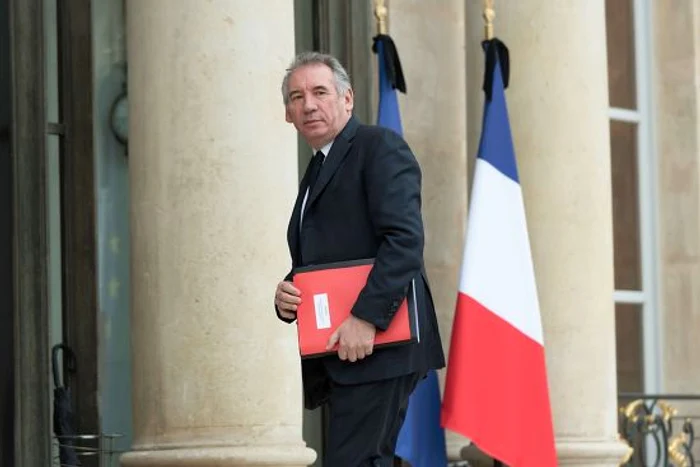
Photo archive
The origin of this crisis is in the decision of President Emmanuel Macron to dissolve the Parliament in 2024, immediately after National rassemblement (the former national front) won the European Parliamentary elections. The maneuver, thought of as a demonstration of force, turned against it: the result was a fragmented legislative, composed of irreconcilable factions, unable to generate a stable majority. Consequently, France crosses a succession of fragile governments, and the credibility of the regime is severely affected.
The political situation overlaps over deep social tensions. On September 10, the French society is preparing for a radical movement, under the slogan Bloquons Tout – We block everything. Unions, civic groups and especially radical left organizations call for a total stop of the country: general strikes, economic boycotes, occupying strategic spaces. The pretext is the austere budget project proposed by Bayro, which includes savings of 44 billion euros and discounts in sensitive fields such as pensions, health and public services.
Beyond the social claims, the recurrent desire of the extreme left to confiscate any form of dissatisfaction and transform it into an instrument to force a radical change of the regime is obvious.
France, once a model of European democracy, seems to be lonely, constantly. When the political center is shaking and the society is fragmented, the simple populisms and promises for complex problems find fertile ground.
At European level, the instability in Paris is followed with fear. In the institutions in Brussels and in the European capitals, the political and economic consequences of the crisis are already discussed, as France is an essential actor in the balance of the Union. Government blockage risks affecting the entire continent, by delayed decisions and by weakening a central voice in European architecture.
This crisis is not just France. It is part of a wider wave that crosses the entire democratic Europe. Divised societies, accentuated political polarization, distrust in institutions and traditional parties – all create a fertile land for extremes. In these fragile spaces, populisms grow and promise order and safety, simplifying until deformation the complex problems of the contemporary world.
They grow all the extremes, either old fashioned or orthodox-fascist communist, or left-wing Islamist groups. They all promise order and safety, but with the price of freedom.
Viewed from Romania, the lesson is bitter. Europe changes under our eyes, and the events in Paris directly affect us: political, economic and social. Romania is not immune to these dynamics. We have a lot to learn and even more reasons for concern.
Democracy is fragile and must be defended every day, with lucidity and responsibility.