
Despite the threats, Trump continues to treat Putin with indulgence. An error with historical potential? – Bloomberg


Despite his warlike rhetoric and the wave of public convictions against Russian aggression in Ukraine, US President Donald Trump seems determined to avoid any real escalation in the relationship with Moscow. A choice that, warns Bloomberg, could remain in history as a major strategic mistake for the United States.
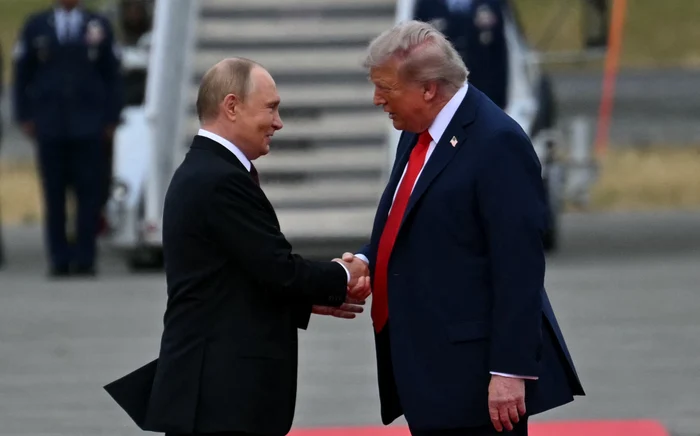
Vladimir Putin and Donald Trump, Alaska/Photo: EPA/EFE
After Vladimir Putin's recent visit to China, where the Kremlin leader was invited to honor at the Beijing military parade, Russia has intensified its attacks on Ukraine. In a weekend that has already entered the statistics of the war, the Russian army has launched over 800 drones and rockets on the Ukrainian territory-a brutal demonstration of force, noted by Bloomberg journalists.
And yet, from Washington there has been no clear signal to strengthen the pressure on the Kremlin. On the contrary, Trump has shown at least an ambiguous attitude in the past: he tried to flatter Putin, temporarily blocked military aid deliveries to Kiev and spoke, unequivocally, about the possibility of recognizing Crimea by Russia.
“What should happen for Donald Trump to admit what is obvious for a long time: Vladimir Putin has no real interest in peace, if this does not mean the capitulation of Ukraine and the withdrawal of Europe?”, The editorialist Bloomberg, Mark Champion, asks.
Critics to Europe but silence toward their own allies
Donald Trump has repeatedly expressed dissatisfaction with the fact that some European states continue to buy Russian oil. Asked to stop these purchases and called on increased pressure on China to reduce Russia's energy imports. He has, of course, brought his own example: he claims that he has pressed India through punitive customs tariffs.
However, these statements are essentially inconsistent. As Bloomberg notes, only two EU countries are currently buying Russian oil: Hungary and Slovakia. Both led by political leaders close to Trump – Viktor Orbán and Robert Fico – and, not by chance, both with favorable positions of the Kremlin. If Trump were consistent, he would ask them directly to stop imports.
Moreover, not even the United States have managed to cause China to give up Russian oil. It is hard to imagine that the European Union could do more in this direction. And Trump is obviously aware of this.
Trump, in a strategy deadlock
Donald Trump seems, more and more, caught in a self-induced diplomatic trap. Recently, he said he would have prepared to move on to the “second phase” of sanctions against Russia – without giving concrete details. The statement, without substance, supplies the perception that the US president prefers to postpone important decisions and let Europe manage the conflict in Ukraine.
But it is a risky strategy. Prolonged instability in Europe will not remain without effects on the security of the United States – a confirmed lesson, with the price of millions of lives, both in the first and in World War II.
For now, Trump seems to prefer a waiting position – one that could be interpreted, from the Kremlin, as weakness. And in a geopolitical context dominated by strength and symbolism, this perception can have significant consequences.


