The first constructions emerge from the smooth surface of the sea. On the surface you can see yellow “blocks” – the so -called Transitional elements that will connect underwater foundations with turbine towers, ships working on the construction of the farm are circulating nearby. Finally, we see ready windmills. The moment is raised – we watch the effects of one of the investments that are to change Polish energy and economy, making them independent of fossil fuel importreducing the impact on the climate and stimulating the development of modern industry.
On the Baltic Sea “Wind of Changes” from the legendary hit of the Scorpions group is not just a metaphor. Farm Baltic Power, built jointly by Orlen and the Canadian company Northland Power as part of the created joint venture with the same name, is today the most advanced project from the first sea phase of the wind energy in Poland. Together with other projects, by 2030 5.9 GW zero -emission power will be created in the Baltic waters – approx. 8 percent. today's potential of the power system.
Read also: 11 ships went to the sea. Orlen starts with great construction in the Baltic Sea
A farm with the area of Gdynia
We flow to the sea thanks Polish Wind Energy Association and the Wind Industry Hub Foundation, which organized a study of several days in the footsteps of the Polish offshore Wind sector. On a sunny, September day from the port of Łeba on a cruise, we are taken by “Łajba” Bota Wind II – a catamaran belonging to the Bot Green Offshore, a Polish company working during the service of Farm Offshore, e.g. in the North Sea. The one -way trip lasts about 45 minutes – Baltic Power is about 22.5 km from the shore, so we have time to excite the turbine and other elements that will make up the farm.
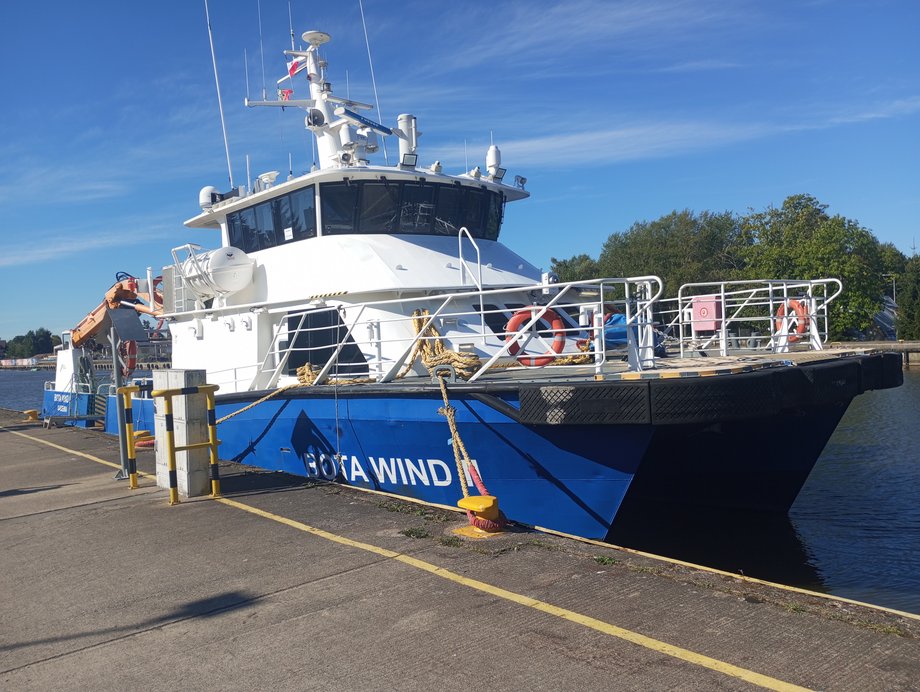
Bota Wind II – this ship's ship's ship Wind Offshore is sailing to see the farm being built
We reach the construction site at a distance of about 500 m. Bot Wind II stops for a long time, allowing us to embrace the emerging energy source, with an area of about 130 km. – that is what Gdynia takes up. The first five windmills have been standing here recently; Turbin installation began in July, and ultimately the Baltic Power will be folded 76. The farm is to start working in the second half of 2026. Each turbine will count on 15 MW of power; For comparison, large and modern windmills today reach about 5-7 MW.
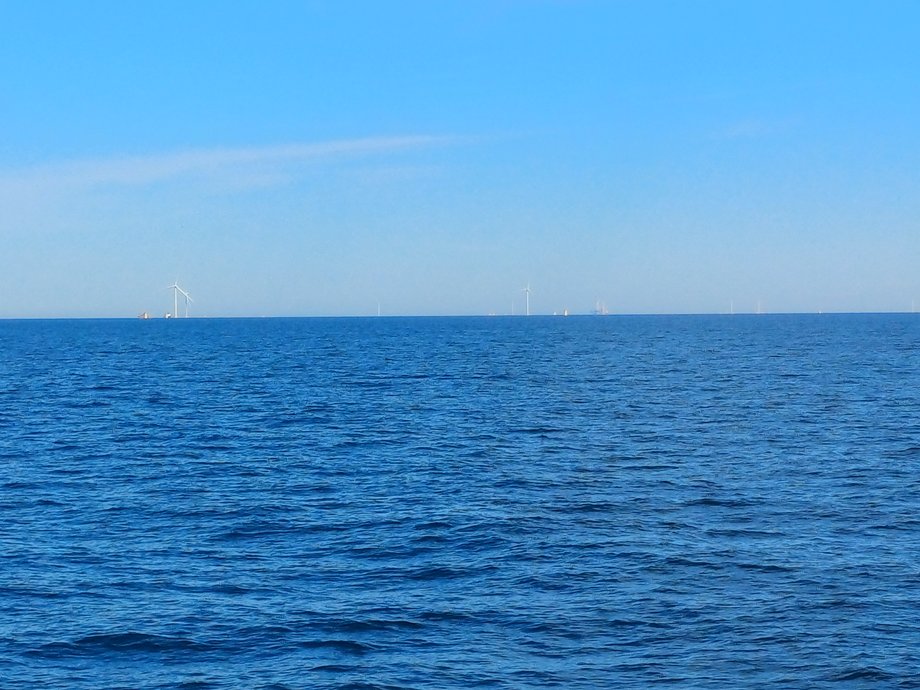
We are approaching the farm being built. This is how it looks from afar
The Baltic Sea is one of the most favorable offshore reservoirs in Europe, so the turbines will have something to take in their shovels, and then send cables ashore. Ok 1.2 GW of power, which will be installed on a farm with estimated production of approx. 4 terawat hours per year will be able to satisfy approx. 3 percent. national demand for electricity and provide it for over 1.5 million households. The farm hour can be enough for the annual needs of 209 farms. It will also allow you to carry out about 6,500 washes in the washing machine.
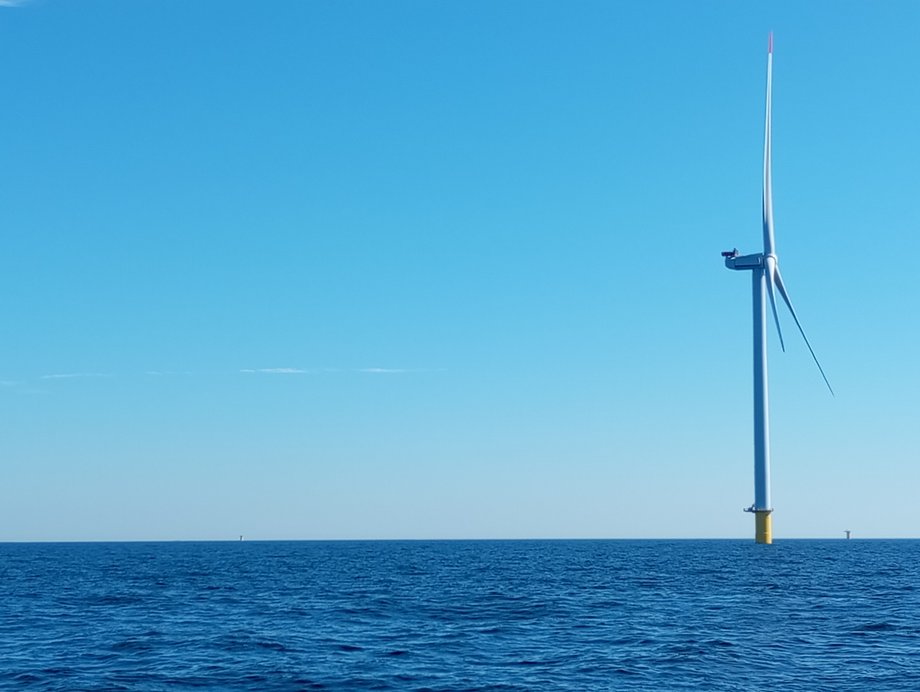
One turbine on the Baltic Power farm will have 15 MW of power. Hour of her work is enough for the annual power of three households
82.5 thousand charged laptops
The possibilities of a single turbine are also impressive. Within hours of operation, one Baltic Power windmill standing in the sea will be able to charge 314 285 mobile phones or 82,500 laptops, 147 electric cars, 110,000 urban lanterns. He will also be able to power three households for a year. The hour is enough to provide energy to 580 km for an electric train or using 33 thousand. refrigerators. A minute will take the windmill to charge the city bus for 100 km of driving. Electricity from the sea will also be useful for people heating houses heat pumps. The hour of one turbine work is enough for the annual supply of three such devices, and the work hour of the entire farm – for the power of 200. In addition, a single windmill can charge 138 air conditioners in an hour; The whole farm will do it for 10,450 of them.
The windmills will be accompanied by two power stationswhich will change the voltage of produced energy. The beginning of their installation is planned for this fall. On land, four cables “goods” will be conducted by another station, built today in Lęborski Osyęki next to the future large station of Polish electricity networks, created for the introduction of the power from several offshore sources into the power system.
Read also: I saw the construction of a station in Choczew. A large energy one enters into Pomerania
Turbines on the farm will also be connected about 350 km of internal cables. Windmills are based on monopals – attached to the sea DNA of steel foundations, installed since the beginning of this year. Together with monopals, the turbines will have 250 m, which is more than the Warsaw Palace of Culture and Science. The depth of the Baltic in this area reaches 33-45 meters.
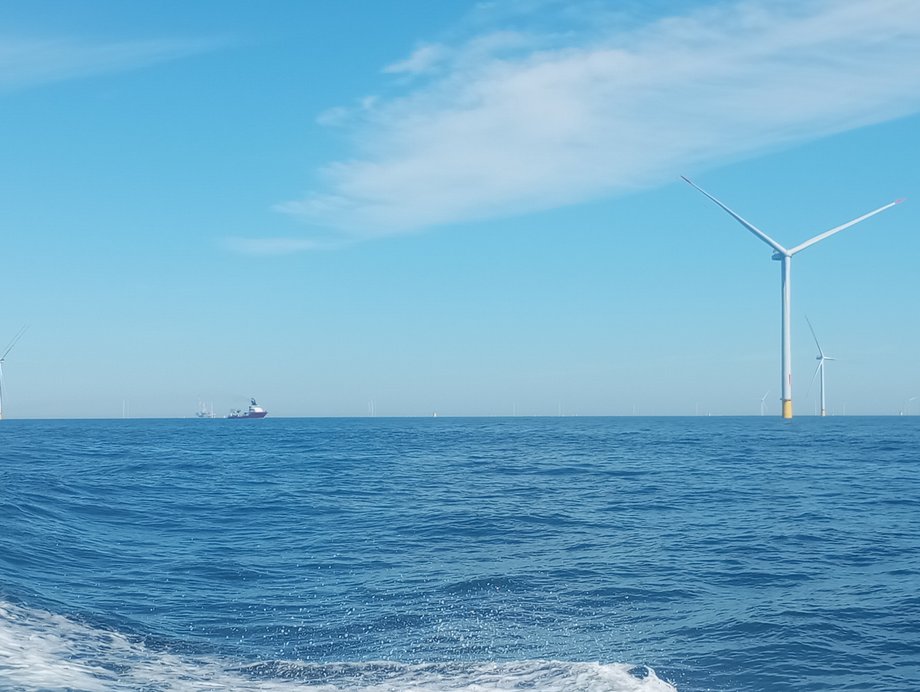
The Baltic Power farm will take approx. 130 km of area – as much as the city of Gdynia
Monitoring 24 hours a day
We return to the port another 45 minutes – the windmills slowly disappear in the eyes, although, as we will see later, with their sight their small, white silhouettes can also be seen on the horizon from the beach. At some point, both wind energy branches can be seen from the sea, because there are terrestrial farms frequent in Pomerania along the coast.
After returning, we also visit freshly put into use-in April this year-the operational and service base. The building crouched on the left side of the Łeba River, near the road to the beach and tourist infrastructure, but it is neat and does not overwhelm the industrial burden. The base will be a home port and a maintenance center for the Baltic Power farm, employing about 70 people. Today, ships supporting installation works (these start in other, larger ports), besides 24 hours a day, the movement of ships around the construction site and works are monitored here. There are also warehouses with spare parts and workshops in the base. Interestingly, the base of other investors is being built next to it – Polenergy with Equinor.
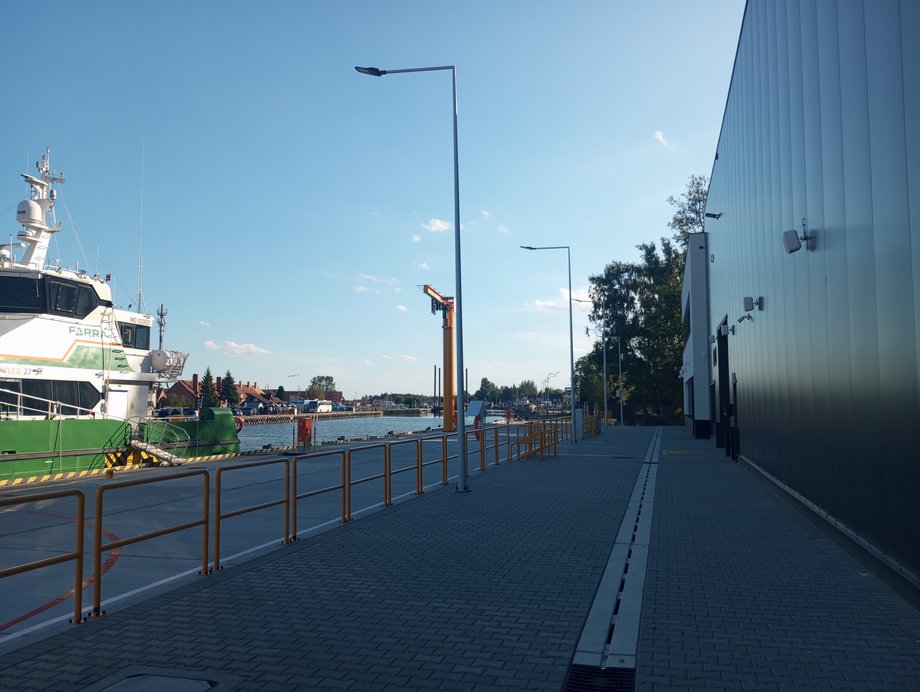
Ships are already flowing out of the service base today helping in installation work on the farm
Local content will grow?
The exact number of all companies involved in the construction of the farm at all stages of the value chain is not easy to indicate, but it is known that the number of suppliers and sub -suppliers is large. Offshore industry Together with related enterprises, in the case of Baltic Power, but also other investments, it has significant growth potential and is already creating jobs from Świnoujście to the Tri -City today. Not only there, moreover, the elements of foundations for Baltic Power windmills come from Smulders factories in Żary and Łeknica (located in the Lubuskie Voivodeship) or in Niemodlin (in the Opole region).
The cables that will lead the power on land will be due to the Tele-Fonika Kable plant in Bydgoszcz. Products of the Gdynia and Gdańsk Shipyard of the Industrial Group Baltic, which provided steel structures for marine power stations, will also take part in the construction. The turbine gondolas themselves, i.e. their responsible for the production of the “heart” energy, are supplied by the Szczecin Danish factory Vestas.
According to Baltic Power, in the whole process, including the construction of a land station, many smaller, local transport, logistics companies, but also advisory or design companies take part. The company declares that in the entire life cycle of the farm, i.e. from the development of the project to the end of operation, the so -called Local Content, i.e. native enterprises, will be at least 21 percentin accordance with the sectoral agreement for the first Polish phase of offshore development. Everyone certainly has an appetite for more, and the market will mature with subsequent projects.
Not everything in the offshore industry is pink today, on the costs of projects, among others, difficulties in supply chains or the enemy of the politician of the current US authorities (we describe these problems more widely here), however, it is certain that without the power in the windmills Poland's energy transformation and the implementation of climate goals will not be able to succeed. In the late afternoon we leave the head and the sea behind us. Construction will last until next year, and we have to wait for the first clean Baltic current in sockets.