Italy claims that it will not build the “longest suspended bridge in the world” from defense funds. Who disputes such expenses for NATO goal


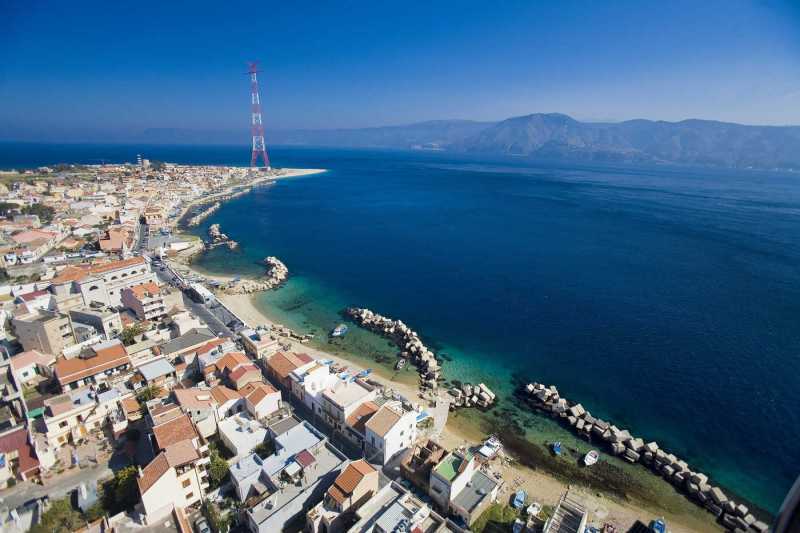
Messina, Sicily. Photo: Federico Meneghetti / Universal Images Group / Profimedia
Italy will not use defense funds to finance the project worth 13.5 billion euros on the construction of a bridge over the Messina Strait, which connects Sicily and continental Italy, the Ministry of Transport and Infrastructure (MIT), quoted by the Italian press agency ANSA, said AGERPRES.
The clarification came after the United States Ambassador to NATO, Matthew Whitaker, raised the question whether European countries would adopt a large definition of defense and security expenses to meet the 5% of GDP.
In an interview with Bloomberg, Whitaker said that the 5% percentage of GDP should not include expenses for “bridges that have no strategic military value.”
MIT replied that it would not be the case. “The bridge over the Messina Strait is already financed entirely from state resources and no defense funds are allocated,” said the Italian ministry. “The possible use of NATO (dedicated) resources is not currently on the agenda and, above all, it is not an absolute necessity. The project is not questioned,” MIT added.
A month ago, a ministerial committee of the Government of Rome gave its final agreement on the construction of the bridge over the Messina Strait, the longest suspended bridge. According to the plan, the construction of this bridge should be completed in 2032.
On that occasion, the international news agencies, including Reuters and AFP, wrote that the Government of Rome included this infrastructure in the defense budget, by virtue that a percentage of 1.5% of the total of 5% of GDP can be spent for “defense related” shares, such as cyber security or infrastructure, and it will be eligible for it. Defense -related expense, especially since Sicily houses a NATO base.
At the Summit of NATO leaders in June, a new military spending objective for a period of ten years was agreed, amounting to 5% of GDP-3.5% for exclusively military expenses and 1.5% for related expenses.