As temperatures begin to drop, the concern increases that Ukraine could face the most difficult winter since the beginning of the war. A new wave of Russian aerial attacks on the country's energy infrastructure has sparked alarm in Kiev and Western capitals, at a time when Moscow seems to rely on cold as a war weapon.
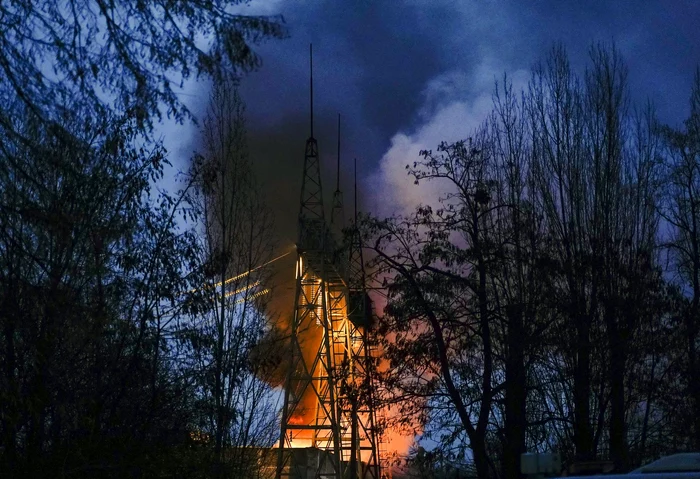
Russian attacks on Ukraine's energy structure/Photo: EPA/EFE
These attacks – among the largest so far – come just a few weeks after a series of diplomatic summits involving US leaders, Russia, Ukraine and European allies. If those meetings offered a ray of hope to resume negotiations, it now seems to be faded by current interruptions and fears about a new energy terror campaign.
Target: Ukraine's energy network
The latest series of Russian attacks on the Ukrainian electrical network seems to be part of a deliberate undermining strategy of population morality and overloading the resources in the winter threshold.
On August 27, Russia has launched what Kiev authorities describe to be the second largest air attack since the beginning of the conflict, using drones and rockets to hit electrical substances, gas pipes and essential power plants for the cold season. Over 100,000 households were left without power.
The Ministry of Energy of Ukraine claims that, in 2025, over 2,900 attacks on civil infrastructure – almost three times more than in the first two years of the war. Officials accuse Moscow of using the same tactic as in past winters, but on a much larger scale.
An international effort in uncertainty
In the past winters, Ukraine has resisted attacks with the help of a large international effort, initially coordinated by the United States and supported by European allies and partners in the Middle East. It included the supply of fuels, mobile generators, thermal equipment and the interconnection of the Ukrainian network with that of the European Union.
This integration with the European energy network was completed just a few hours before the beginning of the large -scale invasion, in February 2022, an essential step in reducing Russia addiction.
In 2023, Saudi Arabia offered $ 300 million in energy resources for Ukraine, followed by the United Arab Emirates, which increased energy exports to Europe to allow it to support Ukraine.
However, under the new Washington administration, the continuity of this support remains uncertain. At the beginning of the year, the key energy security program for Ukraine, funded by USAID, would have been suspended. In the absence of a coordinated impulse from the US, the European Union recently allocated $ 500 million to support gas imports and repair the destroyed infrastructure.
Meteorological and military pressures
Meteorological forecasts indicate a winter that could start gently, but with extremely cold January and February months-a scenario that Moscow seems ready to exploit. At the same time, Russia has significantly expanded its arsenal of Iranian drones and precision rockets, and the frequency of attacks has increased considerably.
“Putin seems to rely on the cold to achieve what has not been done on the battlefield – weakening of the will of the Ukrainians.”said a European diplomat under the protection of anonymity.
Diplomacy in the deadlock
The last Russian attacks come at a sensitive time, after the summits aimed at shaping a possible negotiation framework. European leaders welcomed the initiative of President Trump, and NATO Secretary General described as “The only person who can stop Putin.”
Among the topics discussed include any territorial exchanges and security guarantees for Ukraine. However, Ukrainian leaders reject any idea of transferring to occupied territories, considering that such a concession would not mean peace, but the preparation of a new conflict.
Zelenski recently reiterated Kiev's position: “We cannot negotiate under the threat of missiles. Peace cannot exist as long as civilians are in darkness and cold.”
Hope comes back in spring but winter must be passed
Many analysts believe that the next few months will be essential. If Ukraine manages to maintain its energy resilience and international support, it could enter the spring in a stronger position for negotiations.
In the US Congress, there are pressures to relaunch a pack of hard sanctions on the Russian energy sector and those buying petroleum products in Russia. A bipartisan draft law, supported by over 80 senators, could be a firm response to Moscow's attacks.
Meanwhile, Ukraine continues to hit Russian energy infrastructure – especially refinery and export terminals – in an attempt to reduce the income of Moscow. Kiev states that these actions have military value and are an act of self -defense, in contrast to Russian attacks on civil infrastructure.
Winter will be a test but does not decide the end
Although the mood in the Western capitals is increasingly reserved, few believe that the war will be decided this winter. The German Chancellor, Friedrich Merz, summarized the mood: “I prepare for a long war in Ukraine.”
However, there is hope that the basis of real negotiations has been put. Until then, however, winter will test not only Ukraine's energy systems, but also the commitment of the West to support Kiev in the face of an increasing pressure.