Interview the exhortations to the boycott of Asian workers can be understood, but “it is impossible for Romania to work without foreign workers,” says the Indian who has brought thousands of workers


Attitudes at the peak against migrants “does not help Romania progress”, believes Nikkhil Manshramani, whose company has brought to Romania over 5,000 workers over the last 6 years, of which 90% are working in construction.
A week ago, Dan Tanasa, Vice President Gold, wrote on Facebook: “Refuse the order if it is not delivered by a Romanian. Stop the import of unskilled workers from Asia and Africa. Wake up!”.
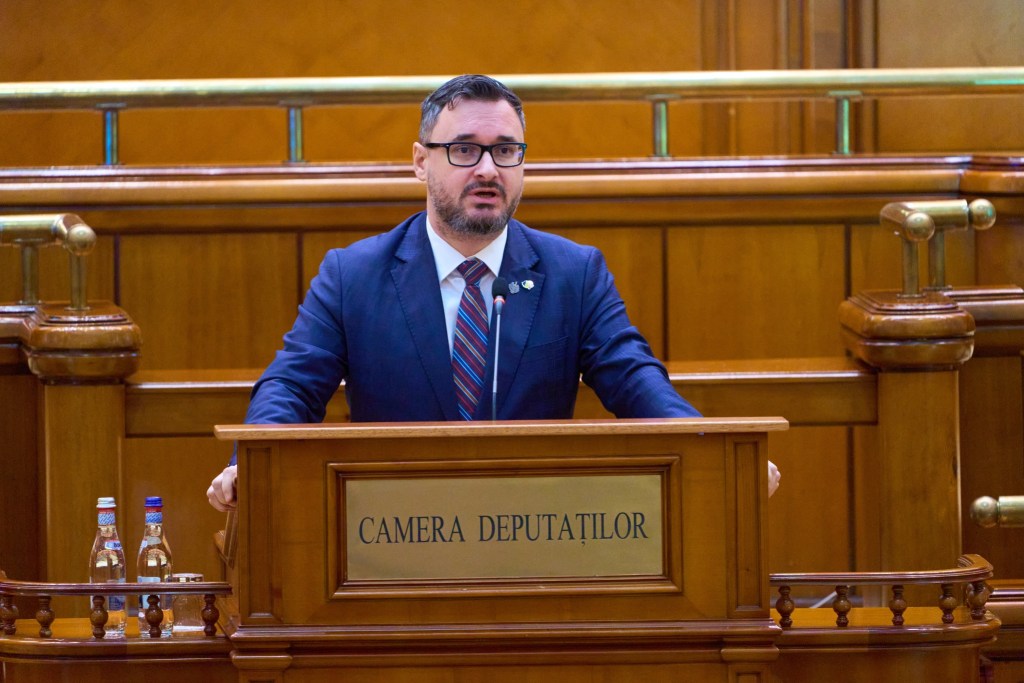
Hotnews discussed with Nikkhil Manshramani, the CEO of a recruitment and placement company in Asia about how these exhortations do these exhortations.
Predilect areas: construction and production
Manshramani's company has brought to Romania over 5,000 workers over the last 6 years, of which 90% are working in construction, he says, and the rest in the production area.
“But our main field has always been the constructions. One project leads to another and then to another, this is how things work,” explains Manshramani in discussion with HotNews.ro.
He says that Romania is facing the same problems as Central and Eastern Europe: the lack of young labor, the aging of the population and the emigration to the west. “Young Romanian people prefer to work in Western Europe, where wages are 2.5 times higher and do not need a work permit,” says Indian CEO.

The exhortations to the boycott of foreign workers are not something new to him. And he can understand them. “As an expression of patriotism, it can be understandable, but it does not help Romania progress,” says the Indian CEO.
“It is impossible for Romania to work without foreign workers”
Romania is a developing country, which benefit from European funds, and the projects funded by the EU must be completed, Manshramani considers.
Protests against Asian workers have seen in several European countries. “Usually, such messages come from either far left or far right parties. In general, it is more difficult with right-wing parties, because they are often anti-immigration.
But the world changes rapidly. A country that remains a few years ago risks leaving the market, ”believes the Indian CEO.
He also says that from his experience – six years of activity in Romania, an interval in which he visited the country a few times, it is not possible for Romania to operate without foreign workers.
And not only in Romania this is valid. Last weekend, the head of the International Monetary Fund, Christine Lagarde gave a speech at Jackson Hole, on the theme of immigrant workers.
“Without immigrants you will not have workers and you will lose billions,” Lagarde warned, arguing that without an influx of foreign workers, the euro area will have about 3.4 million people in less work by 2040.
“Although foreign workers represented only 9% of total jobs, they contributed to 50% of the increase of the workforce in the last three years,” added Lagarde, emphasizing their “determinant”.
If you go to the Old Center of Bucharest, all restaurants have employees from Nepal and Sri Lanka
At the end of last year, 2024, in Romania there were over 135,000 foreign workers with active contracts, most of Asian countries such as Nepal (over 31,000), Sri Lanka (about 19,000), India and Bangladesh
In fact, in 2023 Romania registered a historical premiere: for the first time in history, the immigrants who came to work were the main cause of population growth.
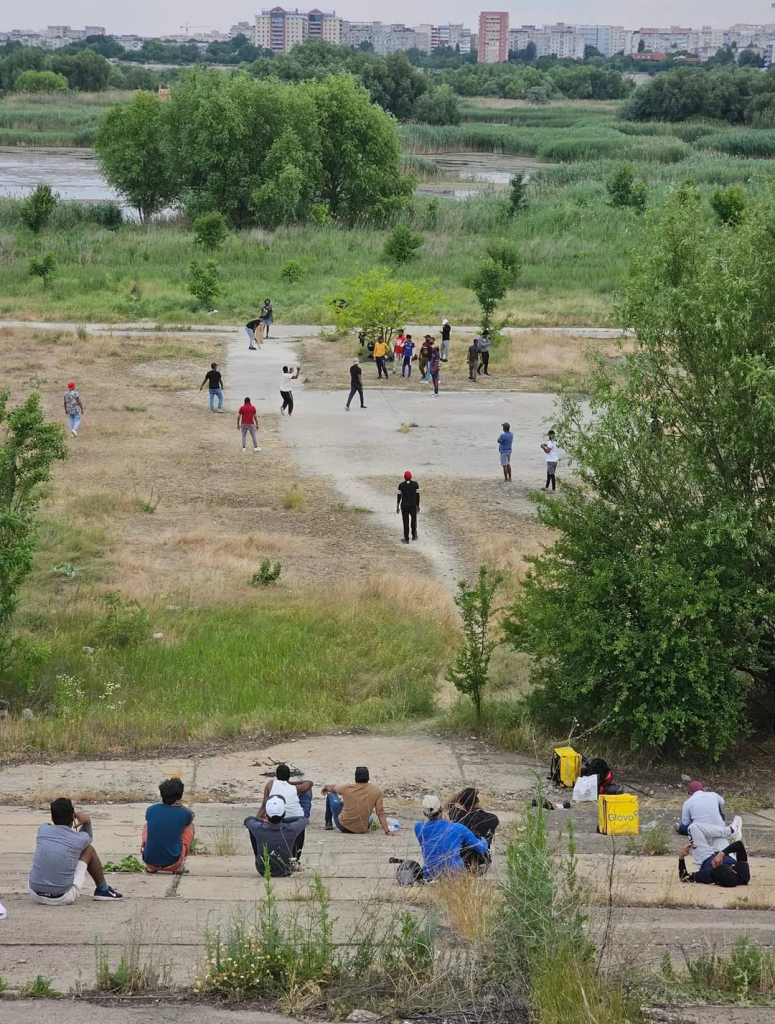
“If you go to the Old Center of Bucharest, all restaurants have employees from Nepal and Sri Lanka – cooks, waiters, bartenders. Even at big hotels, such as Radisson, the staff is mostly from Sri Lanka,” says Manshramani in the dialogue with HotNews.ro
Sometimes Romanian employers are not prepared and do not know what to offer foreign workers
It is right, both in the international press and in the one in Romania, written about dissatisfaction among some workers, especially Indians and Vietnamese, disappointed by the conditions in Romania.
Manshramani is up to date with such cases and says that sometimes, Romanian employers are not prepared and I do not know what to offer to foreign workers. “We had two situations where the accommodation conditions offered by the customer were not completely developed when the workers arrived – it was a problem with the connection to the electricity network.”
“More recently, in the last 3-4 years, the weather conditions have changed drastically during the summer. In winter, there is heating, everything is ok. But summer, the air conditioners do not cope. In some days, in some locations the temperatures exceed 40 ° C. So the main dissatisfaction is about the employees' expectations. he explains.
His recruitment company brings workers only for large or medium -sized organizations. “We do not bring workers for very small companies, such as a cafe or pizzeria. Bringing workers involves great responsibility-accommodation, logistics, many conditions must be offered,” adds the Indian CEO.
The risk of bringing workers who leave quickly to the west
On the other hand, the Romanian patrons are afraid that the Asian workers only want to reach Western Europe and use Romania as a gateway.
Manshramani admits that this phenomenon exists, especially among young workers, who are looking for lighter jobs and a shorter road. “This trend was more visible until the end of 2023, when Romania was not yet in the Schengen area. Now, since Romania joined Schengen, the trend fades, because foreign workers can obtain permanent residence permit.”
“Many of the workers recruited by us in 2019 have already applied for a residence permit. To avoid this phenomenon, we only recruit people with work experience and families – more responsible people, who want to work and send money home, not to move from one employer to another.”
Also, the Romanian law has changed – the workers cannot change their employer for 12 months, without the written consent of the previous one.
Visa on 6 months
In order to obtain residence in Romania, the first step is to obtain a work notice. With this, the person applies for the visa to the Romanian Embassy in India. The visa is valid for 6 months.
After reaching Romania, the workers apply for a temporary residence permit – TRC. Before Romania entered Schengen, the TRC was valid for 1 year. Now it is valid for 2 years.
Obtaining the work notice takes about four months, and the fourth visa, so in total bringing an Asian worker takes about 8-9 months
If the person is working without interruptions for 5 years, TRC must be renewed every 2 years. After 5 years, it can apply for PR – permanent residence permit.
Minimum wage in India: $ 200 per month
Once they have permanent residence permit, they have almost the same rights as a Romanian citizen and no longer need work notice. I can change the job, they have similar rights to those of Romanians. Previously, I said that this is just what the law says theoretically, but now it's real, ”details the Indian CEO.
In India, the minimum wage is about $ 200 per month, but each state has a different minimum wage.
In Romania, the salary starts from about 600 euros net. In addition, employers offer money for free food or food, or transport. If the company is large, it also provides accommodation. Therefore, Asian workers get to win in Romania about 5-6 times more than in their country.
Bringing an Asian worker takes about 8-9 months
Obtaining the work notice takes about four months, and the other four visa, so in total the process takes about 8-9 months, says Manshramani. “This is because the General Inspectorate for Immigration – IGI – has a limited processing capacity.
“When I started, in 2019, the annual share was 25,000 non-EU workers. Then it increased to 30,000 and in the last four years it was 100,000. The embassy in India manages seven countries: India, Nepal, Bangladesh, etc., and has about 45,000 applications.
In the opinion of the Indian businessman, more personnel would need more personnel and a larger visa department at the New Delhi Embassy. “About 40% of the share of non-EU workers of Romania comes from India, Nepal and Bangladesh, and all applications are processed in New Delhi,” says Manshramani.