Why the European states hesitate to confirm the assets of the Central Bank of Russia. “It's like a goose that makes gold eggs.”


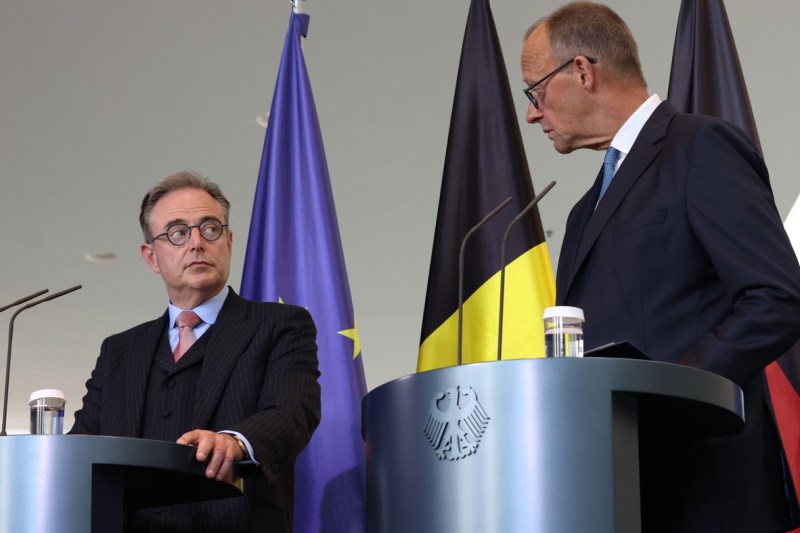
Belgian Prime Minister Bart de Wever and German Chancellor Friedrich Merz: News-Photographer, Eus-Nachrichten / Alamy / Profimedia
Belgium and Germany are skeptical about the confiscation of Russia's central bank assets that are currently frozen in the European Union, DPA and Reuters, quoted by Agerpres.
The sovereign assets of the frozen Russia from the beginning of the Ukraine's war should remain in the Euroclear custody of Belgium, as their confiscation for the benefit of Ukraine would raise legal problems on Tuesday Belgian Bart de Wever.
G7 states froze about $ 300 billion Russia's sovereign assets, of which, according to the European Commission, about 210 billion euros ($ 245 billion) is in the EU, mainly in the form of government bonds at the Euroclear depositary.
“Most of these funds are immobilized in Brussels at Euroclear. I know there are governments trying to confess the money. But I would like to warn that this is not so legal,” the Belgian prime minister said in a common press conference with German Chancellor Friedrich Merz in Berlin.
De Wever said that assets include funds of the Central Bank of Russia that have legal immunity, which means that any political decision to confiscate could have serious repercussions. “Other countries will withdraw their state funds in their turn. It will have systemic consequences and is also very dangerous from a legal perspective. I think it should maintain these fixed state funds,” he said.
Interest in these assets are now used to finance weapons and ammunition for Ukraine. De Wever also said that the use of interest is acceptable to help Ukraine, but warned of using the main funds.
“It is like a goose that makes gold eggs. We should keep this goose. And finally, when we talk about a peace treaty, the goose can be placed on the table … until then, it is wise to keep the situation as it is today,” he added.
The Merz Chancellor warned, in turn, in relation to the negative effects on the capital market, and that other countries could withdraw their state funds.