Mintia power plant, the end of the charcoal era. The spectacular transformation of the “Star from Mureș”

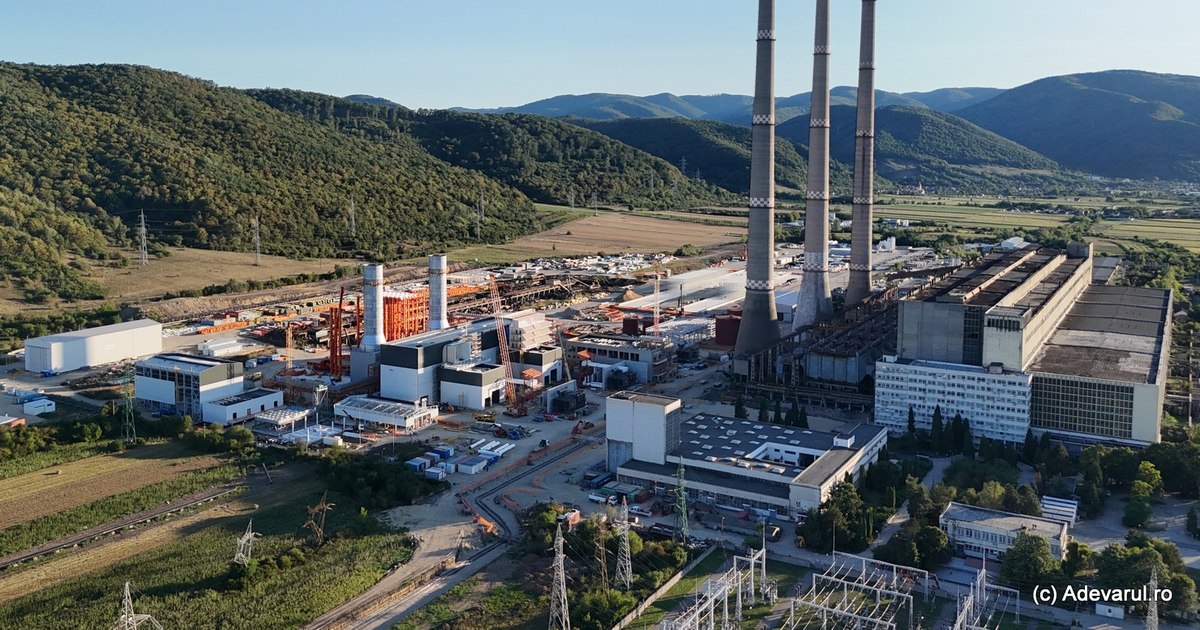
Three years after the privatization of the ancient Mintia the power plants, one of the former great energy producers in Romania, the modernization of the energy complex have reached an advanced phase. In 2026, the boiler could cause energy again, from less polluting sources.
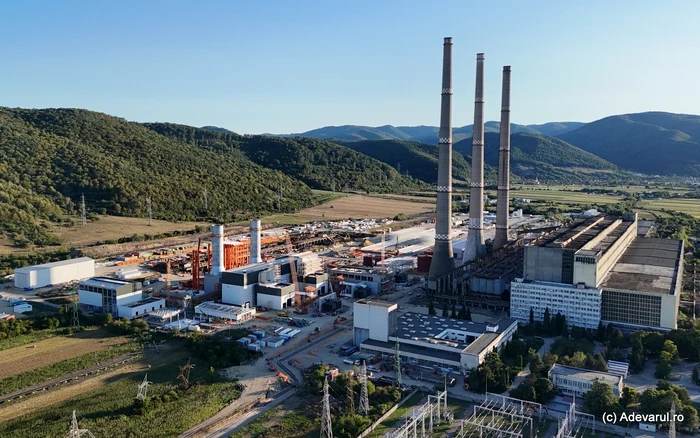
Mintia power plant. Photo: Daniel Guță. TRUTH
The last nearly 700 employees of the old power plant Mintia were made available in the summer of 2021, when the energy power plant was permanently stopped, after five decades of activity and several months of stagnation.
How in three years has changed the face of the Minia power plant
Meanwhile, in August 2022, the Mintia power plant was sold by the Romanian state, through the judicial liquidator, with over 91 million euros, to a private investor. The new owners of the power plant have announced its refurbishment and its transformation into a gas power plant, having a production capacity of over 1.7 GW of energy.
The investment was estimated at over 1.4 billion euros, and the new owners, Mass Global Energy Rom, have committed to transform the “Steaua on Mureș”, as it was called the power plant in the communism, from a coal power plant in an energy complex that will use Siemens technology, of the last generation, which will work with natural gas.
Meanwhile, the appearance of the old power plant has changed. The main building of the power plant were kept, the two major water cooling towers, erected on the Mureș bank, but also the three chimneys built in the 1970s, with a height of over 200 meters each.
The coal household, the fuel household, the oil household, the chemical water treatment station, the main condensate treatment station, buildings, annexes and installations included on an area of ten hectares in the courtyard of the Complex were abolished. In their place are in the construction site of the new power plant on Metan gas, which will occupy an area of about 7.5 hectares.
According to the project, it will be equipped with two gas turbines (GTG) H-class, a steam turbine and three SGEN5-3000W generators from Siemens.
Will also be equipped with auxiliary equipment for generators and production equipment (pumps, pipes, cables, valves, water intake equipment, etc.). At the same time, the components of the boiler will be prepared for the transition to the new energy production technologies, based on hydrogen. Investors estimated that the project will generate about 700 jobs.
The gas pipeline, in the site
The works at the new power plant in Hunedoara are approaching the end, recently showed the representatives of the Ministry of Energy. In June 2025, former minister Sebastian Burduja stated that the project reached a 75 percent stage with the first cycle, and in the middle of 2026 the entire power plant will be ready.
“In December, according to the current chart, the first turbine of almost 600 MW will be ready, in January-February another identical turbine and, in July 2026, here we will have all 1,734 MW in production”, Declared the former Minister of Energy.
In parallel with the construction of the power plant, works are held at the natural gas bus, carried out by Transgaz, which will feed it. The investment, worth over 60 million euros, is supported by the Ministry of Energy and aims at the construction of the gas transport pipeline on the Sântămăria Orlea – Mintia route, with a length of about 60 kilometers.
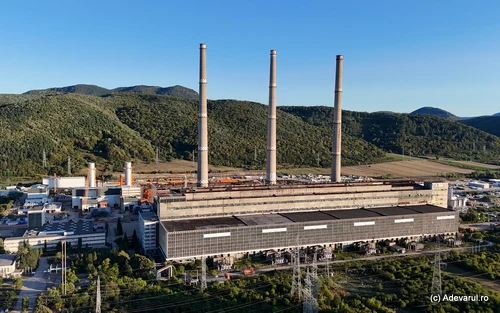
Image 1/10:
Termocentral Mintia Photo Daniel Guță Adevărul (12) JPG
It will connect the power supply to the natural gas bus (Bulgaria – Romania – Hungary – Austria). The works on the gas pipe are also in advanced stage, many segments of the pipe being connected and buried. They could be completed this year, the former minister recently estimated.
The old power plant Mintia, the extinguished “Star” of Mures
Retehnologization of the Mintia power plant means not only its return to the national energy system, but also its transition from the use of coal to less polluting materials.
Also called the “Steaua from Mureș”, due to its importance for the western area of Romania, the Mintia power plant was one of the few power plants in Romania that worked with raw material (coal with a higher caloric capacity, but with higher operating costs), next to the Term Coamantii
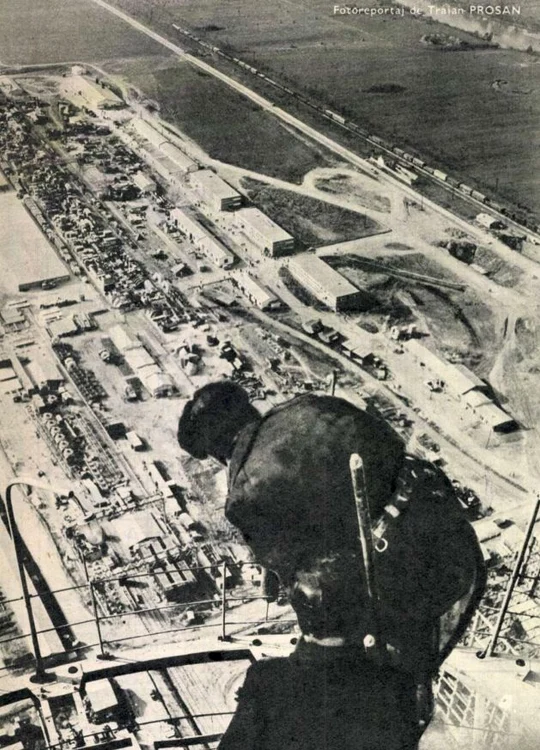
The construction of the Mintia power plant in 1970. Photo: Flacăra
In Romania, Mintia and Paroseni thermal power plants based their electric and thermal energy production on the coal extracted from the Jiu Valley.
The parish power plant was built in the 1950s, and until 1964 three groups of 50 MW and a group of 150 MW were put into operation, reaching an installed power of 300 MW. At the Mintia power plant, in the early 1970s four groups of 210 MW were put into operation, and between 1978–1980 another 210 MW groups, which led to a total installed power of 1,260 MW.
The two power plants balanced in the 1980s the energy balance in the western area of Romania and ensured, by the total installed power of 1,560 MW, between 10 and 12 percent of the electricity produced in Romania and over a quarter of the electricity produced by coal.
Mintia power plant, pollution source
The press from the communist period frequently mentioned the Mintia power plant as “built at the indication and direct support of Nicolae Ceausescu”, but the old complex has often aroused controversy.
Some of its constructions overlapped, over the 1960s, over the monuments of the Archaeological site Micia-the former town at the borders of the Roman Empire, from which the amphitheater, temples, thermal baths and several civil buildings, partially affected by industrial and agricultural works were kept.
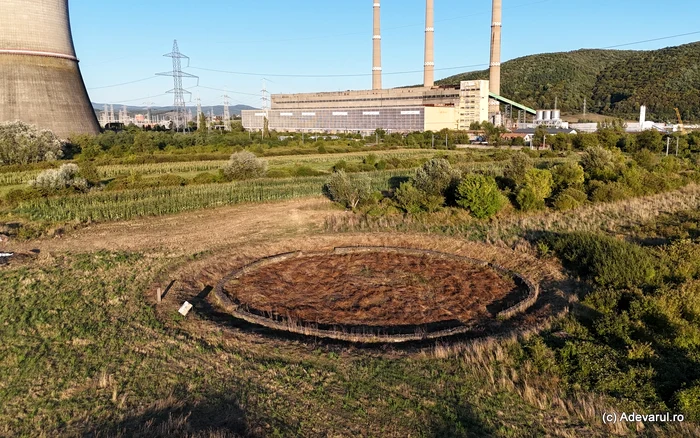
The Amphitheater from Micia, spared by the works at the Mintia power plant. Photo: Daniel Guță
The coal used at the Mintia power plant was one of the main pollution sources in the Deva area, next to the Chiscădaga cement factory and the Hunedoara steel combination.
“From the commissioning until the end of 2011, the Minia power plant has delivered 204 TWh of the electricity needed for Romania and consumed 117 million tons of coal”showed a report of the former energy unit.
The sterile and ash dumps, but also the huge amount of burned coal, made Deva, less than ten kilometers from the power plant, to be considered, in the early 1990s, one of the most polluted cities in Romania.
The most affected were the inhabitants of the surroundings of the power plant, exposed to dust powders and toxic substances from the energy complex. The respiratory diseases of many locals were on account of the pollution caused by the power plant and its dumps.
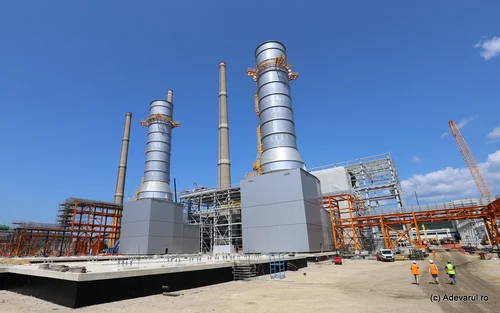
Image 1/11:
MINTIA TERY COOCKING IN THE PHOTO SITER DANIEL GUCE Adevărul (98) JPG
The Mureș River in the area of the lie had also been effective by the residues of Mintia since the 1970s.
“The water of Mureş, below the Dam from Mintia, is guarded by numerous piles in which dozens and hundreds of tonnes of scrap. It is here – and who knows how much they will be under the sand and sludge brought by water – cabins, wheels, pieces that once were part of the installations, of objects coveted by any specialized store. wrote the newspaper Scânteia Tineretului in 1978.
The end of the charcoal era
The quality and especially the insufficiency of the coal extracted from the Jiu Valley were often demanded by the officials of the power plant, from the 1980s and until its closure, in 2021. In the 1980s, over ten million tonnes extracted from the Jiu Valley Mines were provided to Romania, but even in winter, in winter, more than 100 kilometers. raw materials.
“We make a commercial call to the miners to help us make our stock. We would not want to get like last year, when sometimes we could play football through the coal warehouse and when I swept the platforms and took the coal with the maid at the boilers. To ensure the consumption of the thermal power. Tone. declared an official of the power plant in 1988.
Coal insufficiency frequently caused interruptions of energy groups from Mintia, especially in winter and more and more after 1990, when the mines entered restructuring and closing processes. For this reason, thousands of homes in Deva remained in the cold, and starting in the 2000s the city has gradually renounced the centralized heating system provided through the power plant's pipes.
Over time, the requirement of coal has reduced, with the decrease of energy production. The installation of the electrofilters and the greening works have contributed to the diminution of the pollution around the complex. However, in 2021, the old power plant reached a critical point, due to the lack of coal, of the accumulated debts, but also the way it had been managed in previous years, as part of the Hunedoara Energy Complex.
Without environmental notice, without funds for the acquisition and transport of coal from the Jiu Valley or from import and without a constant feed with huil from the closing mines, the “Steaua on Mureș” was definitively closed in the summer of 2021, and will leave the new gas power plant.