The operation “Hope”. How Donald Trump managed to plant in Ukrainian society the dangerous illusion of a close end of war


US President Donald Trump Na needed secret tanks or meetings with Kremlin agents to destabilize, even temporarily, the will of a people under siege. It was sufficient to say, with the specific ambiguity of the populist discourse, that “peace is possible”, and “negotiations with Putin” could bring the end of the war “in 24 hours”.
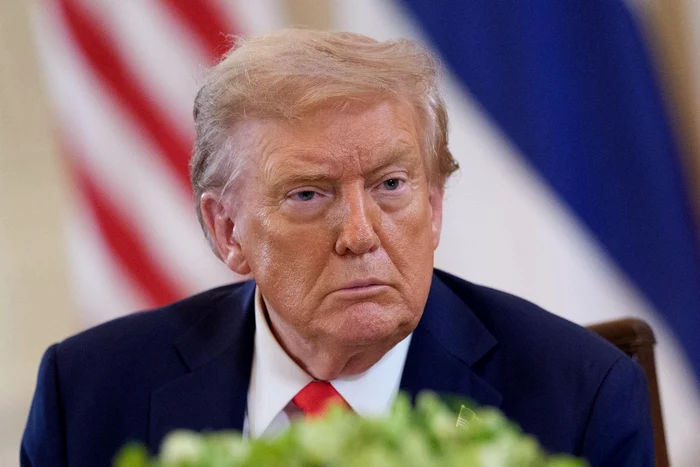
Donald Trump at the White House, at the meeting with European Profimedia photo leaders
This formula, obsessively resumed by the White House leader was inevitably heard and interpreted in Kiev. And its effects are not only geopolitical, but deeply psychological.
Ukrainian psychologist Svitlana Cunihina warns that such messages, coming from an influential international figure, can trigger an insidious phenomenon: an emotional manipulation operation in which “hope”, once diverted from reality, becomes a weapon of inner resistance.
Hope as collective vulnerability
Cunihina surprised that the idea of ”possible negotiations between Zelenski and Putin” is taken into account as a serious option. “That person-accustomed to cynicism and professional distance-seeking Putin's weaknesses, asking if our president could exploit them at the table of negotiations.”tells the psychologist in a conversation with journalists of the Ukrainian publication Focus.
It was, she says, an alarm signal. Not because the desire for peace would be wrong – but because the illusion of a fast peace, “delivered” by foreign powers, is a subtle form of moral and political abandonment. When you no longer believe in your own strengths, but you are waiting for salvation from the “great men of the world”, you have already opened the gateway to resignation.
Prisoner Syndrome: Hope that kills
Cunihina evokes the famous paradox of James Stockdale, an American prisoner officer in Vietnam: under-limit conditions, not pessimists die the first, but the naive optimists, those who build an ideal scenario and collapse when the reality shatters it. And she also quotes an episode of the book of Viktor Frankl, a survivor of the Nazi concentration camps, about a colleague of detention who died exactly on the day of his hope – that the war will end at a certain date – has proven unfounded.
“It is exactly the danger in which we enter if we cling to the idea that peace can come from Trump or a possible meeting Zelenskiwarns the psychologist.
A more effective operation than Russian propaganda
During the war, Russia's many attempts to divide and demoralize Ukrainian society by propaganda, conspiracy theories or orchestrated panic have been largely inefficient. But what Trump produced – probably without intention, but with a massive psychological effect – is a destabilization operation by inoculating the wrong hope.
“Not the fact that he opposes military aid or that Putin licks is really dangerous – the Ukrainians can cope with adversity. The real danger comes from the fact that it has offered, on the tray, an exit that seems easy, fast, painless. And that is so dangerous.”
Between lucidity and courage
What is missing today in public discourse is an honest alternative. If the “negotiations” have become the only scenario, then the impression is created that there is no other way – and that the resistance becomes useless. “But it is a false impression, and we must say it: there are no shortcuts. There is no peace without justice. There are no real negotiations that do not recognize the existence of the other.”
This does not mean that we have to fall into despair. On the contrary. The feeling of respect for themselves and others – those who continue to resist, bury their deaths and yet remain standing – is the foundation of a mature hope. One that does not ask for wonders, but asks for time, patience and courage.
If you wait for something from a photo with Trump and a little smiling in front of the cameras, stop. No there is the end of this war. But in trenches, in weapons workshops, in hospitals and in the minds of those who do not confuse hope with deception.