One of the biggest misunderstandings in economics is the minimaks principle. The minimization of one goal while maximizing another is incompatible. Similarly, in the case of the monetary policy of the American Central Bank: Federal Reserve, in short, the Fed is aimed at maximum inflation to two percent. At the same time, her monetary policy is to stimulate employment. Both of these goals are difficult to reconcile. Because the dynamically developing economy with new workplaces increases consumption and causes price increases. Usually, the central bank must take into account that slightly greater price stability means slightly less economic growth and vice versa.
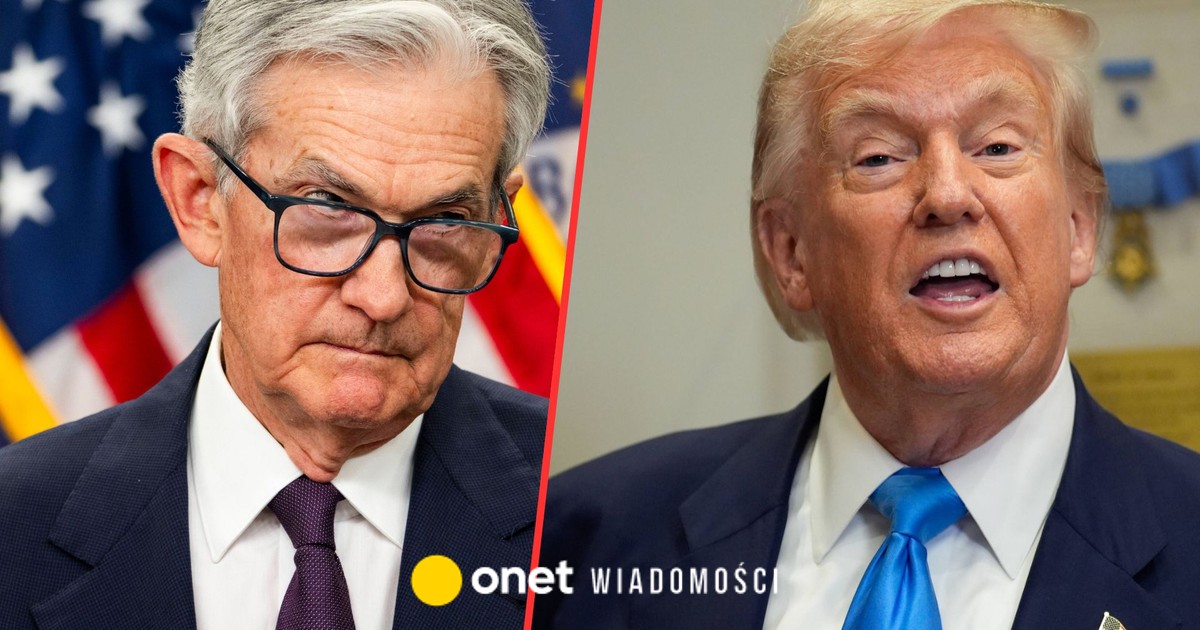
In monetary policy, conflicts of goals are therefore inevitable. Since Donald Trump became the president of the United States for the second time, this conflict has become evident and public. The head of the American Central Bank Jerome Powell wants stable prices, and Trump of maximum economic recovery – minimaks is not possible.
In this way, the political dispute was in the spotlight during the annual meeting of central bankers in Jackson Hole, Wyoming. For three days, international money experts, invited by the central bank in Kansas City, as every year, exchanged views during the economic symposium. What did Powell do? How did Trump react? And why does it matter not only for the US?
In his program speech, Powell talked about “changing the risk balance”. This means that inflationary pressure has decreased significantly. Changes in monetary policy seem possible. Central bank interest rates are currently 4.5 percent.
Good news for Trump: Probably in September the Fed will reduce interest rates.
Bad news for Trump: It will probably end for now.
“I forecast that the FED will once reduce interest rates and then return to cautious politics,” says Gunther Schnabl, director of the Research Institute at the Flossbach management company von Storch.
Personal conflict
This would mean a continuation of personal feud between Powell and Trump. In April, Trump called 72-year-old Powell a “loser” because he refused to lower interest rates. On the Social Social Social Platform, in turn, he wrote that Powell is “Lord late”. If he does not take immediate action, economic growth will be slowed down.
The US president himself appointed Powell by the president of the Central Bank during his first term in 2018. The head of the Fed is considered a non -ideological person and an intermediary between supporters of a hard course and pragmatics.
In the American Central Bank, the so -called Jastrzębie is in favor of restrictive monetary policy in favor of low inflation, and pigeons for interest rate policy, which stimulates economic growth – even at the cost of price stability.
Fun fact: Powell was appointed to the FED board in 2012 by Barack Obama. It was unusual at the time, because the democratic president nominated the Republican.
The independence of the Central Bank from politics is also the highest principle of its operation in the United States. The second four -year term of Powell ends in May 2026.
The US President could release the head of the Fed only if he could accuse him of abuse of his position or corruption. At the end of July 2025, Trump discredited him during a visit to the construction site broadcast on television. He blamed Powell for exceeding the budget.
Powell retorted that Trump made a mistake in calculations.
Continued article under video material
America digesting problems
The monetary policy in the US will remain cautious in the foreseeable future. Although most banks and assets managing assets expect interest rates in September – Deutsche Bank analysts believe, for example, that the “most likely” is a reduction of 25 base points, i.e. 0.25 pp – nevertheless the United States is still struggling with huge threats.
An example of inflation: Although it is far from the peak values achieved in July 2022 (then it was 9.1 percent), but at 2.7 percent. It still exceeds a two -percent goal. In addition, base inflation (i.e. without taking into account variable energy and food prices) increased in July to 3.1 percent. Almost all analyzes predict the acceleration of inflation in the second half of the year in connection with the duties.
Schnabl financial expert claims: – There is no justification for a significant reduction in interest rates. The chief economist of Barclays, Christian Keller, therefore expects a “slight advantage” when the Fed management board makes a decision in a few weeks. He also believes that the reduction of interest rates will be possible “only in December”.
Example of the labor market: For a long time the labor market in the US was experiencing a boom. It has changed. In July, only 73 thousand were created outside agriculture. new jobs. It's not much for America. Interest rate impulses for the economy could revive the labor market.
On the other hand, the US unemployment rate stays at a stable level of 4.2 percent. For comparison: in Germany it is 6.3 percent, in Poland 5.2 percent. Therefore, there is no need for radical reduction of interest rates. Lack of qualified employees can cause wage increases and in a medium -term price increase.
In Jackson Hole Powell said that the data is ambiguous. “Fed is in a difficult situation,” he said, adding that “the risk of weakening the labor market is growing. The risk of further inflation increases.” However, the head of the central bank has one more problem: the goal of maximum employment is “difficult to measure”.
Example of economic growth: According to Goldman Sachs forecasts, the American economy will increase by 1.1 percent this year. At the beginning of the year, the bank still assumed an increase of 2.5 percent. To maintain the purpose of full employment, the economy must, however, function well. Lower interest rates help in this.
At the same time, financial experts warn of cheap loans against the creation of the market. Financing conditions measured by the National Financial Conditions Index [jego polskim odpowiednikiem jest Wskaźnik Kondycji Finansowej publikowany przez Narodowy Bank Polski] are minus 0.56. This means that loans are easily accessible and the economic slowdown is “independent of interest rates”.
Powell and Trump can also stand in September with a skeptical attitude. A one -time reduction in interest rates would be insufficient for the US president. For several reasons, he demands a permanent reduction in interest rates.
Debt: Trump finances most loan tax reductions. He introduced lower taxes primarily for enterprises. The “great, beautiful law” was controversial, but in July this year it was adopted by the Congress in Washington.
It is estimated that in the next ten years public debt may increase by an additional $ 3.3 trillion.
Grocery store in Los Angeles, California, USA, August 12, 2025.Allison Dinner / PAP
Trump's plan
Why this is important: today the United States pay almost a trillion of dollars to cover the annual interest costs on public debt. This is about 17 percent. total federal expenses. Trump needs low interest rates to finance old and new debts.
Export: Trump is disturbed by a commercial balance deficit with Europe, China and other parts of the world. That is why he imposed 15 % duties on imports from the EU to the USA. In this way, the US president wants to attract foreign enterprises producing outside America to the United States. It cannot be ruled out that he will succeed.
One of the mentioned reasons is also the phenomenon of “tariff-hopping foreign direct investment” (foreign investment using differences in duties). When the markets are large enough, customs increase the motivation to carry production.
However, this is not enough for Trump. Few pay attention to “agreement with Mar-a-Lago”. It contains the doctrine of Trump and his adviser to economic policy Stephen Mirana. Both do not mean free trade, but the economic and currency system, which is subordinated to their principles: stronger law (economically and military) – with weakened dollar and strengthened workplaces in the US industry.
A weak dollar would be beneficial for Trump and his ambitions so that American products become cheaper and more desirable abroad. However, such a scenario would fuel inflation even more. The Fed is critically assessing the effects of Trump's customs policy. Powell made it clear that it was not clear whether the duties would cause a one -time price increase or would be long -lasting.
Powell therefore suggests reduction of interest rates, but remains careful. In any case, the decision is not made by the head of the Fed, but the central bank of twelve.
– Given the election program, I see a stronger tendency among the Republicans to a restrictive monetary policy – says economist Schnabl. The permanent expansive monetary policy is therefore “unlikely”.
Despite the high debt of the USA, Schnabl considers the dollar to be a stable currency. Especially in relation to the euro: – Fed monetary policy is more oriented to stability than the policy of the European Central Bank. As the economist notes, the ECB must take into account the weak EU countries with high public debt. “In addition, Germany is now giving up the role of fiscal policy stabilizer in the euro area.”
Application: Trump sharply attacks the head of the Fed, but this does not change anything about the independence of the central bank. Perhaps, however, the US president needs low interest rates less than he thinks. Thanks to social reforms and tax reductions, it drives economic growth itself.
I’m Ashley Davis as an editor, I’m committed to upholding the highest standards of integrity and accuracy in every piece we publish. My work is driven by curiosity, a passion for truth, and a belief that journalism plays a crucial role in shaping public discourse. I strive to tell stories that not only inform but also inspire action and conversation.