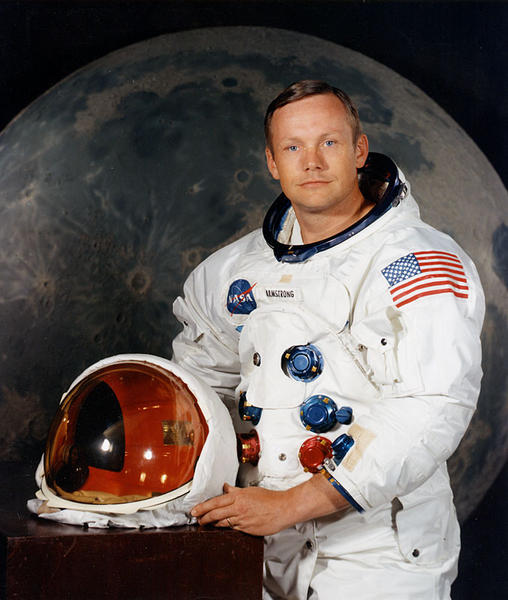
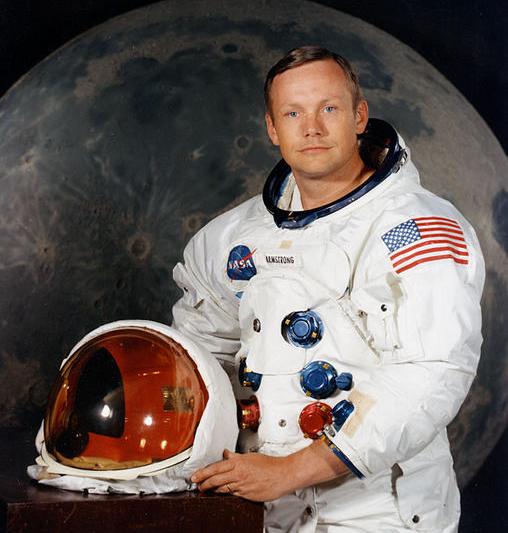
Neil Armstrong, Photo: NASA.Gov
Neil Armstrong was the first man to go on the moon, becoming famous with it all over the world. Parades were organized in his honor, and 17 states offered him medals. Five years after his historical spur, he requested a DEINS CLUB card, one of the first US credit cards. He was rejected because he did not have enough income.
After walking on the moon, Armstrong gave up the space program and became a (relatively poorly paid) professor at the University of Cincinnati, writes Jay Zagorski in the book “The Power of Cash”. Half a century ago, his huge fame did not help him to get a credit card. The Armstrong family actually had the last laugh in this story. After Neil's death, the family auctioned his souvenirs, and a collector paid 30 thousand dollars only for the credit card rejection letter.
See here Neil Armstrong's rejection letter
While half a century ago the approval for the use of an alternative to cash was a difficult exam, today is something trivial.
However, Romanians are a people dedicated to cash. “The use of cash in Romania remains essential, especially in the context of limited access to financial services in certain geographical areas and the low degree of financial education and digital skills,” shows an analysis of the National Bank.
In fact, 6 Romanians out of 10 who manage to put money aside to keep them in cash, show the data of an IRES poll at Kruk Romania. Men and women have about the same appetite for cash, but in regions the situation contrasts strongly. Moldovans prefer to keep the money saved in the form of 70%cash, while Banat and Transylvanians prefer 54%cash savings, IRES survey.
In age groups, those aged 56-65 have the highest cash appetite (64% of them keep their savings “at mattress”), but not even 18-35 years old are far away (56% prefer to tighten cash).
A previous study conducted by IRES (for the Romanian Banks Association) showed that 4.4 million Romanians over 18 have no current accounts, so they do not save other than in cash. Of the 4.4 million, about 1.7 million are pensioners.
In Romania, the use of cash has increased in the last 10 years, especially the pandemic period and at the beginning of the conflict in Ukraine
The main perceived advantages of cash are anonymity and protection of private lifeas well as the perception that its use makes you more aware of your own expenses, another European report shows.
The BNR has carried out a questionnaire addressed to both companies and banks to gather information about the geospatial positioning of ATMs and Banks, concluding that the banking sector in Romania benefits from a network of ATMs and units that are generally responsible for the needs of customers.
However, we are in the last place both from the perspective of the number of ATMs/km square and the number of banks/square km.
We have 25% of the population that is in a radius of one kilometer compared to an ATM and 50% in a two-kilometer radius, says the deputy director of the Stability Directorate of the National Bank, Matei Kubinschi. “Sure, he admits, there is also the reverse of the medal: 10% of the population is more than eight kilometers from an ATM.”
The deputy of the Stability Directorate of the Central Bank has made a connection: between the economic development of the counties and the number of bank and credit units. “If we look at the relationship between the number of ATMs and GDP per capita on each county or the number of banking units and the credit in that county, we see a positive correlation and a close relationship. This relationship can allow us to strategically distribute these units to allow the access to the population and companies to financial services and to integrate them better in the Economic Circuit,” says Mate.