How Japan is trying to become the world's most AI-friendly country. A different approach to the US

While in the United States the debate about artificial intelligence is dominated by fears of job losses and the social impact of automation, Japan seems to be following a different strategy: slower, more pragmatic and oriented towards the gradual integration of the technology into the economy.
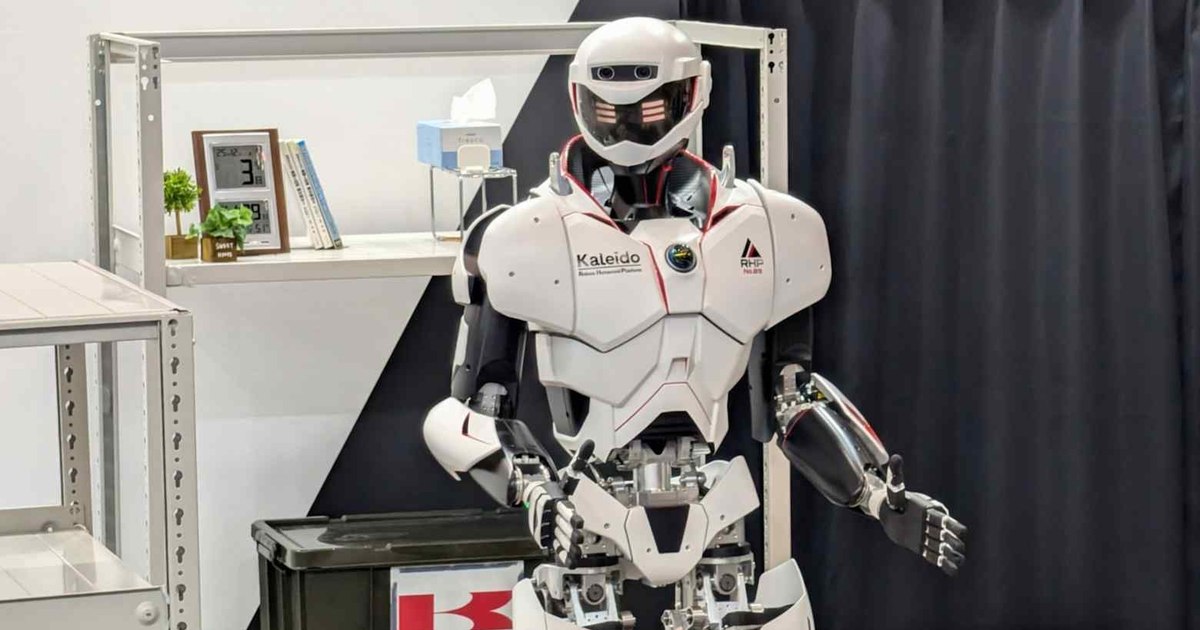
Japanese robot/PHOTO:X
Although it has long been considered behind the major global centers of AI development, Japan is now trying to turn this delay into a strategic advantage.
A different approach to Silicon Valley
Instead of participating in the global competition dominated by spectacular promises and massive investments, Japan is trying to learn from the mistakes of other states and avoid the costs and instability of the early stages of the AI boom.
Japanese authorities and companies see artificial intelligence mostly as a practical economic infrastructure, not as a symbol of technological prestige.
In addition, the country's demographic background reduces some of the fears that dominate the Western debate.
Japan has been grappling with an aging population and shrinking workforce for years, making automation seen more as an economic necessity than a social threat.
Problems that AI could solve
Experts say that many of Japan's structural difficulties fit exactly the kind of problems that artificial intelligence could effectively tackle.
These include: caring for an aging population; language barriers in the relationship with the rest of the world; shortage of modern software in many sectors of the economy.
Adoption of the technology appears to be accelerating.
According to data from the first quarter of 2026, the level of AI usage in Japan grew more than three times faster than the global average.
Japanese company NTT Docomo says that the actual use of AI tools among consumers has almost doubled from the previous year.
Attempting to recover the software gap
Japan has been associated for decades with excellence in hardware — electronics, robotics and precision manufacturing — but has lagged behind in software and digital services.
Now, Japanese developers are using AI tools to bridge this gap.
Data published on the GitHub platform shows that Japanese programmers made 129% more code updates compared to the previous year, above the global average rate.
This acceleration quickly attracted the attention of major AI companies.
OpenAI and Anthropic have expanded their presence in Tokyo as international startups try to enter the Japanese market.
A difficult market for foreign companies
However, Japan remains a cautious and relatively reserved society towards external influences.
Analysts say Western firms trying to break into the Japanese market must avoid the aggressive marketing style often associated with Silicon Valley.
Rather, success depends on building long-term relationships, hiring local staff, and collaborating with Japanese universities and scientific communities, which enjoy a high level of public trust.
The decline of alliances? Japan chooses Russian oil and leaves the EU increasingly alone: ”Calculations will have to be redone, everything is becoming transactional”
Tourism, one of the first areas targeted
One of the sectors where AI could have a rapid impact is tourism.
The increase in the number of foreign visitors puts pressure on the infrastructure of big cities and popular tourist destinations.
Governments and tech companies believe AI systems could:
– create personalized tourist itineraries;
– direct tourists to less visited regions;
-reduces congestion in congested areas.
Flexible regulation and ambitious targets
The Japanese government has so far chosen a relatively flexible regulatory approach.
Tokyo has openly stated that it wants to make Japan one of the most favorable countries for the development of artificial intelligence.
The strategy is based on the idea that states that adopt the technology later can first observe what works and what doesn't in other parts of the world.
This approach is considered especially important for the development of so-called “agentic AI” — systems capable of making autonomous decisions and performing complex tasks without constant human intervention.
Obstacles remain significant
However, Japan's success is not guaranteed.
Japanese corporate culture is known for caution and resistance to change, and public interest in new technologies does not automatically translate into rapid economic transformation.
Japan is testing a passenger plane at least twice as fast as the legendary Concorde. Two hours from Tokyo in the USA
Experts say that the state needs to support not only startups, but also small and medium-sized enterprises, as well as older employees, who are an important part of the workforce and adopt new technologies more slowly.
The long term bet
One of the most vocal proponents of future AI in Japan is Masayoshi Son.
His company, SoftBank, has invested tens of billions of dollars in OpenAI and other artificial intelligence projects.
Son argues that the AI revolution should be viewed over a decades-long horizon, not in terms of immediate gains.
For Japan, this seems to be the dominant philosophy: not a sprint, but a technological marathon.
While other states are under pressure to quickly justify huge investments in AI, Tokyo is trying to gradually build a deep integration of the technology into the real economy.
If artificial intelligence proves to be a technology comparable to the steam engine or electricity, analysts say, the ultimate advantage may belong not to the first movers, but to those who manage to integrate it most effectively into society and the economy.