Ukrainians, Russians, Italians. This is how foreigners set up companies in Poland [NOWE DANE]

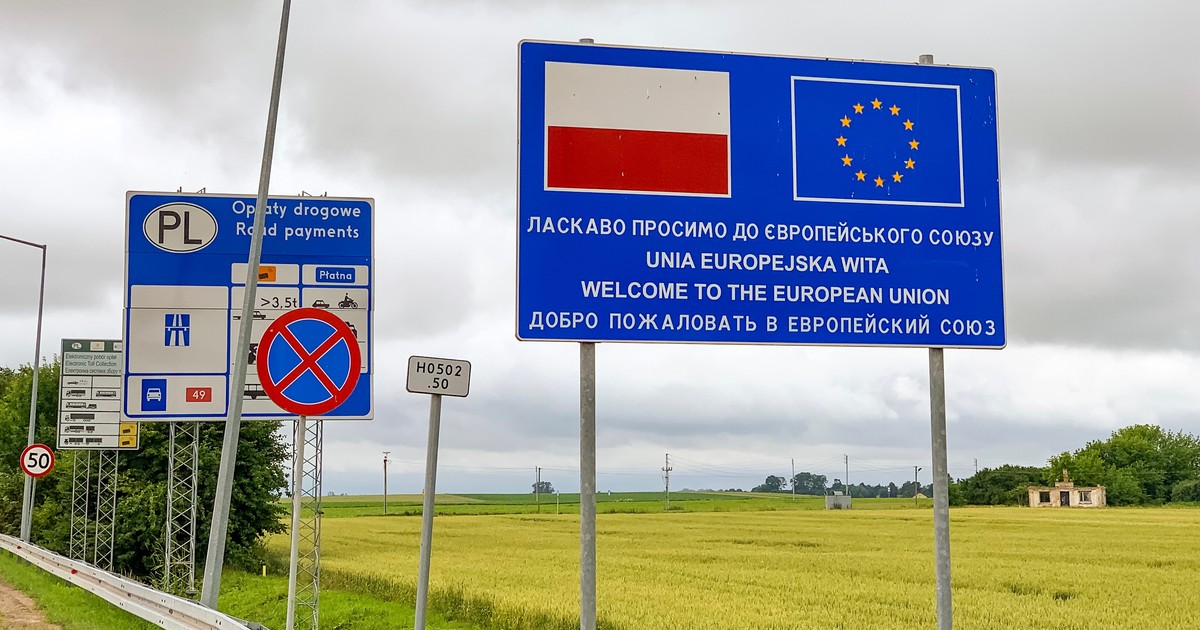
In the first half of 2025, a total of 149.1 thousand were received in the Central Register and Information on Economic Activity (CEIDG). applications for sole proprietorship registration. Among this number, the vast majority were Poles – as many as 127.6 thousand. applicants. At the same time, the number of applications from people with foreign citizenship was 21.5 thousand, maintaining the level from the previous year (21.8 thousand). In addition to foreigners, it also includes people with double citizenship, e.g. Polish-German or Polish-Ukrainian.
Adrian Parol, a restructuring advisor and legal advisor, notes that this percentage indicates interest in the Polish market among foreigners. Emphasizes that Foreign entrepreneurs often specialize in gastronomic establishments and stores offering products from their native cultures.
– As a result of the war, many Ukrainians found themselves in our area. They also want to run a business, including due to the sealing of the system. They decide to run, among others small gastronomic premises or the provision of transport services. They do not intend to function in a gray zone, which is successively shrinking. They definitely prefer to earn a legal way – he adds.
Mateusz Lewandowski from Employers of the Republic of Poland reminds that In the face of an aging society and a shortage of employees, the activity of immigrants, also in the field of entrepreneurship, is crucial for the competitiveness of the country.
See also: The famous thinker who coined the term “new Middle Ages”: Germans are waking up, but Poland is already running
The domination of Ukrainians among the applicants
In the analyzed period Ukrainians maintained the position of the leader, submitting 16.7 thousand. applications, which is a slight increase compared to 2024. As explained by Bartłomiej J. Gabryś from the University of Economics in Katowice, Ukrainians choose Poland, among others due to cultural and geographical closeness and no need to obtain additional permits. Facilitations such as a simplified legal system or market availability make the establishment of an economic activity a quick and effective solution.
“JDG is simplicity for Ukrainians the possibility of earning,” explains Dr. Gabryś.
In the following places of this ranking there are Belarusians – 1.4 thousand. (a year earlier – 1.8 thousand), as well as people with Polish and Ukrainian citizenship – 225 (195).
Next are Germany – 197 (previously – 242), people with Polish and German citizenship – 193 (196), and then Romani – 179 (213).
Behind them are people with Polish and Belarusian citizenship – 171 (165), Russians – 168 (175), Bulgarians – 144 (161), as well as Italians – 132 (110).
– In the case of Belarusians, you can talk about an analogous situation as with Ukrainians, i.e. there is also cultural and language similarity. As for the Germans, deep economic connections between these countries are important – analyzes Mateusz Lewandowski.
See also: “Indisputable red lamp”. The expert advises you to watch out for such jobs
In addition, as Dr. Bartłomiej J. Gabryś points out, Geographical closeness is a very important element of economic emigration. She makes individual people relatively easier to find themselves in Poland. They also do not have to allocate a significant part of the funds obtained for travel to their homeland. Such separation is less painful for them. And if something undesirable on one or on the other side of the border happened, they can react relatively quickly. This applies not only to Ukrainians.
– People with double citizenship often have social and cultural capital, which facilitates their efficient functioning in two systems. However, the presence in the ranking of Romanians, Bulgarians or Italy may indicate that not only geographical closeness or political situation is important. The fact of belonging to the common EU market is also important. Often also the abovementioned Connotation is caused by a family situation. However, not all citizens of EU countries are economically active in our country – sums up Alicja Woźniak, a lawyer from the ARE AEQUI office.