The domination of China over the rare lands gives Beijing a powerful advantage in trade, technology and strategic negotiations. Beijing uses the export control of raw materials to put pressure on the USA in ongoing commercial disputes.
In 1992, the Chinese leader DEng Xiaoping said: “The Middle East has oil and China has rare lands.” When he extinguished this opinion, he wanted to emphasize that although oil was rare in China, it The Middle Kingdom is rich in other, crucial for modern farm, deposits. Probably, however, he did not even think that today's Chinese leaders would use raw materials to exert such pressure on the United States and other Western countries.
In a situation where the administration of President Donald Trump is involved in an economic confrontation with China and threatens to introduce huge duties, Beijing uses the elements of rare lands and magnets as a weapon. In April, the Chinese government limited the supply of seven raw materials to the United States and other countries. The US almost entirely acquire the metals of rare lands from China (currently about 96 percent) – and, like other Western countries, found themselves in a situation almost without exit.
The US arms industry is facing serious interference in the production and supply of key weapon systems. It has already started. The problem also affects factories around the world.
The domination of China is reflected in the massive accumulation of raw materials from both domestic and foreign sources (in 2024, the Chinese rare metal reserves were the largest in the world), as well as in the production of rare lands, which accounts for almost 70 percent. global processing of these raw materials.
From 2000, China has invested billions of dollars in mines and processing plants. As in many other strategic industries, China used huge state subsidies, not paying attention to environmental standards and security, to extract raw materials at lower costs than Western competitors. This strategyallowed China to obtain a monopoly on the metals of rare lands.
To maintain his monopoly, Beijing used all the available means to extract as little metals of rare lands as possible, while also obtaining them from other countries. Currently, only a third of the rare lands produced and processed in China comes from domestic sources.
Beijing obtains two -thirds of these raw materials from abroad, of which over 60 percent He comes from Mjanma. They are cheaper than Chinese, because their deposits are located close to the surface, not deep underground. The geographical proximity of this country also allows you to reduce transport costs.
The so -called processed metals of rare lands are actually a “basket” of 17 elements. For example, China control almost 100 percent. world resources of disposal and terbu.
Continued article under video material
Australia, which cooperates with the United States, has the potential to become the second source of light metals of rare lands in the world after China. It provides 15-20 percent World Neodyym and Prazeodyym. However, Canberra admits that she is unlikely to be able to “fully replace” Chinese vans of all 17 elements of rare lands.
In recent years, despite the efforts to create their own mining and processing industries, the earth of these raw materials in the United States remained far from satisfying demand.
Militarization of rare earth elements
In 2018, during the first term of Trump's administration, China began to impose inspections on global export of rare lands, which was mainly affected by the US military industry. Nevertheless The United States did not create their own rare -rare metal supply chain.
In December 2023, when the US president was Joe Biden, the Chinese authorities imposed strict control of exports of technology for processing and refining of rare lands. This year, several additional regulations have been introduced, which even more limit the export of rare lands to use these raw materials as a tender card in negotiations with Western countries, especially the United States, in exchange for things that Beijing urgently needs, such as advanced microchips or markets for Chinese products.
As the largest producer in the world, China is the main goal of President Trump's trade war, and the US trade deficit with China is huge. President Trump believes that this imbalance has led to the disappearance of some industries in the USA.
However, it seems that he underestimated his opponent's strength in the trade war.
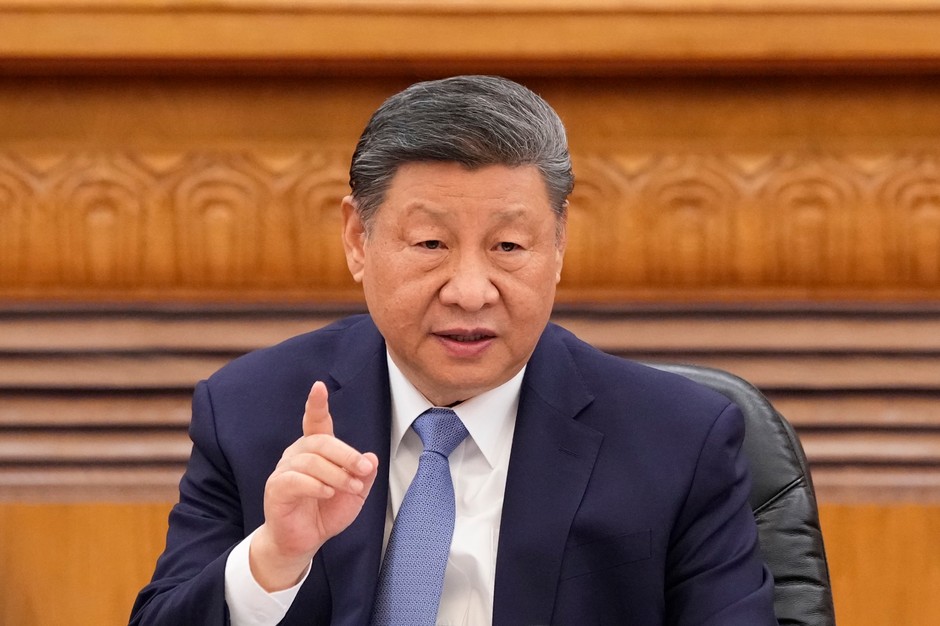
The chairman of the People's Republic of China Xi Jinping has experience in the trade war during the first term of Trump, and his position is clear: to conciliatory gestures he responds with conciliation, and to escalation – even greater determination.
XI JinpingKEN ISHII / POOL / GETTY IMAGES
So when in April President Trump announced an increase in duties on Chinese import, the Chinese Ministry of Trade decided to introduce a number of export restrictions on goods containing rare lands. In response to Chinese blackmail, Washington slightly softened the tone and extended the terms of commercial negotiations with China to prevent a more dramatic limitation of America's access to key raw materials.
The threat of imposing duties on Chinese goods by the United States reached 145 % in the spring of this year, and Chinese fees for American imports amounted to 125 percent. Ultimately, however, both parties withdrew from this threat. At the beginning of August, Washington's duties on Chinese goods were 30 percent, and Chinese fees for American goods – 10 percent. Nevertheless, these events disrupted trade between the United States and China.
On the side of the American element of rare lands, they are necessary for the automotive industry, as well as for the defense and technological sector. The American “Great Three”, or traditional leaders of the national automotive segment (General Motors, Ford and Chrysler), stood in the face of disturbances in the supply and production chain, when Chinese restrictions on rare earth elements have been sharpened.
A very troublesome control system developed by Beijing requires submitting applications for export several times a year. This not only extends company supply cycles, but also undermines the trust of international customers in Chinese supplies.
For their part, Chinese officials seemingly approve the export of rare metals to three main American car manufacturers, but only in enough for a few months. China also limited the export of some magnets, hindering the production of Western manufacturers of electric vehicles.
“China's goal is clear”
In this commercial dispute, it seems that Trump has given way to the first. At the beginning of May in Geneva there were talks between the United States and China, as a result of which the parties agreed that for 90 days they would suspend most mutual duties. In June in London there were further talks about customs. The abolition of the restrictions has been extended again in August.
The purpose of the use of rare lands by China as a weapon is clear – to force the White House not only to restore duties to the previous level, but also to abolish control over the export of advanced chips and relieving restrictions on Chinese students studying in the United States (especially in scientific and technical fields). Meanwhile, the control of rare metal exports struck primarily at the American arms.
The United States showed some readiness to cooperate in the field of chip exports, agreeing in August that American leaders of semiconductor industry, Nvidia and AMD, can export some advanced chips to China, provided that these companies will share 15 percent. revenues from sales with the US government.
Mini still a lot of time before the United States will be able to develop certain processing capacity in the field of rare lands.
In short, Trump's administration must realize that disconnecting from the Chinese chain of rare metal supplies will be very difficult to achieve during his term.
The most likely scenario for the development of events is that China will remain a leader in the field of rare land metals
Beijing will keep the monopoly for at least a decade. Because Beijing uses the metals of rare lands as a weapon, Washington is forced to further alleviate his policy towards China. As a result, the United States will not be able to disconnect from China as fully as they want. The United States may be able to maintain an advantage in some technological areas, but America's domination in the global economic order and its geopolitical primacy will weaken.
The elements of rare lands will become a real advantage of China, which they will be able to use for decades. Nevertheless, Beijing's policy can have the opposite effect, because it already has great dissatisfaction among Western non -military enterprises and representatives of the American defense industry.
I’m Ashley Davis as an editor, I’m committed to upholding the highest standards of integrity and accuracy in every piece we publish. My work is driven by curiosity, a passion for truth, and a belief that journalism plays a crucial role in shaping public discourse. I strive to tell stories that not only inform but also inspire action and conversation.