The White House analyzes an uncomfortable location for Kyiv for Zelenski-Putin negotiations. Russia and US betrayed the pact signed there


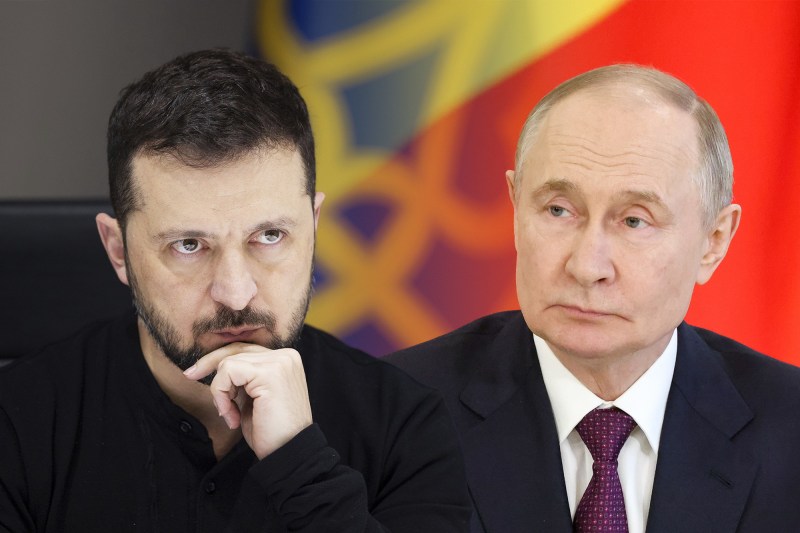
Volodimir Zelenski and Vladimir Putin. Collage: Ion Mateș / Hotnews. Photo: Profimedia, Shutterstock
The White House is planning a possible trilateral meeting between the Presidents of the US, Russia and Ukraine in the Hungarian capital, Budapest, as a next step in negotiations for the end of the war that lasts three and a half years, according to a Trump administration and a person close to the Washington administration, writes the American edition of Politico.
According to Politico, Secret Service is preparing for the summit in the Eastern European Country led by nationalist prime minister Victor Orban, a close relative of President Donald Trump from his first term.
A white house spokesman did not immediately respond to the request to provide a point of view.
Although Secret Service often researchs several locations and the final place of the meeting can change, Budapest is outlined as the first option for the White House, the two people said, who wanted to remain anonymous to discuss the private conversations they had access to.
Russian President Vladimir Putin told Trump that Moscow prefers, and French President Emmanuel Macron insisted on Geneva as an ideal place for the meeting.
Also, the Swiss Foreign Minister promised Putin “immunity” in front of the international arrest warrant, issued on his behalf by the International Criminal Court (CPI) for war crimes, if the nation known for its neutrality will be chosen for peace negotiations.
In contrast, for Kiev, Hungary would be an uncomfortable choice, because it reminds of the Budapest Memorandum in 1994, by which the US, the United Kingdom and Russia have promised to respect the independence, sovereignty and borders of Ukraine in exchange for giving up nuclear weapons.
Putin's attack on Ukraine in 2014, when he illegally annexed the Crimea Peninsula, showed that the agreement was meaningless, as none of the signatories provided military forces to counteract Russia's movement.
Putin proposed that Zelenski came to Moscow for negotiations
Russian President Vladimir Putin proposed, in the telephone discussion with the American leader Donald Trump on Monday evening, to organize a bilateral meeting with Ukrainian President Volodimir Zelenski in Moscow, who immediately refused to come to the Russian capital, two sources quoted by AFP said on Tuesday.
“Putin mentioned Moscow” in this call on Monday, but the Ukrainian president, who was at that time at the White House with the group of European leaders, “replied” no “, according to one of the sources.
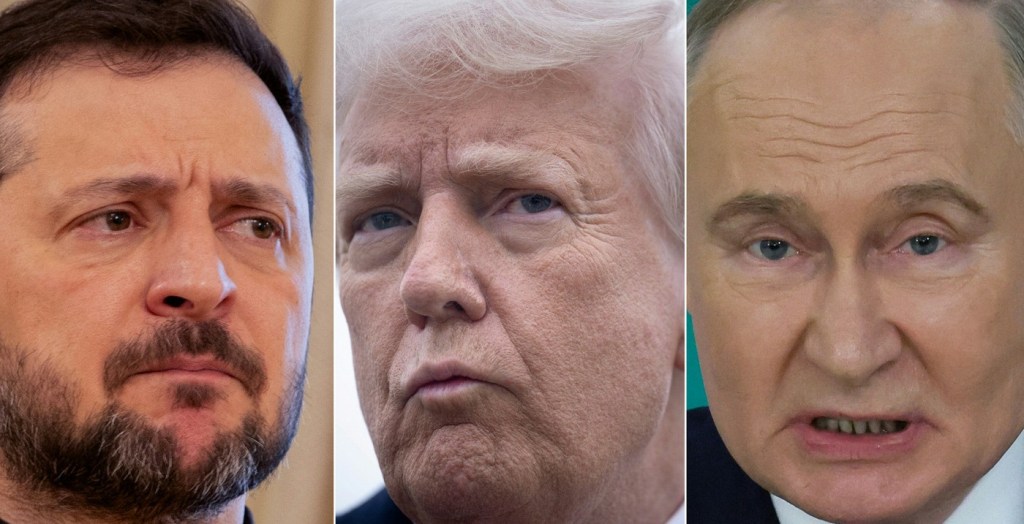 Putin suggested Moscow as a location for the summit with Zelenski, in discussion with Trump. The reaction of the Ukrainian president and European leaders
The US president interrupted his meeting at the White House with Zelenski and the European leaders' group to call Putin.
After the summit had this on Friday in Alaska, concluded according to the two with some progress to the negotiated resolution of the Russian-Ukrainian war, although there were no concrete results, the US president's intention was that after the discussion that followed Zenski in Washington a Trilateral Trilateral Summit was held.
However, after the telephone call with Putin, the leader from the White House announced that he was working on organizing a Putin-Zenski bilateral meeting first and only after that, the desired trilateral would be held, Agerpres notes.
Russian presidential counselor Iuri Usakov said that Putin and Trump discussed in their conversation Monday evening the possibility of “increasing the level of representation of Ukrainian and Russian parties” in bilateral negotiations, without mentioning a future meeting between Putin and Zelenski, while the head of Russian diplomacy, Sergei Lavrov, must be a “Minute”.
Despite the optimistic note in which the Trump-Putin summit ended on Friday in Alaska and then at the White House Trump's meetings with Zelenski and the group of European leaders who came there to support the Ukrainian president, the divergences remain numerous and difficult to solve.
For example, Zelenski rejects any transfer of territories to Russia, which on its side rejects any troops from NATO countries as a security guarantee for Ukraine, while the latter European allies further provides all the support if it continues the war.