– If suddenly there are not enough materials from China, this can stop our plans for the defense industry – warned Jakob Kullik, a researcher from the Technical University of Chemnitz and an expert on politics in the field of rare lands.
The plan of the German chancellor, that the armed forces of his country become the “strongest conventional army in Europe”, is associated with unprecedented costs. Berlin undertook to spend hundreds of billions of euros on defense by 2029.thus breaking the decades of budget restrictions.
A significant part of these funds has already been allocated for this purpose. Orders for military vehicles are calculated in thousands, the production of rockets is gaining momentum, and the demand for ammunition is growing rapidly.
Armaments companies compete in the modernization of factories and reactivation of long -closed production lines, hoping for the revival of the industrial base, which declined after the end of the Cold War.
However, all this is based on a fragile foundation.
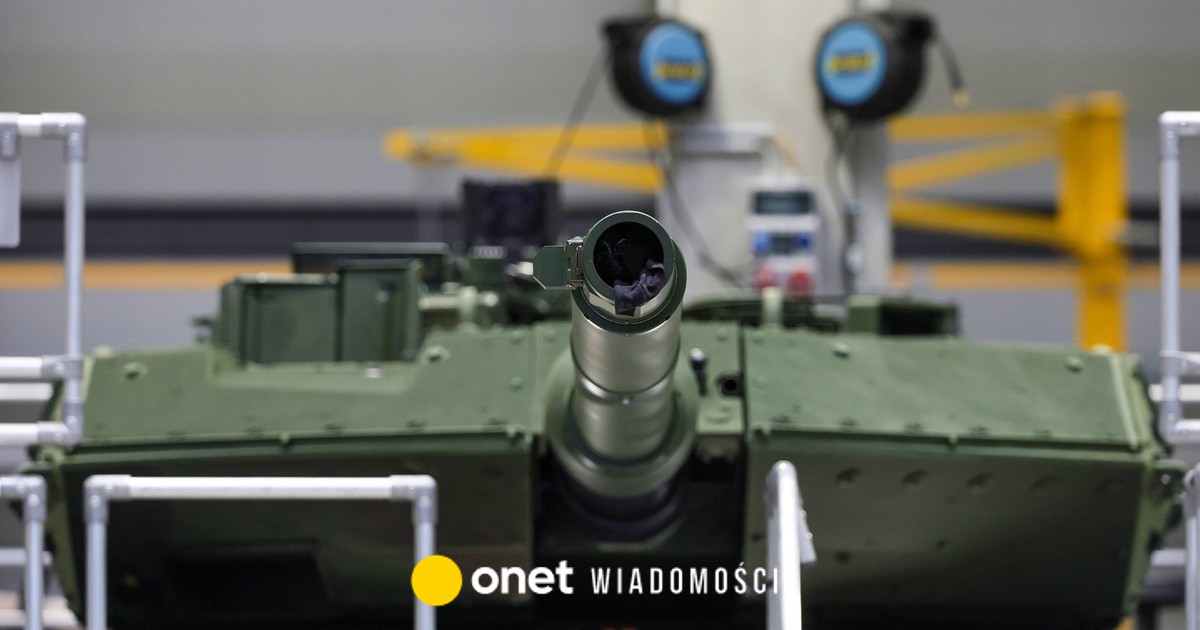
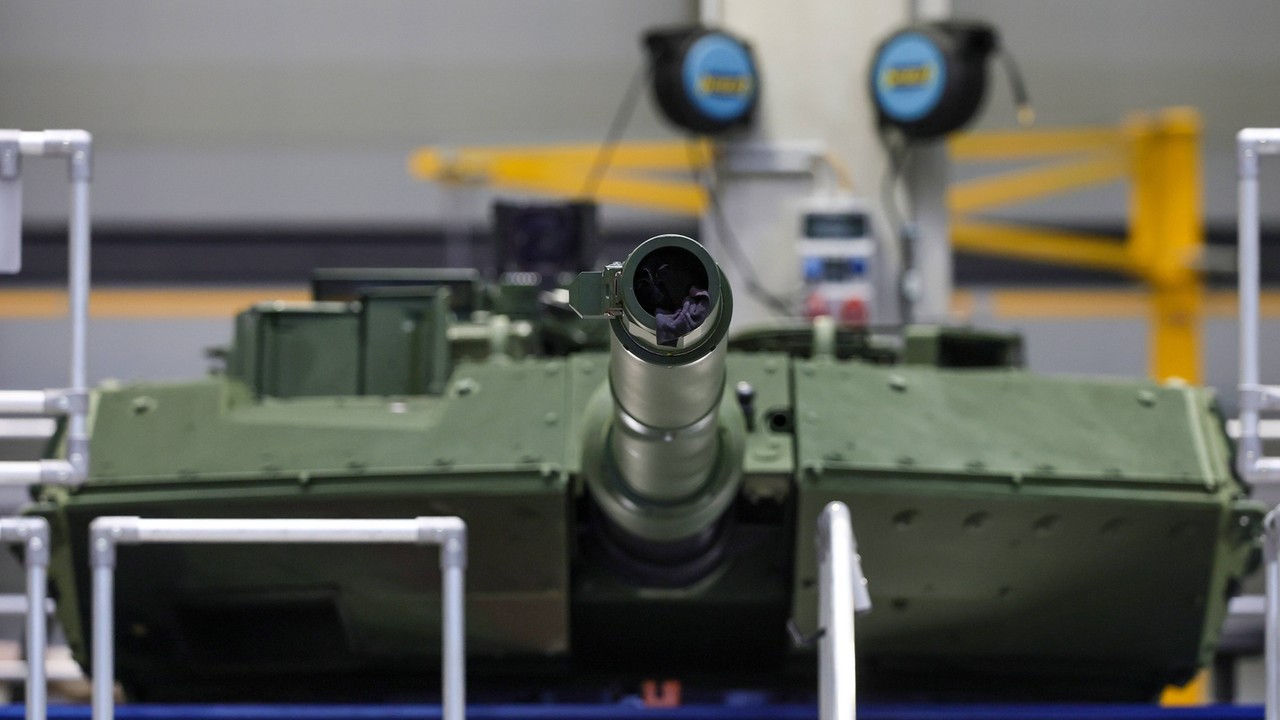
Each tank, bullet or drone ordered as part of the country's arms program depends on raw materials, whose names are known by few outside the defensive industry.
According to the German industry federation (BDI), the largest lobbying group for industry in the country, elements of rare lands, such as neody and disposal, as well as tungsten, graphite, titanium and high purity magnesium, form the basis of advanced military systems. They are used in radars, electrical engines, rocket stabilizers, thermal sight and drone drives – i.e. in elements of the modern war of the war.
Most of them come from China.
BDI warns that the EU imports 95 percent all strategic raw materials, and 90 percent of them comes from countries outside the EU. Germany practically does not process these raw materials. Meanwhile, China controls over 50 percent World processing of many key minerals, and in the case of some of them, such as Gal and German, even 86 percent.
The risk becomes the greater the more advanced the weapon. Eurofighter aircraft use strong, light titanium – processed mainly in China – for RAM production and special metals resistant to high temperature in engines. Rheinmetall has confirmed that its anti -tank missiles use tungsten cores.
In response to Politico questions, the German Ministry of Economy confirmed the risk of raw materials for the defense sector, but did not provide any specific data, referring to industry associations such as BDI.
The threat is not only theoretical. China actively limit the export of key raw materials to Western arms companies, causing delays in production and a rapid increase in costs in the entire industry. This is particularly worrying for the United Statesespecially after Beijing blocked the export of 11 key materials in response to duties imposed by Donald Trump – this restriction has already been lifted.
“From a macroeconomic point of view, this is a serious risk,” there is no doubt about it, “Kullik said. Even if Beijing maintains open exports, he warned, the structural relationship will remain. – All countries that use these technologies – France, Spain, Great Britain – depend on the same supply chains, and they all lead back to China.
Continued article under video material
EU too soft, Berlin is too slow
Although the EU promised to provide access to key minerals, Kullik claims that it did not draw the necessary strategic conclusions. “This is the only area that we in my opinion completely neglected – both in the EU and in Germany,” he said.
The legal framework on both sides of the Atlantic are diametrically different. Washington treats them as strategic assetsand the provisions such as the Defense Production Act allow the government to finance domestic mining, direct supply chains and give priority to defense needs in extraordinary situations. The United States maintains national reserves through the Defense Logistics Agency – a federal security network intended for crisis during the war. Still, they still need China.
Brussels, on the other hand, took a milder path: the Critical Raw materials Act sets up ambitious goals and frames, but leaves the real implementation of voluntary coordination between the Member States – without the central body responsible for enforcing the provisions. “We don't have state supplies, unlike gas or oil,” Kullik said. – I don't see this kind of preventive, strategic preparation yet.
Some Berlin legislators say that the current EU approach is simply insufficient.
Vanessa Undel from the Conservative Party of Christian Democrats, a member of the Bundestag Economic Committee, critically assesses the EU Act on critical raw materials, calling it well thought out, but ineffective. “He points out the problem, but he gets lost in bureaucracy,” she said. Instead, in her opinion, National governments must enter where Brussels hesitates – especially when it comes to defense.
According to Zwel, Germany's dependence on raw materials is a direct threat to national security. “Without safe supply chains, there can be no question of reliable military deterrence,” she said. – Such dependence in critical areas for safety is reckless.
Although Zwel, it supports the creation of domestic stocks, he considers it a short -term solution. “The strategic reserve makes sense in times of crisis, but every supply is limited,” she said. “If we want true immunity, we must introduce structural changes,” she added.
This means reactivating Germany's own resources. “We've been self -translated for too long,” she said, pointing to unused lithium deposits and political resistance to domestic mining. – Everyone who wants to have an resistant defense industry must allow extraction, approve service and prioritize financing – she emphasized.
The wider message is that Germany must stop relying on market forces and start thinking like a geopolitical subject. – Zeitenwende [niem. punkt zwrotny w historii] He must be reflected in our thinking – said Zwel, referring to the commitment of former Chancellor Olaf Scholz to a fundamental change in Germany's approach to security and defense after Russia's invasion of Ukraine. – Everything is political. Everything is strategic – the politician summed up.
I’m Ashley Davis as an editor, I’m committed to upholding the highest standards of integrity and accuracy in every piece we publish. My work is driven by curiosity, a passion for truth, and a belief that journalism plays a crucial role in shaping public discourse. I strive to tell stories that not only inform but also inspire action and conversation.