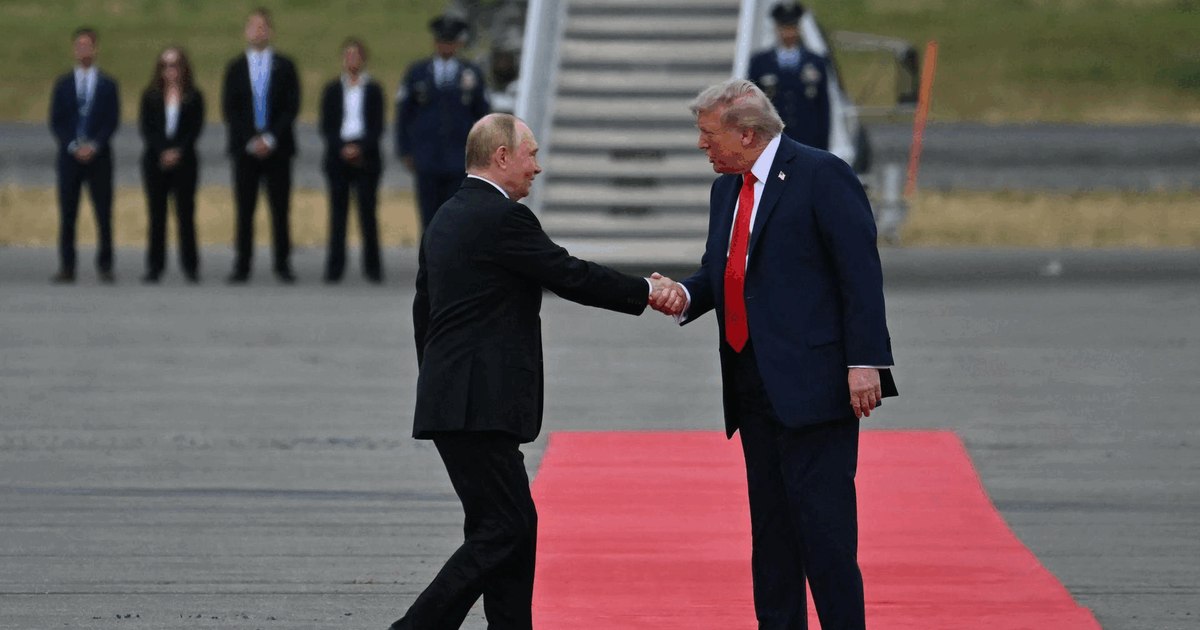
The meeting between US President Donald Trump and the Kremlin leader Vladimir Putin, held at the Elmendorf-Richardson military base, was, in the opinion of Ukrainian analysts, a demonstration of tactics and manipulation-in which a former Soviet spy knew exactly how to feed the ego in an united leader External, Al Jazeera reports.
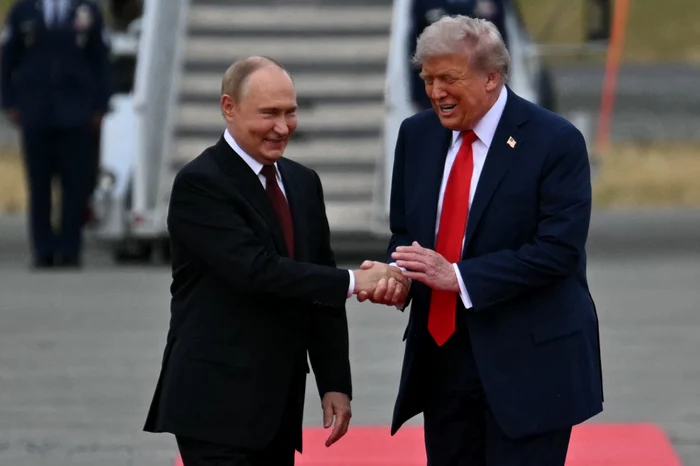
Vladimir Putin and Donald Trump, meeting in Alaska/Photo: AFP
“Putin knew how to play it,” says a Kiev political analyst, who preferred to stay anonymous. It is a manual lesson on how to build influence by carefully dosed lingering and power symbols.
He met with a wide smile and a protocol worthy of a state visit, Putin stepped on the red carpet prepared by the host and climbed into the American presidential limousine, “The Beast”, giving him a scene that the Kremlin will exploit propagandistic.
Fablet as a diplomatic weapon
Putin offered Trump what he seems to seek the most in politics: confirmation of his own greatness. During the press conference, the Russian leader reiterated the idea, frequently conveyed in Trumpist rhetoric, that the Ukraine war had been avoided if Donald Trump had won a second term in 2020.
“I am convinced that this would have been”said Putin, smiling, in front of the journalists.
This strategy to repeat and reformulate Trump's statements, to validate his statements and to put it at the center of the speech, was interpreted by Ukrainian analysts as a deliberate attempt by manipulation.
“Putin offered exactly the food that a narcissist needs: echo, confirmation, attention focused exclusively on it”, emphasizes the Ukrainian analyst, who has contributed to reports for the US Congress on Eastern Europe conflict.
A summit without content but with many implications
Beyond the media show, the meeting did not produce anything concrete: no agreement, no position change, not even a negotiation calendar.
“It was agreed that there would be discussions”Trump said. A formulation that, although ambiguous, allows the Kremlin to suggest that the dialogue with Washington is open – even if against an active military aggression against a sovereign state.
Putin spoke twice as much as Trump in the conference, adding a history lesson about Alaska and reminiscent of Soviet-American partnership in World War II-an attempt to remind a period when Russia and the US appeared as allies.
The refusal of the two leaders to answer the journalists' questions was perceived as a clear sign that the summit was rather an image movement than a round of real negotiations.
Ukraine, between realpolitik and marginalization
For Ukraine, the messages transmitted indirectly are worrying. The fact that a leader accused of war crimes was received with honors on the American territory is equivalent, in the opinion of General Ihor Romannko, a former deputy of the General Staff, with “unacceptable legitimation.”
“Putin was symbolically rehabilitated, at a time when it should be liable for military aggression and crimes committed”, he told Al Jazeera.
The general emphasizes that Trump did not come up with any firm proposal on an armistice and did not reiterate the policy of sanctions against Russia.
“The fight will continue. Until Trump finds his political will – if he ever finds it,” adds Romannko.
China – the elephant in the room
The discussions behind the closed doors included, according to Ukrainian analysts, another hot topic: the geopolitical balance in relation to China. Russia would have tried to provide America with a counterparty economic and strategic cooperation for political concessions that would strengthen its global status.
“For Kremlin, Ukraine is only a chapter in a larger file-that of Russia's repositioning as a stand-alone geopolitical pole.”says Igar Tișkevici, an analyst from Kiev.
However, neither Washington nor Beijing seem to recognize this status to Moscow. But the fact that such negotiations exist, even informally, questions the US commitment to a complete victory of Ukraine.
What follows?
In the absence of clear guarantees, Kiev is expected to intensify the attacks with rockets and drones, but also to a possible acceleration of internal mobilization. Ukrainian strategies claim that there is a need for “full and equitable mobilization” and reorienting the economy to the war effort.
The Anchorage summit has not changed the course of the war – but has transmitted important messages about how Russia builds its influence and how fragile the international solidarity remains when it is face to face with personal political interests.