August 15. The day Grigore Gheba was born. The story of the life of the best known author of mathematics collections in Romania

The day of August 15 marks throughout history a serge of important events, from the execution of the Romanian ruler Constantin Brâncoveanu and his sons, to the birth of the most well-known author of mathematics collections, Grigore Gheba.
1714 – the execution of Constantin Brâncoveanu and his sons
Lord of the Romanian Country for 26 years, Constantin Brâncoveanu had a tragic end, which placed among the saints.
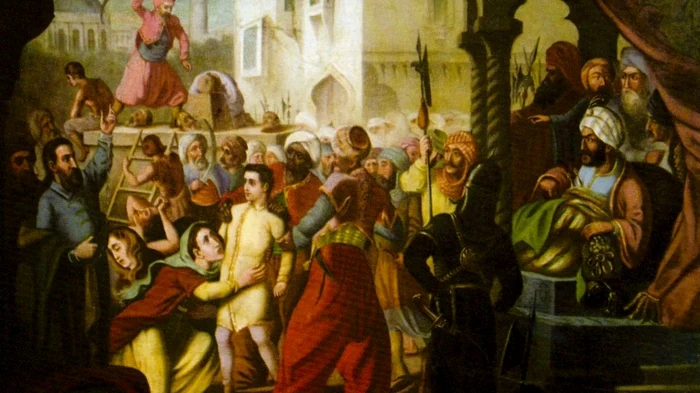
Brâncoveni martyrs. Photo: Archive
On the day he turned 60, after months of suffering in the Ottoman prison, he was beheaded on the Bosphorus's shore with his four sons and his son-in-law, after he refused to give up Christianity, to save his own life and that of his sons. Their bodies were secretly recovered and buried, and the tomb remained unknown for two centuries.
1769: Napoleon Bonaparte was born
Born on August 15, 1769, Napoleon Bonaparte prevailed during the French Republic, leading the military campaigns against the coalitions that threatened France. In 1799, he took the power by coup, becoming the first consul, and in 1804 he crowned the emperor. He dominated Europe through a series of victories, but Russia's invasion in 1812 brought him great losses.
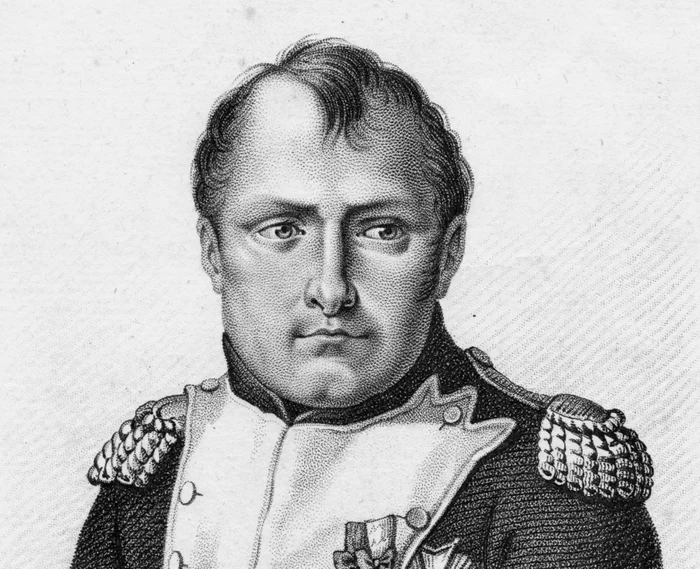
Napoleon Bonaparte ended on the island of Saint Elena. Photo: Archive
Defeated in Leipzig in 1813 and forced to abdicate in 1814, he was exiled to Elba, from where he escaped to return to power, being permanently defeated at Waterloo in 1815.
He died in exile on the island of Saint Elena, of stomach cancer, but there are still theories that they say would have been poisoned.
1806: The cornerstone of the Arc de Triomphe in Paris was laid
Inspired by the speech of Napoleon after the battle of Austerlitz, the decree for lifting the arc was issued in 1806, and the foundation stone laid on August 15, on the same year. The works were interrupted after 1815, resumed in 1826 and completed in 1836 under Ludovic-Filip, with representative sculptures such as “La Marsillaise” and “triumph of 1810”.
The arch was inaugurated on July 29, 1836 to celebrate the “July Revolution”.
1865: was born Mikao Usui, the founder of Reiki
On August 15, 1865, the Japanese Mikao Usui, the Creator Reiki, was born, a spiritual practice used for complementary therapies that treat mental and emotional conditions. He founded the Usui Reiki Ryoho Association and trained over 2000 students, thus spreading this method in the world.
1881: Alexandru Golescu died
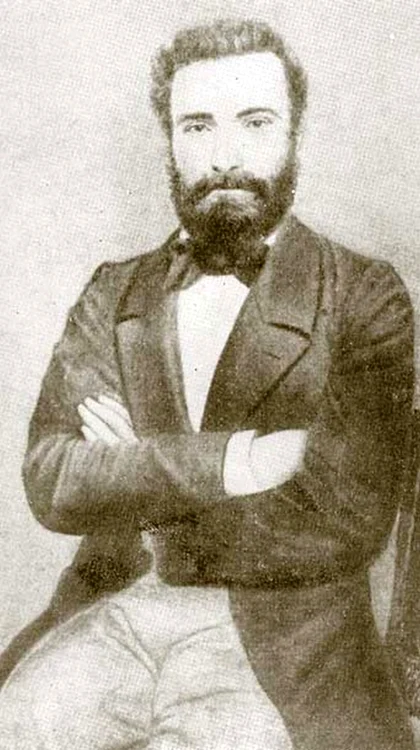
Alexandru Golescu supported the release of the servants. Photo: Archive
Active participant in the Revolution of 1848 and Prime Minister in 1870, Alexandru Golescu was a supporter of the liberation of the peasantry from servitude and appropriation.
He came from an influential family and founded secret societies for political reforms. He studied in Paris and had an important impact on Romanian political life.
1888: The daily “Adevărul” appeared to be published
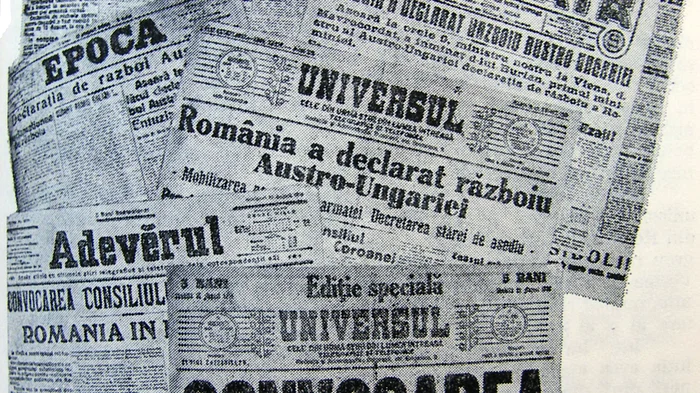
Photo: Archive
Founded by Alexandru Beldiman, “Adevărul” is one of the most long -standing Romanian newspapers, with a history marked by prohibitions and rebirths.
Although the year of birth of the newspaper is 1888, Alexandru Beldiman, the founder of the daily, tried to give birth to a publication of the same name since 1871. Thus, on December 15, 1871 he saw the light of the pattern, in Iasi, the weekly “Adeverul”, which appeared every Wednesday, but had a short life, only a short life.
Between these data, a short and troubled history is written: Alexandru Beldiman was sued for the antidinastic content of the newspaper, but was paid by a jury chaired by Vasile Alecsandri.
In 1888, on August 15, with the financial support of Cuza's son, Alexandru Beldiman brought out the publication again, this time with daily appearance. In 1916, the publication disappears, as a result of Romania's entry into World War I, and reappears at the beginning of 1919.
In 1937, the “truth” is forbidden by the Octavian Goga – AC Cuza government and resumed nine years later. For a short period, however, because on March 31, 1951, the communist regime suppresses the emergence of this newspaper.
“Adevărul” reappears on December 25, 1989, having, from then until today, an uninterrupted presence on the media market in Romania.
1914: It was inaugurated to the Panama Canal
The Panama channel, built through French and American efforts, connects Atlantic and Pacific oceans, considerably shortening the maritime routes. The works were difficult, with numerous victims, but the channel has radically changed trade and navigation.
However, the history of the Panama Canal is an older one, the concept of such a channel existing since the beginning of the sixteenth century and a first construction attempt starting with 1880, under the leadership of French Ferdinand de Lesseps.
After this attempt failed, the project was finally completed by the United States, and the channel opened in 1914, Wikipedia notes.
According to the same source, the construction of the Panama Canal, which is 77 kilometers long, was not easy at all, in a period when diseases such as malaria and yellow fever were ravaging among workers and massive landslides made the project. It is estimated that up to 27,500 workers died in the construction of the channel.
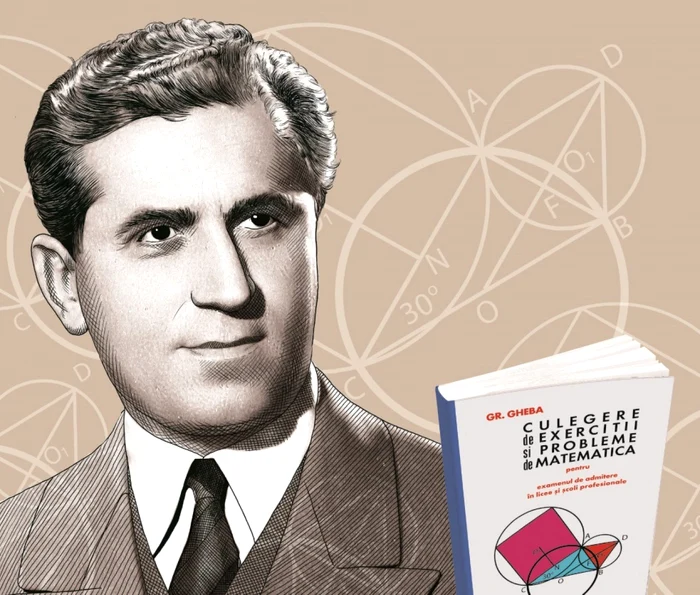
1912: The famous Romanian mathematician Grigore Gheba was born.
Renowned for his mathematics collections, Grigore Gheba had a life marked by war, prisoner and conflicts with the communist authorities. He dedicated his entire life to mathematical education, contributing to the education of millions of students with his textbooks.
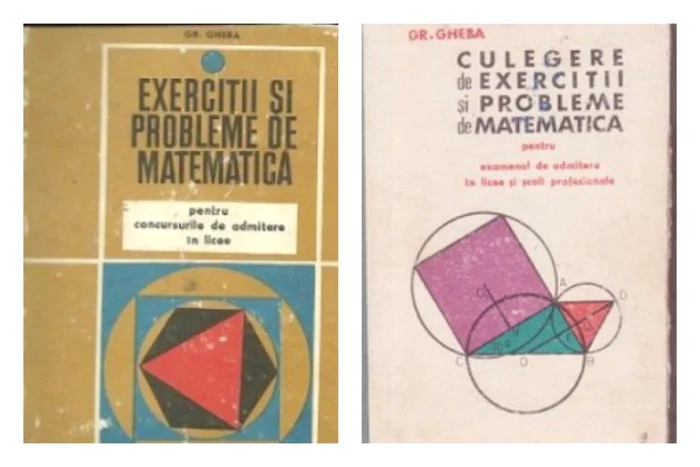
The whole generations learned mathematics from the collections signed by Grigore Gheba. Photo: Archive
Grigore Gheba is considered, without doubt, the most important author of mathematics collections in Romania. Few know, however, that his destiny was full of difficulties, and in 1975 his fame reached such a high level that the communist authorities forbade him to publish the collections.
Grigore Gheba's life was marked by harsh experiences during World War II. As an army general at the beginning of the war, he fought on the front in the artillery, in the Transnistria region, where he was employed in confrontations with the Russian army. In 1942, he was captured and passed through three prisoners, including those in Siberia, an extremely painful and difficult experience, and when he escaped there he enrolled in the Tudor Vladimirescu Division, a Romanian unity that fought against the German troops.
Throughout the war, he was injured twice and received eight decorations for his courage.
A tragic moment in his life was the participation in the battle of Don's elbow, a military operation that resulted in over 150,000 victims among Romanian soldiers. Grigore Gheba was fortunate to escape alive, but was taken by the Russians and was held captive for a whole year.
After the end of the war, he was appointed prefect of Râmnicu-Sărat county in 1947, a period when Romania was still crossing troubled times. However, due to strong conflicts with the communist authorities, who insist on co-opting him among the Romanian Communist Party, he constantly refused to become a member and eventually resigned from this position. Thus, he chose to dedicate himself with passion.
After this unsuccessful administrative experience, Gheba attended the courses of the Faculty of Mathematics of the University of Bucharest, where he deepened his knowledge and strengthened his passion for mathematics.
His first math collection was published in 1958, and the last one appeared in 2004, when Gheba was already 91 years old, thus demonstrating an exceptional longevity and an uninterrupted dedication to this science.
Its fame reached its peak in the 1970s, especially in 1975, before the prohibition was imposed. In his book “Between life and death”, Grigore Gheba confesses with emotion and sincerity: “My passion for mathematics subjugated me by the child, marking my whole existence. As a student, and later as a teacher, I did not reconcile with the superficial acquisition of the mathematics, but especially with the presentation by the teachers, who certainly respected the textbooks, unclear and confusing, full of errors.”
This criticism of didactic methodology actually motivated the activity of Grigore Gheba, and from the 1950s, almost no student in Romania was deprived of a collection signed by him. It was even said that Gheba “took all the students in the country”, due to the exceptional quality and clarity of his collections for the secondary education.
At that time, all the math hours of teachers in Romania were almost exclusively on the basis of Gheba's collections, and the students were so involved that “they dreamed of the problems in Gheba's collection,” as many of those who learned after his work.
In his impressive career, Grigore Gheba wrote no less than 34 collections, which were sold in total prints that exceeded six million copies, an impressive record for Romania.
In an interview, he explained with modesty and clarity his deep motivation: “I wanted the students to understand mathematics. To understand it as an exercise in the mind. And the brain needs gymnastics. Otherwise, you assimilate anything. That's what I learned from the scientist Moisil, who was a counselor.”
Thus, Grigore Gheba remains an emblematic figure of Romanian education, a man who knew how to combine the harsh experiences of life with the passion for mathematics and with the sincere desire to convey knowledge in a clear and accessible way.
1916: Germany declares war on Romania
Under the pressure of an ultimatum, Romania enters the First World War with Antanta. Although he gets initial successes, the army suffers major defeats that lead to the government's refuge in Moldova and occupying a large part of the territory by enemies.
1931: The communist newspaper “Scînteia” appeared
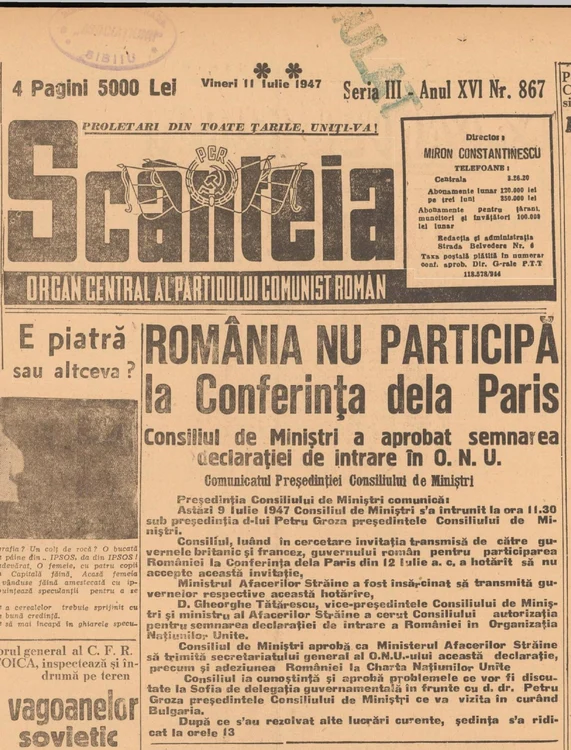
Photo: Archive
The official body of the Romanian Communist Party, “Scînteia” appeared in 1931 and marked the political and cultural life of the country until 1989. The huge prints and the propagandistic role made it a symbol of the communist regime.
1947: Monetary reform in Romania
On August 15, 1947, a new reform changed the old currency with new lei, the ratio being 20,000 old lei for 1 new lion and applying different limits depending on the profession and social conditions. Thus, the families of peasants could change the most 5 million lei, and if they had the proof that they delivered to the state the share of products were allowed to change addition to 2.5 million. The employees, the pensioners and those with the officially recognized liberal professions had the right to change 3 million lei, and the rest of the population, 1.5 million old lei. The unchanged amounts were blocked, seriously affecting the Romanian economies.
1992: The beloved artist Anda Călugăreanu died
Known for the activity in light music and folk, Anda Călugăreanu was a loved presence on the Romanian stage. He has collaborated with famous bands and artists, participating in numerous festivals and tournaments in the country and abroad.
The first more important appearance was with the synchronous band, at the Palace Hall in Bucharest, in 1965, but for years he collaborated for years at the “Flacăra” Cenacle. A long time formed, together with the actors Dan Tufaru, with whom she was married, and Florian Pittiș, a musical-cultistic trio, which, directed by Alexandru Bocăneț, was one of the attractions of the TV shows. It is also famous with his couplings along with another great Romanian actor, Toma Caragiu.