What will happen on Friday arouses an aura of uncertainty and reminds about the historical meeting of the British Prime Minister Nevil Chamberlain and Adolf Hitler on September 29-30, 1938 in Munich.
After the Munich dictate, concluded by European powers – France, Great Britain, Italy and Germany – nothing was the same in Europe.
The question related to the Munich System, which should now persecute European leaders, is: could Hitler be stopped without giving him Czechoslovakia?
The situation at that time is twin similar to the current one. Will Putin go away if Trump “gives away” part of Ukraine?
In 1938, Nazi Germany annexed Austria. Hitler wanted to do the same with a part of Czechoslovakia.
Great Britain joined the case, headed by Neville Chamberlain. He convinced allies to conclude an agreement with Germany, in which Germany's law was recognized to part of Czechoslovakia. The local government had no choice but to capitulate before Hitler.
Germany quickly occupied Czechoslovakia. For Europeans it became clear that Poland would be the next goal, but it was too late. They agreed to the “Pact with the Devil”.
Continuation of the material under the video
New “big two”
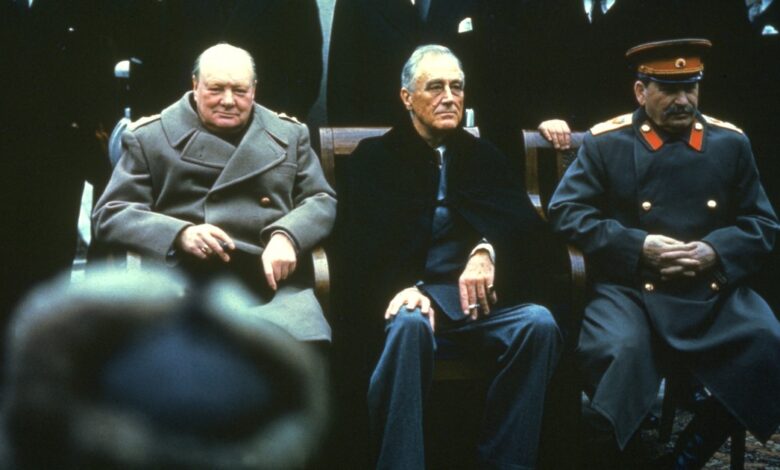
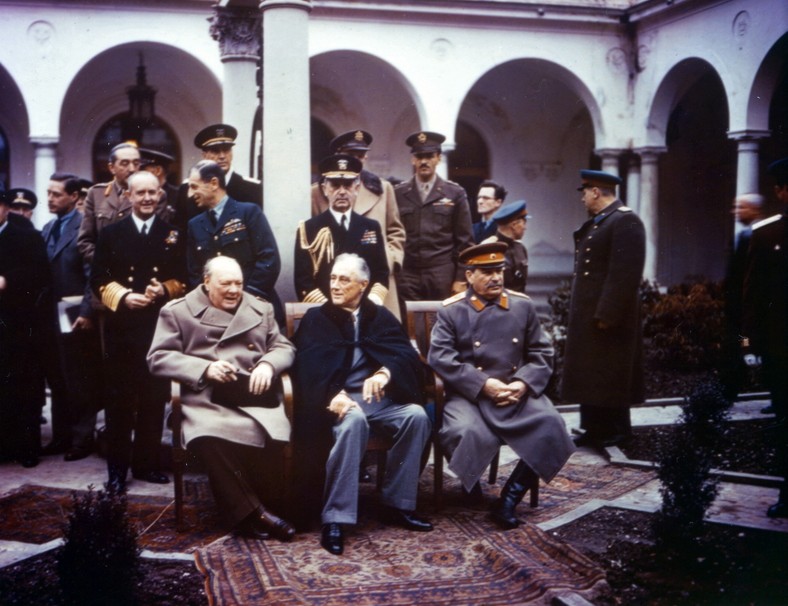
Another similarity to events from the dark history of Europe concerns the conference in Yalta. Then the “Great Three” – Józef Stalin, Winston Churchill and Franklin Roosevelt – met to divide post -war Europe.
The key issue that the leaders of the powers sought to was the defeat of Nazi Germany. They concluded an agreement on Hitler's capitulation – they wanted to divide Germany between the USA, Great Britain, the USSR and France.
The judgment of Nazi criminals was also prevailed. Nuremberg trials were conducted in 1945-1949.
Although the direct “division of Europe” was not part of the official agreement with Yalta, it is clear that Stalin, Churchill and Roosevelt agreed the influence zones. Stalin insisted that his dominant role in Eastern Europe be recognized, especially in Poland, Romania, Bulgaria, Hungary and in the Baltic States.
“Great Three” – Winston Churchill, Franklin Delano Roosevelt and Józef Stalin – at the Yalta conference, February 1945.
Western forces, despite Churchill's objection, eventually agreed to these findings. The most disputed issue was the fate of Poland. Stalin wanted the Polish border to be moved west, i.e. that the USSR would keep eastern Poland (today's Western Ukraine and Belarus), and Warsaw received part of the German territory in the West (Silesia, Pomerania).
In Yalta, the members of the “Great Three” also agreed on the framework of the future United Nations organization.
The consequences of the negotiations of the powers are well known. The Eastern Block remained under Soviet dominance. A cold war began. After the war, Moscow and Washington quickly entered the logic of the competition.
The consequences of the agreement, which can be concluded in Alaska on August 15, are unpredictable at the moment. According to journalists of the Swiss website, “Blick.Ch” Putin will announce victory. Each contract concluded by the Kremlin will most likely be used to escalate subsequent demands in the future.
– Russia cannot afford a fair peace. It is far from achieving its strategic goals and made war an existential issue – both for Ukraine and the Kremlin – writes the Finnish analyst Joni Askola.
I’m Ashley Davis as an editor, I’m committed to upholding the highest standards of integrity and accuracy in every piece we publish. My work is driven by curiosity, a passion for truth, and a belief that journalism plays a crucial role in shaping public discourse. I strive to tell stories that not only inform but also inspire action and conversation.