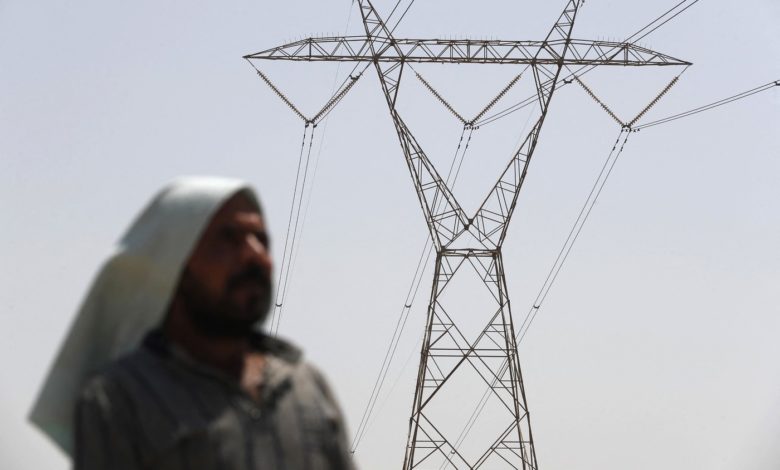
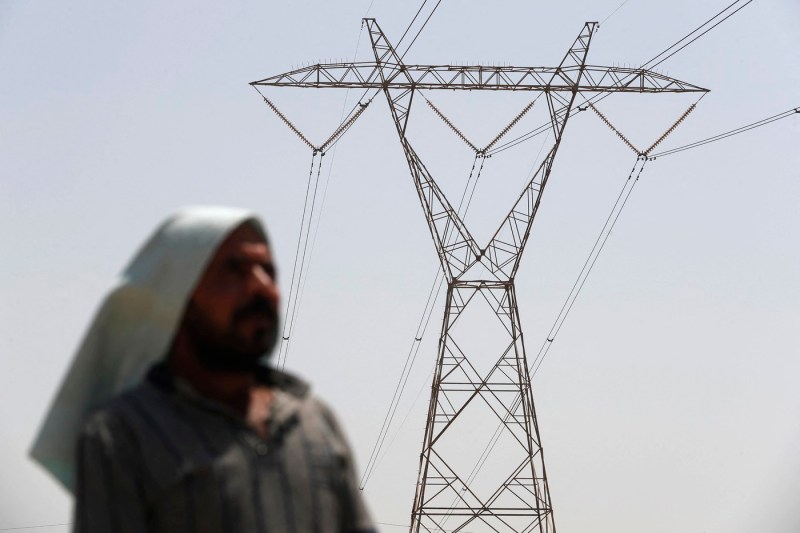
More frequent current feathers in Iraq. Photo: Ahmad al-Uubaye / AFP / Profimedia
The Iraq's electricity network faced a “total wedge” caused by “a record temperature rise” on Monday, as well as an increase in consumption, which led to stopping two transmission lines, the Ministry of Energy announced, according to AFP.
Although many of the homes could continue to feed with the help of the generators, until the current occurred in the context of temperatures that reached 50 degrees Celsius in the capital Baghdad and 11 provinces in the center and south of the country.
According to the quoted ministry, a significant increase in demand is mainly registered in the Kerbala province, where millions of pilgrims go to the holy city on the occasion of the important religious commemoration.
“Our teams are currently mobilized on the field to progressively restore the network in the next few hours,” the Ministry of Energy said in a statement.
According to the Iraqi ministry, against the backdrop of temperatures, as well as the demand, two transmission lines did not work, “causing a sudden and accidental loss on the network of over 6,000 megawatts”, an incident that determined a total wedge and the cessation of the operation of the power plant.
This heat wave will take more than a week, according to weather services.
“Iraq is currently facing more and more intense and frequent heat waves” compared to the 20th century, explained for AFP the spokesman for the weather services, Amer Al-Jaberi, mentioning the climatic changes and human factors.
He stressed that the gas emissions and the smoke released by private generators “contribute to the increase of temperatures”.
Al-Jaburi advocates for “a green belt” around Baghdad, so that the city “can breathe a little”.
The subject of electricity is ultra-sensitive in Iraq, where more and more severe power features cause manifestations and exacerbates the dissatisfaction of the population to the elites in power.
In July 2023, a fire broke out at a transmission station in southern Iraq caused a generalized current wedge.
If the vast majority of Iraqis have resorted to private generators, this source of electricity is not always sufficient for the operation of appliances, especially of air conditioners.
In order to no longer have power feathers, Iraq should produce about 55,000 MW during the peak periods of consumption. This month, for the first time, Iraqi power plants reached the 28,000 MW threshold.