
“As during the Cold War.” Controls reintroduced to the German-Polish border: “We got used to something else. Europe can offer something different”

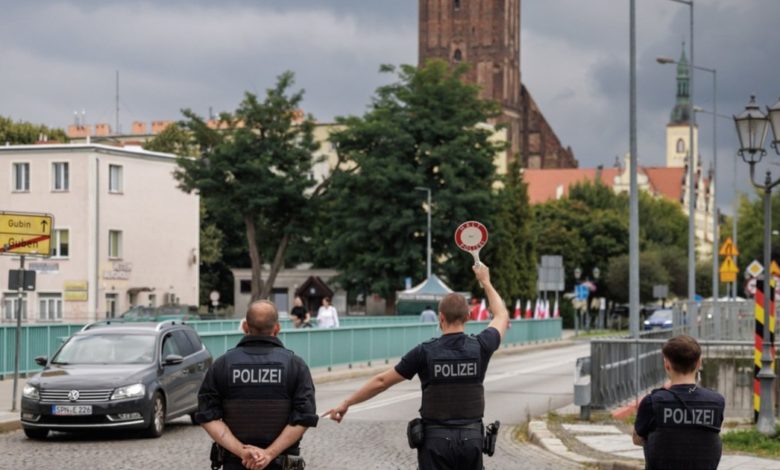
For several weeks, the inhabitants of two twin cities on the Polish-German border are accustomed to an unusual image: guards posted on both ends of the 68-meter bridge connecting Guben, on the German, and Gubin, on the Polish side.
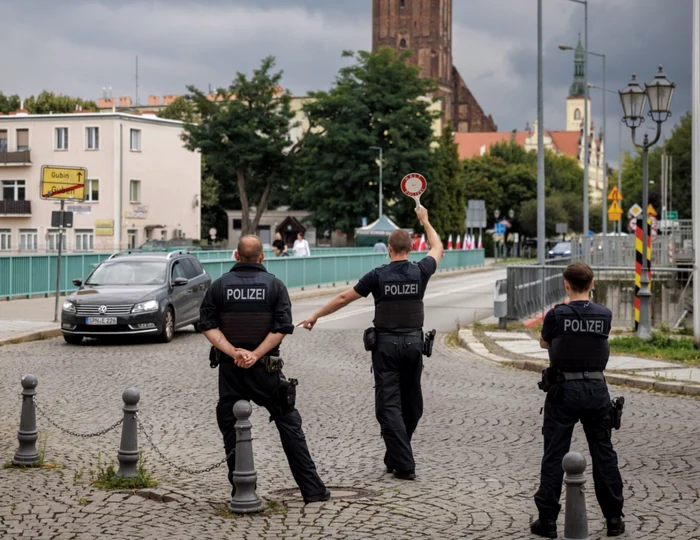
Controls reintroduced to the German-Polish Border Photo: X
The border between Poland and Germany, which was drawn along the Neisse river in 1945 and divided the city of Guben into two, was not a long time a barrier to the locals who passed the daily bridge on the side of the border. Now, the bridge has again become a symbol of the division, against the background of intensifying the dispute between Berlin and Warsaw on asylum seekers, in the context of increasing the anti-immigration feeling.
Last month, in a rare case from the accession to the Schengen free circulation area in 2007, Poland reintroduced the controls on the border with Germany, in response to the restrictive measures taken by Berlin in May, according to the Financial Times.
Caught in a conflict between the governments of Berlin and Warsaw, the mayor of Guben, Fred Mahro, was saddened by the image of the guards “Which looked at each other as during the Cold War.”
“We have become accustomed to something else, Europe can offer something different. he said.
Old wounds also reappeared: this month, on the Polish side of the bridge, flags and banners were flown to commemorate the Revolt of Warsaw of 1944, stifled by the Nazi forces. “This is the first time this happens,” said Zbigniew Bołoczko, the mayor of Gubin.
Merz has strengthened controls to prohibit asylum seekers entering
After taking over the position in May, German Chancellor Friedrich Merz strengthened controls to prohibit the asylum seekers. He had promised to tighten the restrictions after a migrant stabbed a child shortly before the elections and in an attempt to win votes from the far -right party for Germany, who ran on a mass deportation platform.
Its restrictive measures were taken a few weeks before the Polish presidential elections, where migration was a central problem, eventually causing Polish Prime Minister Donald Tusk to reinstate the border controls with Germany to block the potential return.
Both countries have invoked emergency measures to suspend the European Schengen legislation that guarantees the free movement. Nine of the 29 countries in the Schengen area are currently carrying out controls at their internal borders.
For Germany, the new measures-which are added to the controls introduced last year by Merz's predecessor, Olaf Scholz-marks a definitive break from the policy of the former Conservative Chancellor Angela Merkel, who in 2015-2016 allowed about 1 million people, many of them Syrian refugees, to request asylum.
“Controls are a message addressed to the world that German migration policy has been wrong and that Germany wants to restore migration under control.” said Knut Abraham, deputy of the Christian-Democratic Union in Germany (CDU), which supervises the German-Polish relations.
But this measure compromised a provisional approach between Berlin and Warsaw, which began after Tusk's pro-EU government returned to power in 2023.
Relationships between Tusk and Merz, both pro-EU politicians, center-right, are “Much better at the personal level” except during Scholz's term, said Joanna Maria Stolalak, the Polish-German director of the Heinrich Böll Foundation in Warsaw. But “They are still hostages of internal politics and both are very worried about the extreme right that follows them closely.”
Merz flew to Warsaw on the first day of his chancellor, after visiting Paris. But his gesture was undermined by his border policy, who created problems for Tusk, whose presidency candidate was about to lose the elections before the right -wing party candidate in Poland, Law and Justice (PIS).
The winning candidate, Karol Nawrocki, led Poland's claims for 1.3 trillion euros for Nazi atrocities during World War II. On Wednesday, he took over the position of president, requesting immediately constitutional changes to defend the sovereignty of Poland and opening a new confrontation with Tusk.
In Gubin, on the Polish side, tensions broke out when Germany's controls entered into force. According to Bołoczko, self -proclaimed Polish justice appeared near the bridge, to ensure that “no one comes from German”.
Tusk called it “hooligans”, as Pis described it as defenders of Polish sovereignty. After the leader of the justicers, Robert Bąkiewicz, received the presidential pardon last month for a previous criminal conviction, Tusk denounced this as “a scandal” instigated by Pis.
Mahro and Bołoczko hope to limit the damage to cross -border relations with the return of the controls. So far, disturbances for residents have remained minimal, they say.
Despite their fears about undermining the decades of free movement and an important economic relationship – Germany is the main commercial partner of Poland – both mayors said that border controls can work if they are applied correctly.
Mahro, who is part of Merz's CDU, said that illegal migration fed AFD support, which reached almost 42 % in Guben in this year's parliamentary elections. At the national level, the CDU won with over 28 % of the votes, while AFD ranked second, with a 20 % record percentage.
Warsaw rejected Berlin's proposal to carry out common border controls, Polish defense minister, Władysław Kosiniak-Kamysz, saying that a German minister “He will not tell us what to do in Poland.”
Bołoczko claimed that Poland was supposed to react. “For a long time, Poland did not exist on the map of Europe. I fought hard and hard to bring it back.”
The legality of the measures taken by Germany is uncertain, at a time when Brussels revises the EU rules on deportations. In June, a German Court decided that, in accordance with EU migration norms, three Somalian citizens should have been processed in Germany, did not send back to Poland by the guards in Frankfurt an der Oder.
Polish border guards said they checked 493,000 people traveling from Germany and Lithuania in the five weeks since the reintroduction of measures, refusing to enter 185 foreign citizens, mainly for the lack of valid travel documents.
“It will be our task to develop a common strategy to put an end to these temporary controls as soon as possible”, said Abraham, the German legislator.
However, the German interior minister, Alexander Dobindt, who enjoyed the 50% decrease in asylum applications, up to 70,000 in the first half of this year, compared to the same period last year, announced last week that the controls will be extended after September.
Tusk's government has also notified Brussels that Warsaw will extend the border controls by at least 60 days.
“I do not see how Merz or Tusk could give up these border controls,” said Stephan Lehstaedt, a historian at Tour University in Berlin.


