Stalin's anti -Semitic ghosts. The dramatic and mysterious story of the “night of the assassinated poets”

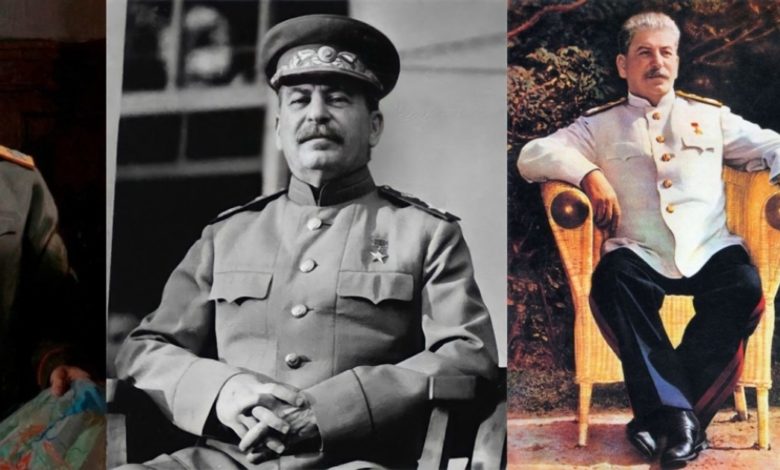
Stalin's anti -Semitism is one of the most controversial issue of the Soviet dictator. Although officially condemned anti -Semitism and militated for twinning between nations and peoples, obviously under the wing of socialism, Stalin persecuted and killed the Jews in the USSR.

Stalin had Anti -Semitic Pinterest Anti -Semites
Part of the Jews in Eastern Europe adhered to this communist doctrine, which opposed deeply anti-Semitic ideologies and regimes, especially anti-Jews, which bloomed in Europe the beginning of the 20th century. It is enough to remember Nazism. Including one of the parents of European socialism, Karl Marx, had Jewish origins. There are voices, like the specialist Yohanan Petrovsky-Stern, who say that including Lenin, the first leader of Bolshevik Russia, had Jewish origins.
Specifically, his maternal grandmother would have been Jewish. However, Stalin, the most important leader of Soviet Russia, persecuted Jewish intellectuals, being suspected of being the only anti -Semitic leader of a Bolshevik state. Stalin ordered two of the most cruel purification to the Russian intellectuals in the USSR, moments remaining in history under the name of “the night of the assassinated poets” but also “the doctors' plot”.
The Jews of the USSR against fascism, an idea that disliked Stalin
On June 22, 1941, Nazi Germany launched the Barbarossa plan to conquer the USSR. The Nazi invasion has aroused panic among Jews in Russia. They were aware that if the Soviet territories fall into Hitler's hands, the extermination camps will multiply. The Jewish intellectuals, catalyzed around Solomon Mikhoels, an Idiș actor and director, director of the Jewish State Theater in Moscow, set up a committee to Jews around the world to support the Soviet War Effort against Nazi Germany. Among the members of the committee were important literary personalities, actors and doctors who wanted through their writings and articles to mobilize as many people to provide help to the Soviets to withstand the German invasion. They have also participated in Radio shows transmitted from Russia to other states of the world, especially to England and the United States.
In 1943, Mikhoels and vice -president of the Antifascist Committee, Itzik Fefer, traveled to the US and England to help raise funds. In the first part of the war, the German army conquered a significant part of the European Russian territories and subjected the Jewish communities in Ukraine, Bessarabia, but also other areas of Russia in genocide. Under these conditions the members of the anti-fascist committee have changed the direction of action. There were no funds for the Soviet resistance, but rather on helping the Jews who flee from the Nazis. There was even a proposal to establish a Jewish autonomous area in Crimea. These concerns drew Stalin's attention, who concluded that this anti-fascist committee was “in matters that should not mix.”
When anti-Semitic paradise turns into a hell
Many Jewish intellectuals had considered the Soviet Union a rescue collage, in a Europe dominated more and more anti-Semitic currents. Communism was an internationalist and concerned with the “class struggle” and less ethnic problems. Many of the Jewish writers and intellectuals found a true paradise in the USSR where they were not threatened and, in addition, managed to build a Soviet idiiper. “Many had considered the Soviet Union a liberator, even a savior, the oppression that the Jews had experienced in Tsarist Russia and during the ascension of Nazism.”shows on the Yddish Book Center.
Three years after the end of the war, the Soviet paradise turned into a true Bolshevik hell for Jewish intellectuals in Russia. Stalin began the exact repression with those prominent figures of the Idiș literature and art from the USSR that raised money for the war effort. He offered them “reward” a humiliating process, serious accusations, torture and finally death. Everything they wrote and did during the war turned against them. Solomon Lozovskii, director of the Soviet Intelligence Bureau (a powerful Soviet News Agency) and Deputy Commissioner for Foreign Affairs, confessed during the process that “what is judged here is the idiich language”. “Indeed, for the accused poets, Idiș poetry literally became a matter of life and death. These writers had worked for decades to build the Soviet idiich culture, and now their literary works were used as evidence against them.”said those from the Yddish Book Center.
The official accusations against Jewish intellectuals from both the Jewish anti-fascist committee and their friends or relatives were of “counter-revolutionary crimes” and actions meant to “overthrow, undermine or weaken the Soviet Union.” Soviet officials, at Stalin's urging, stated that they had discovered evidence that Jewish intellectuals used CAE (Jewish anti -fascist committee) as a means of espionage and promoting the underminery of the state authority, as false as possible. On the contrary, the USSR funds were helped in the war effort. The accused Jewish intellectuals endured incessant interrogators, beats and cakes.
Due to the incessant torture, most of them “confessed” the most fantasy and autocritical aberrant and self -denunciation, in the hope that they will escape the beating. The only one who did not confess any alleged crime was Boris Shimeliovich, the medical director of Botkin Hospital in Moscow. He confessed that he received over 2000 hits at the buttocks and heels.
“Night of the assassinated poets”
All Jews from CAE or close to those in CAE were top personalities of culture and science, poets, writers, actors, doctors and cultural leaders. Many of them had served in the Soviet apparatus, they were decorated or recognized for their cultural value. However, they were dragged, beaten and humiliated five years through prisoners. Only in 1952, on May 8, their process officially began. There were no prosecutors or lawyers, only three military judges. “Nothing less than terror disguised in the law”the historian Joshua Rubestein said. On July 18, the sentence was given. This provided that the defendants would be executed and the confiscated goods. They have been dispossessed by all the medals and distinctions received over the time. On August 12, 1952, 13 intellectuals and cultural people were killed in the basement of Lubianka prison.
After the execution of the defendants, the process and its results were kept secret. The families of those killed were exiled in December 1852, as relatives of the homeland traitors. They found only in 1955 what had happened to the judges. Among those killed in Lubianka were Peretz Markish, a poet, founder of the School of Writers, novelist David Bergelson, Yosef Yuzefovici, researcher of the Institute of History of the Soviet Academy of Sciences, Ilia Vatenberg, translator and editor, Solomon Bregman, deputy of foreign business. Der Nister, another idiich writer, was arrested in 1949 and died in a work camp in 1950. The literary critic Yitzhak Nusinov died in prison, and journalists Shmuel Persov and Miriam Zheleznova were shot-all in 1950. assassinated, most likely at Stalin's orders in 1948.
Anti -Semitism or anti -intellectualism
This bizarre process of artists and intellectuals remained in history as “the night of the assassinated poets” was followed shortly by the so -called “plot of doctors”. This was an anti -intellectual and anti -Semitic campaign of the Stalinist regime aimed at an important group of Jewish doctors. All of them were somites of the medical world of the USSR. They were accused of holding a Jewish international plot by which they wanted to kill high -ranking government officials and vase members of the Communist Party. Including Stalin. Between 1951-1953, a group of doctors from Moscow Mostly Jews were expelled from hospitals and institutes, arrested and tortured. Both actions led to the conclusion that Stalin was anti -Semitic and that he was actually a paradox of communist ideology.
“The persecution of the Jews in the Soviet Union has escalated significantly after World War II, reflecting deep anti-Semitic feelings within the regime. While in previous periods the Bolshevik leadership did not explicitly target the Jews, the ascent to power of Joseph Stalin marked a turning point. Jewish cultural and political affiliations as threats, keeping Jews with terms such as “roots without roots” and condemning “Zionism” as lack of loyalty. This led to harsh restrictions on Jewish intellectuals, artists and organizations, especially during the Jdanov doctrine, who imposed the strict respect for communist ideals in arts ”said Kimmel Leigh Husband in “Soviet Escaled Persecution of Jews”.
There are also opinions that show that Stalin's anti -Semitism was actually a fight against Jewish intellectualism. That is, he was looking at the Jews as a threat to the USSR unit. The decision of the Soviet dictator to trigger the persecutions against the Jews remains, however, partially a mystery, especially the case of “the night of the assassinated poets”.