
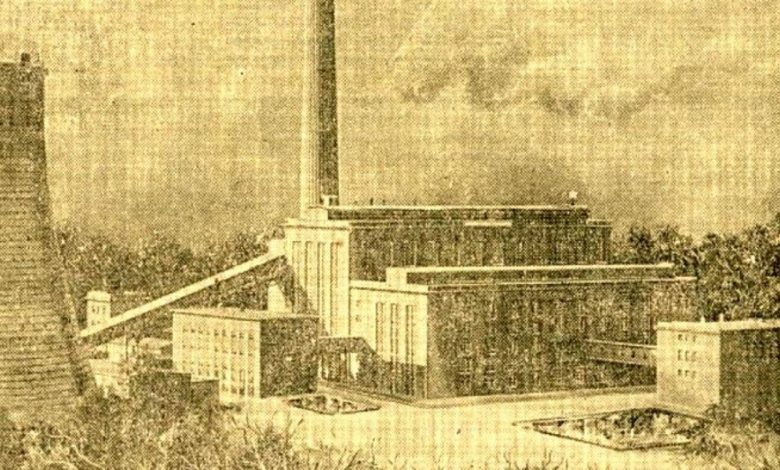
Paroseni, the oldest coal power plant in Romania, was inaugurated in 1955 and was based in the seven decades of operation in the Cabine in the Jiu Valley.
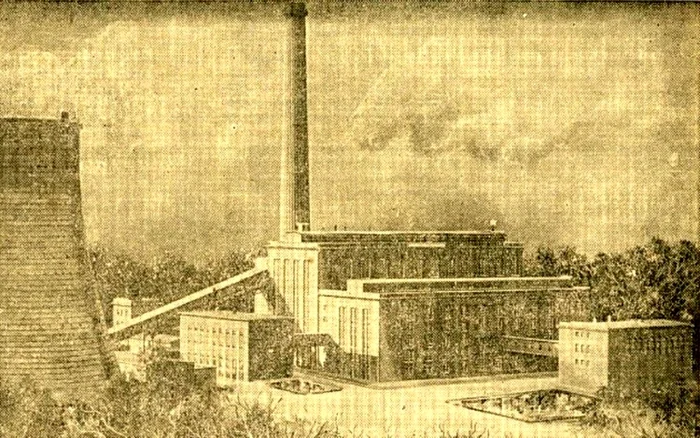
Paroşeni Termocentral in 1955. Source: Constructorul Magazine.
The future of the parish power plant, after 2032, is discussed, among the alternatives being projects related to the construction of a gas group or the use of renewable resources, in its operation, as part of the energy transition strategy.
The mines in the carboniferous basin of Hunedoara are in the process of closing, estimated for 2032, and at present the amount of huil it delivers to the power plant is insufficient for its supply.
The emblem of the first five -year
The construction of the Paroseni power plant, located on the right bank of the Western Jiul river, between the cities of Lupeni and Vulcan, began in 1951, and the project was presented by the authorities of the time as one of the landmarks of the first five -year -old, started in 1951.
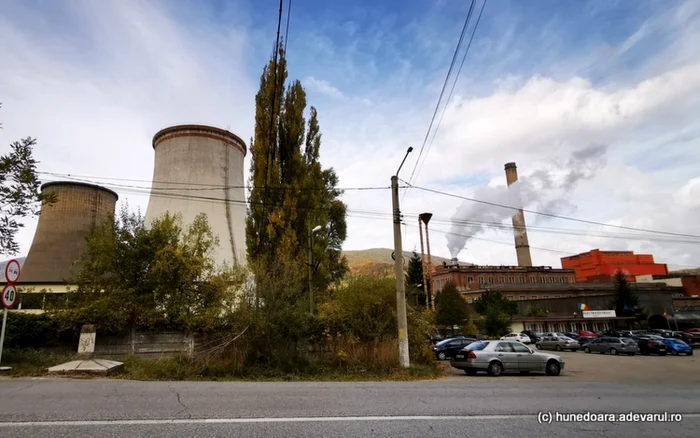
Paroseni. Photo: Daniel Guță
This industry development program was inspired by an economic model imported from the Soviet Union. Between 1951 and 1955, the years of the first five, Romania expanded its industrial capacities: 18 new oil fields were discovered, which were to provide over two thirds of the country's oil production in the early 1950s, the first large power plants were built and new furnaces were erected.
Despite the successes in extending industrial capacities and adopting many new production techniques, the objectives of the first five -year -old plan were not achieved. Among the reasons identified by specialists are the lack of raw materials, poor resource management and low productivity, affected by absenteeism and lack of skilled workers. Neither new equipment has been used efficiently, and production costs remained high.
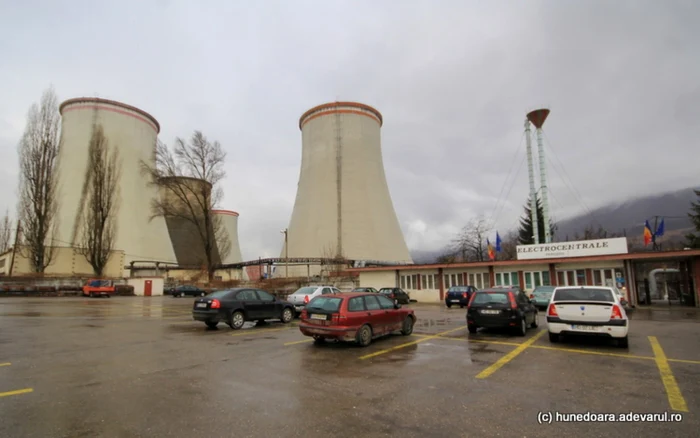
Paroseni. Photo: Daniel Guță
To all these were added investments made without clear plans and lack of rigorous financial control, which led to delays and waste, according to a CIA report, entitled “The effects of Soviet development policy on investments and industrial production” (1957).
In 1955, the power plant built in the Jiu Valley by the Energo-Construction and Electro-Montage enterprises, in collaboration with Soviet specialists and with the work of over 2,000 Romanian workers, was presented as an emblem of the first five.
“The workers of the two companies have managed to raise a real energy giant in Paroseni, whose size we can tell if we think that the boilers are measuring 45 meters high, the chimney built from reinforced concrete prefabricates is 120 meters high, and the fuel deposits have a new capacity. Its size, as well as the fact that it uses as a fuel coal waste resulting from coal preparations.informed the press of the time in 1955.
How the construction of the power plant has begun
The power plant was planned by the Institute of Energy Studies and Designs from the Ministry of Energy, following a project of an Institute (TEP), within the “10-year electrification plan” (1951-1960).
“The electrification plan of the RPR provides for the construction of a large thermoelectric power plant in Paroseni-Valea Jiu. southwest of Transylvania ”informed the communist press in 1951.
The complex was designed to reach an installed power of 300 MW, which could provide energy for the coal mines in the Jiu Valley, for the metallurgical combinations in Hunedoara and Otelu Rosu, for the oil area of Oltenia, but also the heating and electrification of the cities of the Jiu Valley, at that time.
Subsequently, the air lines (LEA) were built for the connection to the national energy system, through the connections with the power plant, the northern area of Oltenia and Banat.
“It was only a month since the beginning of the works and, at the edge of the parish hamlet, a real town of the builders was erected. A canteen was built, large barracks, with spacious bedrooms, and other barracks are under construction.”informed the builder magazine in 1951.
Work battalions, on the site of the power plant
The works, showed the reports of the Central Intelligence Agency (CIA) of the United States of America, were led by the Petrosani yard group, on an area of 5-6 kilometers, well guarded, between Vulcan and Lupeni.
“Between 1952 and 1955, the Petroșani yard group hired over 2,000 people. Since then, their number has reduced in half. Nearly 90 percent of the unskilled workers came from the work battalions of the General Directorate of the Labor Service (DGSM) in Romania (n.red. Romanians who did not present confidence for the communist regime and did not have social origin,” by the military who fought against the USSR, by gossip, priests, doctors, teachers, students who had to be oppressed). The entire surface is surrounded by two -meter high fences, with three layers of barbed wire ”showed an informative note of the CIA, from December 1959.
The Petroșani yard group also built in the Jiu Valley, three electric stations at the Lupeni preparation, Petrila and Bărbăteni preparation.
“The power plant is served by the railway network and a special railway station. The station turbines were provided from the Krivo-drug Combined. Other equipment were brought from the Soviet Union. Five-six Soviet specialists live in Petrosani and supervise the construction and installation of equipment.”noted the authors of the CIA report.
Coal for seven decades
Built between 1951-1955, the power plant began to produce electricity in the spring of 1956.
“Sunday, April 15, at the Paroseni power plant in the Carbonifer Basin Valea Jiului was put in parallel with the energy system the first turbogenerator of 50,000 kW, the largest turbogenerator installed so far in our country. At 2:45, on the high voltage lines, they started for the ants in Hunedoara, Mines of the Jiu kilowatts produced by the new energy unit ”, Agerpres informed, in 1956.
Until 1959 the first three generators were given into operation, each with a capacity of 50 MW/h, and between 1962-1964, the second stage of construction of the power plant was completed, consisting of a 150 MW block.
Since the early 1980s, the power plant has provided thermal energy in Lupeni, Vulcan, Aninoasa and Petroșani. In 2009, the three 50 MW generators in use in the 1950s were quashed, due to their outdated lifespan. In recent years, the power station in Paroseni has worked with a single 176 MW energy group.
On the banks of the Jiu, three other huge power plants were built in the following decades, in Rovinari, Turceni and Ișalnița (Craiova), to operate on coal, mainly lignite from the mining operations in the Oltenia basin.


