“The longest suspended bridge in the world”, project conceived by Romanians, strongly challenged shortly after the final approval

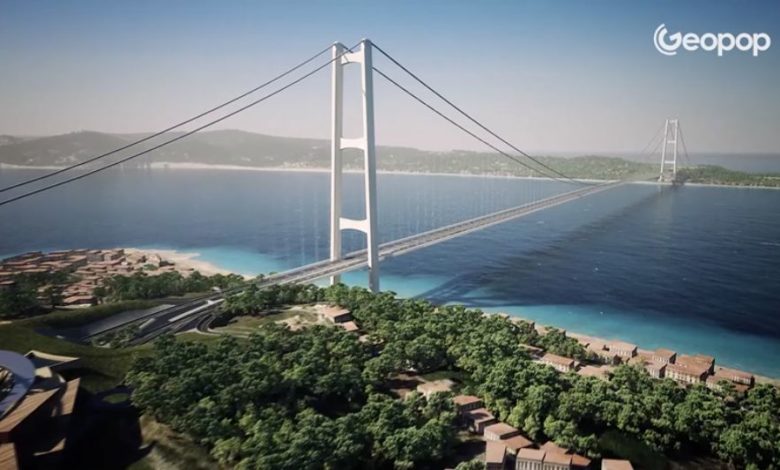
The decision of the Government of Rome to approve the construction of the longest suspended bridge between Sicily and the continental part of Italy has opened the way for a legal battle that could even delay a project initially designed by the ancient Romanians, informs Reuters.
The right -wing government of Prime Minister Giorgia Meloni on Wednesday gave the final approval for the bridge over the Messina Strait, allocating 13.5 billion euros for a project that has been in question for more than 50 years.
“It could give me the value of my house three times, but that doesn't matter to me. What matters is the landscape. It doesn't have to reach the Messina Strait,” said Mariolina de Francesco, a 75-year-old woman living in the Sicilian city of Messina.
Over 440 properties will have to be expropriated on the Sicilian side and in the Calabria region on the continent to make room for the bridge of 3.7 km and the roads and railways.
“Our lawyers will take action and we will stop them. It is guaranteed,” said Francesco, whose house is near the location of one of the 399 meters high towers provided for the bridge.
The Minister of Infrastructure, Matteo Salvini, said that preliminary works should start in September-October and promised generous compensation to those who will have to give up their properties. The bridge has as its completion term the year 2032.
Messina Strait, who supervises the project, is preparing for an important legal fight. “(Legal appeals) I certainly keep me busy, because they make us lose a long time,” said the executive director of the company, Pietro Ciucci, for the newspaper La Stampa.
Complaint to the European Union
The ecological groups filed a complaint this week at the European Union, signaling serious risks to the local ecosystem.
The Torre Faro neighborhood, located on the northern edge of Messina, includes a natural reserve that surrounds two ponds, and Calabria seems to be a pour when you walk along the sea.
The committees of inhabitants “no bridge” claim that the ecological value of the area and the seismic risk make it inappropriate for this infrastructure. They are also afraid that the works will be extended, making the neighborhood uninhabited because of the noise.
Messina Strait states that the bridge will be designed to withstand very strong earthquakes and will not be located on active faults. He also promised mitigation measures to protect protected habitats and species.
The contractual obligations will ensure that the duration and effects of the construction activity, including the noise, will be kept under strict control, added the company.
The supporters of the project, attributed to the EuroLink consortium led by the Italian company Webuild, states that it will stimulate the economy of an underdeveloped region.
“The bridge could create jobs for young people and maybe change something in Sicily, where we like to keep everything as it is,” said Giuseppe Caruso, 71 years old.
The authorities promised strict measures against the involvement of the mafia. The two regions are the headquarters of the Mafia organizations Cosa Nostra and 'Ndrangheta, which have a long history of infiltration in the projects on public works.
The government also takes into account the classification of the investment in the bridge as a defense expense, which would help Italy to meet the new NATO objectives of military budgets.
1,000 people risk running out of houses
The expropriations of houses will take place gradually, depending on the advancement of the construction works. Activists and lawyers estimate that about 1,000 people could run out of housing and argue that increasing costs at the time of the project could violate the European Union law on public procurement.
“We are a country governed by the rule of law within the EU, so the government must respect the rules,” said Antonio Saitta, the lawyer who represents some inhabitants of Messina.
The Strait of Messina company said that the cost increase, from 8.5 billion euros in 2011, before the project is blocked, to 13.5 billion euros at present, is due to the increased increase in the prices of the building materials.
Saitta said that the main way to block the construction of the bridge is to submit, by the end of October, an appeal to an administrative court against the Government's decision.
Gianluca Maria Esposito, a professor of administrative law at Sapienza University in Rome, said that the public interest prevails over the private one in such cases and that blocking the project would be a difficult challenge.
“Citizens are entitled to damages, but they cannot request additional damages and they cannot oppose the project,” he said.