Trump stepped on Putin to the imprint. Europe was in the crosshairs

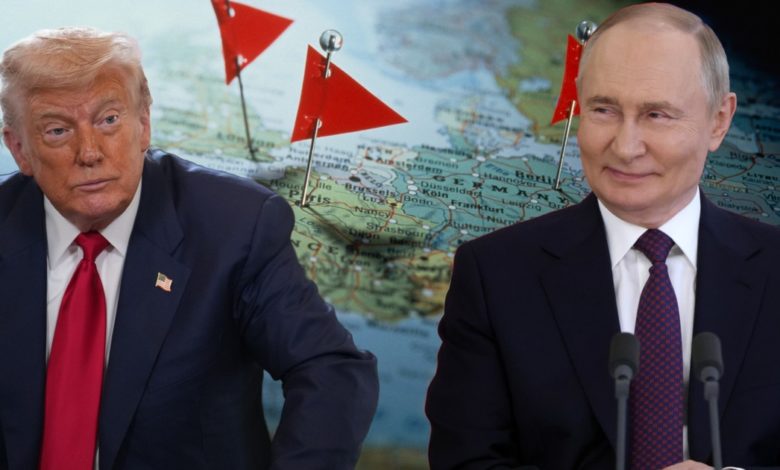
Donald Trump's statements about the transfer of American atomic submarines “closer to Russia” and the abolition of the moratorium by Russia to the distribution of medium and short range rockets have become two related events that designated each other A new phase of confrontation between the Kremlin and the West.
Both moves caused a storm.
It is important to understand that American strategic aircraft carriers are constantly in a state of combat readinesspatrolling the oceans and regularly changing the routes. Their movement is a routine part of the nuclear triad activity, not a sign of the upcoming war.
For the Kremlin, as for the Pentagon, it is everyday life. The information noise around the movements is not of much military significance. The political and psychological aspect is much more important: Trump's statement sounded like a reminder that not only Moscow has nuclear weapons. Such a signal can hit the sensitive element of Putin's worldview, based on the belief that the West is weak, divided and is afraid of escalation.
The Kremlin unscrupulously uses nuclear blackmail as a foreign policy tool. Threats of “consequences that the world has not yet seen” accompanied the invasion of Ukraine and are regularly repeated at NATO, Europe and the United States. They appear in rhetoric Scenarios of attacks on the western capitalsand officials such as Dmitry Medvedev routinely threaten the use of nuclear weapons.
Russia destroyed the arms control system, suspending the participation in the New Start Treaty (between the USA and the Russian Federation, on funds aimed at further reduction and limitation of strategic arms), and at the end of 2024 it presented a new rocket complex Oresznik, positioned as a means to destroy goals throughout Europe. These steps are part of an intimidation image, which is to paralyze the will of the West.
American-Russian scuffles
In the face of a clear nuclear threat on the side of Washington, Moscow strategists were forced to urgently develop the appropriate steps that would show that You can't talk to Russia with a nuclear blackmail – In Moscow they have already got used to that only they can behave like that. The thought process led to a decision to resign from a voluntary one -sided moratorium on the production and distribution of medium and short range rockets in Russia.
The history of this moratorium dates back to 1987, when US President Ronald Reagan and the leader of the USSR Mikhail Gorbachev signed a treaty on the liquidation of medium and short range rockets. The document liquidated the entire class of offensive weapons and became one of the symbols international relaxation. However, in the years 2010, the United States suspected Russia of violating the treaty due to 9m729 rocket tests and Rubież, and Moscow in turn accused Washington of the installation of universal MK-41 launchers in Poland and Romania, capable of firing not only missiles intercepting the SM-2 anti-release system, but also missiles Tomahawk, including nuclear heads.
In 2019, the Trump administration withdrew from the contract, citing constant violations of the provisions by the Russian side, as well as its outdated: this type of rocket was already had China, Iran, India and other countries. Russia answered a one -sided moratorium, promising not to place such systems until they do it. On the one hand, it was an attempt to demonstrate peaceful intentions – unlike Washington's unilateral actions. On the other hand, an obvious attempt to mask work on your own rockets.
Now the moratorium has been officially lifted, and Moscow stated that it could arrange the rockets anywhere that it deems appropriate.
Militarization of Europe
Although it formally opens the path to the installation of complexes in the western borders, including Königsberg, strategic balance has long been unfavorable for Europe: Russian calibers, H-101/102 and other systems are able to hit European capitals.
Political consequences are obvious. The arrangement of Russian short -range Russian ballistic missiles will almost inevitably lead to an increase in tension and retaliation. European countries will have to create multi -level defense against these threats, including new elements of the anti -cancer and anti -aircraft defense system, which will require significant financial outlays.
At the same time, the accelerated militarization of Europe itself will begin: plans to arrange American land rockets at least in Germany are already discussed.
The continent will face not only the increase in defensive budgets, but also the appearance of new impact systems on its territory, directed directly against Russia. In this way, the Kremlin's actions have the opposite effect – instead of increasing security, they provoke the extension of NATO's military presence and stimulates their own development works of Europeans.
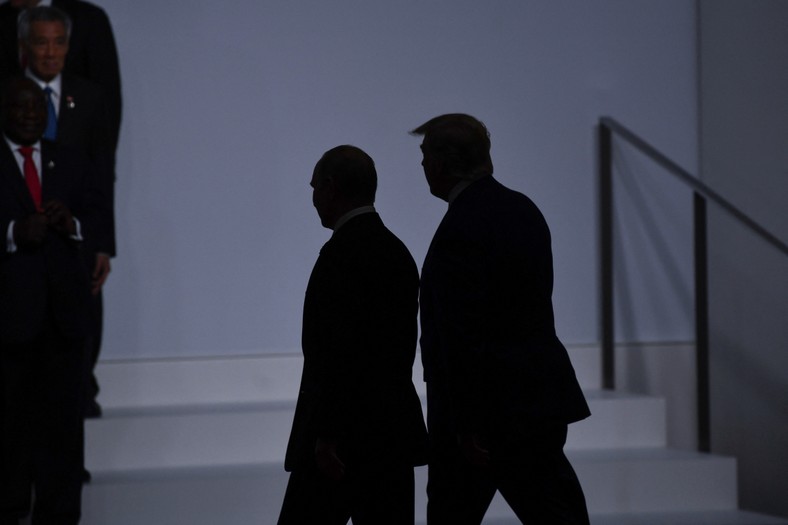
Russian President Vladimir Putin and US President Donald Trump in 2019.
Playing in escalation
Joe Biden's “strategy”, based on fear of escalation, did not show the force necessary to effectively stop Russian aggression against Ukraine and hostile activities in the form of hybrid operations against some Western countries. Donald Trump, who made a high -profile declaration on submarines, sought not so much to intimidate Putin, but to show that the American army is ready to defend national interests. His words seem to have defensive nature. Therefore, it is too early to claim that Trump took a more definite position than Biden towards “his friend” by Vladimir Putin.
Russia, however, still plays escalation, manipulating the fears of opponents and leaving the field of maneuver when it is beneficial to it. The Russian declaration of abolition of the moratorium is unclear: the Kremlin does not say that the rockets will be arranged immediately, reserving the right to take action when it deems it appropriate. This allows Moscow to use threat as a tool of pressurekeeping the opponent in suspense.
Escalation becomes the norm. The Kremlin considers himself a game master, and the West as a student who is afraid to cross the red line. However, strategic stopping must work both ways. Signals reminiscent of Putin that two pages can play this game – such as Trump's statement about submarines – could play a positive role.
But to succeed, a coherent strategy is needed – a consistent, logically constructed policy in which words confirm the actions and the steps are not contradictory. Today in the west there is still a lack of such a strategy.