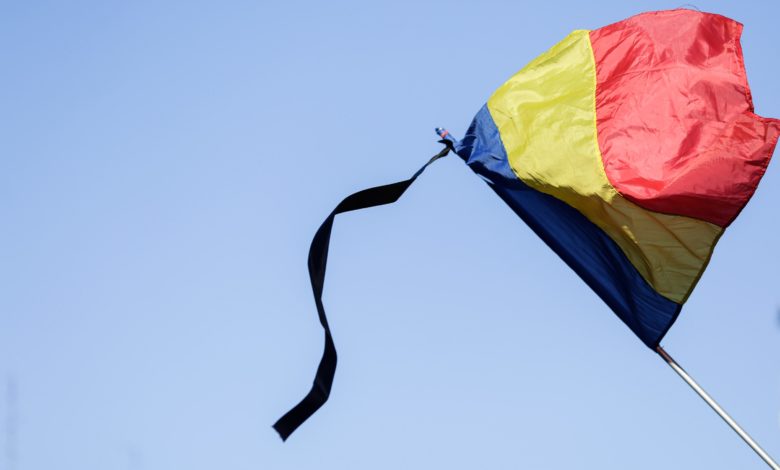
Today, August 7, 2025, is a day of national mourning throughout the territory of Romania, in respect of the memory of former President Ion Iliescu, died on Tuesday at the age of 95. The former head of state is to be buried with military honors, at the Ghencea III Military Cemetery.
The Romanian government adopted, in an extraordinary meeting held on Tuesday night, the decision by which August 7, 2025 was declared a national mourning day.
In accordance with the legal provisions in force, on the day of national mourning, all central and local public institutions and authorities will fly the flag of Romania in Bern.
What happens on a national mourning day:
- The national flag in Bern will be flown to the headquarters of political parties, trade union and employer organizations, educational institutions of any degree, cultural institutions and diplomatic missions, at the points for crossing the border, in airports, ports, stations and bus, as well as as a pavilion on ships of any kind and on the Romanian pavilion.
- The same obligation also belongs to the individuals, if they fly the flag of Romania at home or at the residence.
- At the same time, the radio and television stations, as well as the cultural institutions, will adapt their broadcast program and the activities organized accordingly this day.
“Ion Iliescu held the position of president of Romania in the 1990–1992 mandates, 1992–1996 and 2000–2004, being a prominent personality in the post -December political life. The basis of democratic institutions and political and economic reforms were initiated ”, the Government said, which also decided that on August 6 and 7, 2025, state funerals will be organized in honor of former President Ion Iliescu.
The program of funeral ceremonies
09: 00-09: 50 Arrival of guests at Cotroceni Palace
10:00 Short religious moment
10:10 Guard ceremony at Catafalc
10:15 Moment of silence
10:16 Lifting from the catafalc of the coffin
- The coffin is carried to the official exit from the Cotroceni Palace (route: Unirii Hall – Basarabilor Gallery – Hall of Honor – Copertine);
- At the cover are present strings of honor consisting of military military as well as military music for honor;
- The bell is drawn from the Cotroceni church.
10:20 Departure of the cortege from the cover
- The movement of the funeral cortege to the Cotroceni church.
10: 30-11: 30 Officiating the religious service of funeral
11:15 The entrance of the Guard of Honor on the Marinescu plateau at Cotroceni Palace
11:35 The funeral court leaves from the Cotroceni Palace on the route Cotroceni – Gate Marinescu Gate
11:40 Guard of honor – Brigade 30 “Mihai Viteazul” Guard – Marinescu Plateau
- The guard presents the last honor – the bowl of the flag;
- Intonation of the national anthem of Romania;
- The cortege will pass in front of the guard.
The movement of Cortegiului will take place on the route Bdul Gheorghe Marinescu, Bdul Heroii Sanitari – Bdul Eroilor – Bagdasar Street – Panduri Road – Geniului – Răzoare Street – Sării Road – Ghencea Bdul – Extension Ghencea – Cooperative Road – Ghencea III Cemetery.
Arrival of the funeral cortege at the Ghencea Military Cemetery III
The funeral ceremony:
- The coffin is located at the entrance to the cemetery on a cannon affection;
- Funeral cortege formation and honor presentation;
- The burial ceremony will only take place in the presence of family and close persons.
Private ceremony, Wednesday evening at Cotroceni Palace
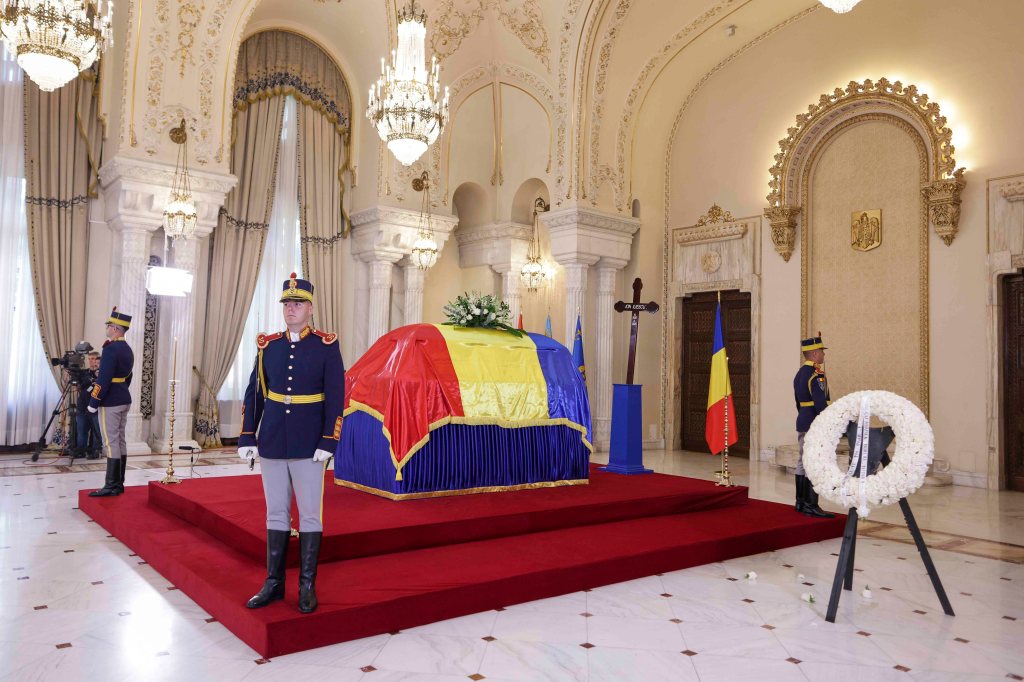
On Wednesday night, collaborators and close friends of the former President Ion Iliescu brought, in a private ceremony, a last tribute to the former head of state, whose coffin was deposited at the Cotroceni Palace.
Nina Iliescu, the one who was 74 years old to the former president, was not present at the catafal of his husband. On a crown of white roses on her side, in the morning, near the catafalc, the message was written: “Rest in peace. With deep pain, Nina,” according to Agerpres.
The service of the pillars was officiated by the Vicar Bishop of the Archdiocese of Bucharest, Timothy Prahoveanul, accompanied by a priest of priests and deacons and members of the Psaltic Group of the Patriarchal Cathedral.
Among those who were present at the job were: BNR governor, Mugur Isarescu, former PSD ministers Rodica Stănoiu and Petre Daea, PSD deputy Ioan Vulpescu, former PSD MPs Viorel Hrebenciuc and Șerban Nicolae, former Prime Minister Viorica Dăncilă, former President of CCR Dorneanu Politehnica Bucharest, Mihnea Costoiu, former director of SRI Virgil Măgureanu.
Other personalities present were: the first rabin Rafael Shaffer, the painter Ștefan Câlii, the former Secretary of State for Cults Victor Opaschi, the general director of Romfilatelia, Cristina Popescu, the writer Angela Martin.
During the Wednesday night to Thursday, only the Guard of Honor remained at Catafalc.
How did the first day of state funeral show
Several hundred people came throughout the Cotroceni Palace on Wednesday to say goodbye to former President Ion Iliescu. Not only high -ranking politicians and officials, but also simple people from several areas of the country were present.
HotNews.ro reporters surprised the atmosphere from the first day without the former head of state.
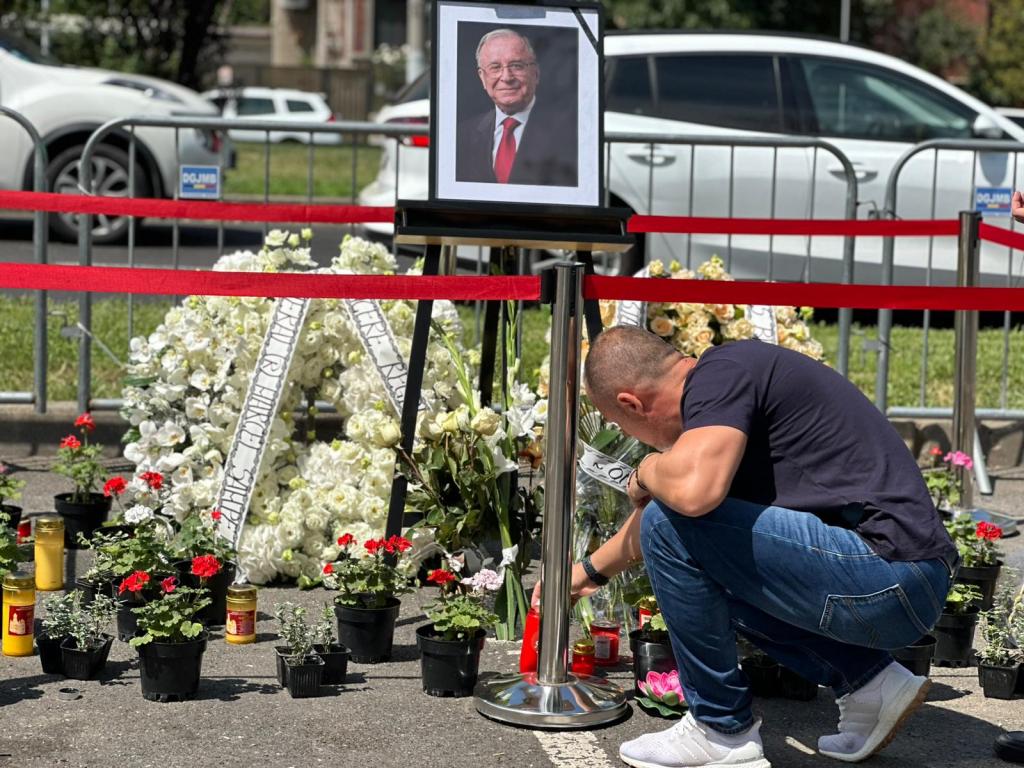 Video reports the first day without Ion Iliescu. Wednesday events in four minutes
Many of those present waited quietly for tens of minutes to pass through the coffin deposited in the Union Hall at Cotroceni Palace. Some laid flowers, others stopped for a few seconds in front of the catafalc, while others looked in silence, without approaching.
Visitors were allowed to enter small groups, in a constant flow, and the politicians did not make statements.
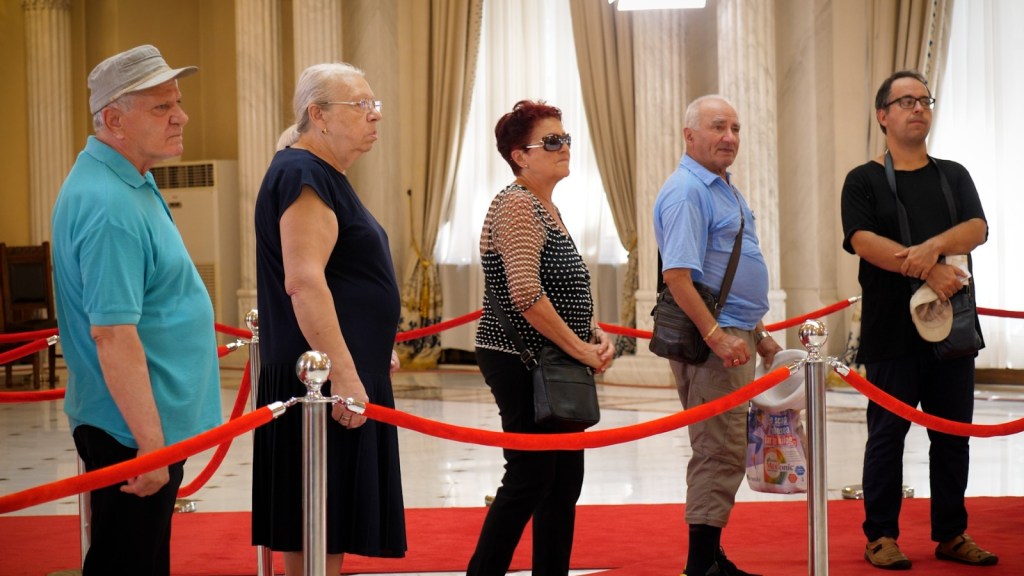 Reporting people who cry Ion Iliescu. How do I remember the former president who came to his catafal-video
Former President Klaus Iohannis and the current president Nicuşor Dan were not present. In contrast, the other two former heads of state after 1989, Emil Constantinescu and Traian Basescu, have chosen to come.
“History will judge Ion Iliescu, the central character of the transition of the 1990s. It is our obligation to clarify the great files of the time, to go on,” Nicușor Dan Tuesday evening, through a message sent by the Presidential Administration. “God forgive him!” Concludes President Dan.
Ion Iliescu died on August 5, 2025, at the age of 95 (b. March 3, 1930). He was admitted since June at the Emergency Clinical Hospital “Prof. Dr. Agrippa Ionescu”, being diagnosed with lung cancer. He was the first president of post-communist Romania, fulfilling the position of head of state in three mandates: 1990-1992, 1992-1996 and 2000-2004. Later he was a senator, then withdrew from political life.
 Video state funerals for Ion Iliescu. The coffin of the former president was deposited at the Cotroceni Palace / the complete film of the day in which the Romanians came to Catafalc for a last tribute
National mourning, subject of discord between PSD and USR
The death of Ion Iliescu created tensions in the ruling coalition. PSD and USR are in conflict after the party led by Dominic Fritz asked in the government meeting on Tuesday night not to be declared a national mourning day and announced that the party members will not participate in the official ceremonies. As a sign of reaction, the Social Democrats decided not to attend the coalition meetings.
The interim president of the PSD, Sorin Grindeanu, announced on Wednesday that the members of the formation have decided to no longer attend the meetings of the ruling coalition until “the USRs will show political maturity and will review their attitude”.
“History cannot be mystified! And those who judge today, will be judged tomorrow, in their turn! PSD has respect for the institutions of the Romanian state! Political maturity and will review their attitude! ”, Said Sorin Grindeanu, in a message published in the online environment.
A session of the coalition on the topic of the package 2 of reform measures was to take place on Wednesday at the Victoria Palace, from 11.00 am.
The social-democrats accused, on Tuesday, the attitude without respect, decency and humanity towards the first president of the democratic Romania, which the USRs displayed, starting from the attempt to block the state funeral and the national mourning in the case of Ion Iliescu.
“Out of respect for the victims of the Revolution and Mining, USR has proposed in the government meeting not to be a national mourning. We take note of the Government's decision. The USR representatives will not participate in the funeral,” Dominic Fritz said on Tuesday night.
Shortly after, the former prime minister and leader of the Social Democrats Marcel Ciolacu published, in the context of the death of Ion Iliescu, an appeal to his party colleagues asking them to ignore “all the political and political misery”. He thus sent arrows to the USR, although he did not mention the name of the current PSD governance partner.
When there was a national mourning
- Most recently, the national mourning was decreed on the territory of Romania on April 26, 2025, in the memory of Pope Francis, even on the day of the Vatican funerals.
- The national mourning was decreed on the territory of Romania and on December 14, 15 and 16, 2017, in the memory of King Mihai I (1927-1930; 1940-1947). King Mihai I died on December 5, 2017, at his residence in Switzerland, and the funerals took place on December 16, 2017, in the new cathedral at Curtea de Argeș.
- Also, September 2, 2016 was a national mourning day in memory of Romanian citizens who died in the earthquake with a magnitude of 6.2 on the Richter scale, which rocked the center of Italy on August 24, 2016 and in solidarity with the Italian people. Following the earthquake, 281 people lost their lives, among the victims were 11 Romanian citizens.
- August 13, 2016 was declared a day of national mourning, in the memory of Queen Ana, on the same day the queen's funerals took place at the Curtea de Argeș Monastery. Queen Ana, the wife of King Mihai I of Romania, died on August 1, 2016, at the age of 92, at the hospital in Morges, in Switzerland. The royal family announced a great mourning for the first seven days after the funeral and mourning for forty days.
- In Romania, the national mourning was decreed on March 24, 2016, in solidarity with the victims of the attacks in Brussels. The attacks at Zaventem International Airport and the Maelbeek subway station in Brussels, committed on March 22, 2016, resulted in 35 dead and over 300 injured.
- The days of national mourning were declared and October 31, November 1 and 2, 2015, in memory of the victims of the fire at the Collective Club in Bucharest, on the evening of October 30, resulting in 65 dead.
- June 26, 2013 was declared a national mourning day, in respect of the 18 Romanians who lost their lives in the coach accident in Montenegro.
- The day of April 18, 2010 was also declared a national mourning day, being commemorated the victims of the Smolensk aviation accident, in which 96 people lost their lives, including the President of Poland, Lech Kaczynski.
- The date of August 3, 2007, at which the funerals of the Teoctist Patriarch took place, who led the Romanian Orthodox Church for 21 years, was also declared a day of national mourning.
- Other data declared days of national mourning were: April 8, 2005, on the occasion of the funeral of Pope John Paul II; March 14, 2004, in memory of Romanian citizens victims of terrorist attacks in Spain; September 14, 2001, after the terrorist attacks in the United States; January 12, 1990, in memory of the victims of the Revolution.