
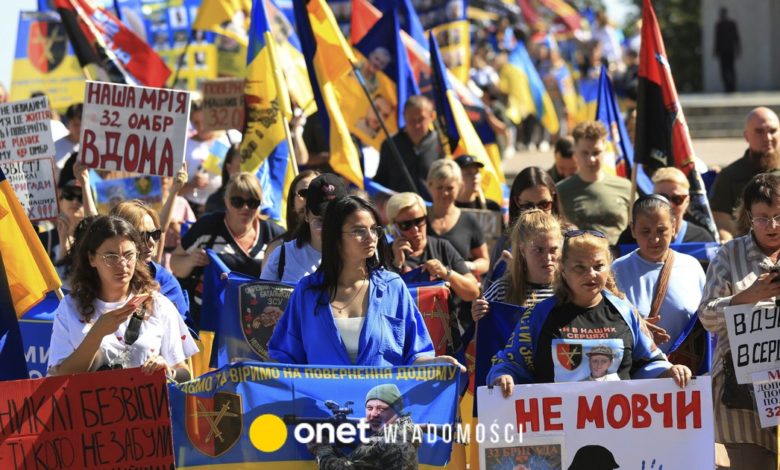
Mariia Tsiptsura, Onet: I saw your research on the burnout of Ukrainians, which in the context of war seems to be a very interesting topic. Professional burnout in ordinary conditions and the state of war are completely different issues. Is this a significant problem of Ukrainian citizens?
Jewhenia twiszek: We got used to the thought that the term “burnout” mainly refers to professional life. Man burns out at work, overwork and tires, which usually results in, for example, a change in employment. During the war, this problem becomes more complex. A man cannot rest properly at home, there is no regulated sleep because of the fire and suffers from nervous tension. Ukrainian citizens are not able to plan their future, they cannot travel or organize a proper vacation. They feel stress because of financial and economic uncertainty – today is work, it is not there tomorrow. It is similar with money.
People found themselves in a situation where they burn out, having practically no way to regenerate. They are in suspense around the clock. During the day they work, sleep in the pain shelter at night. Then this condition is no longer just a sign of stress, but just burnout.
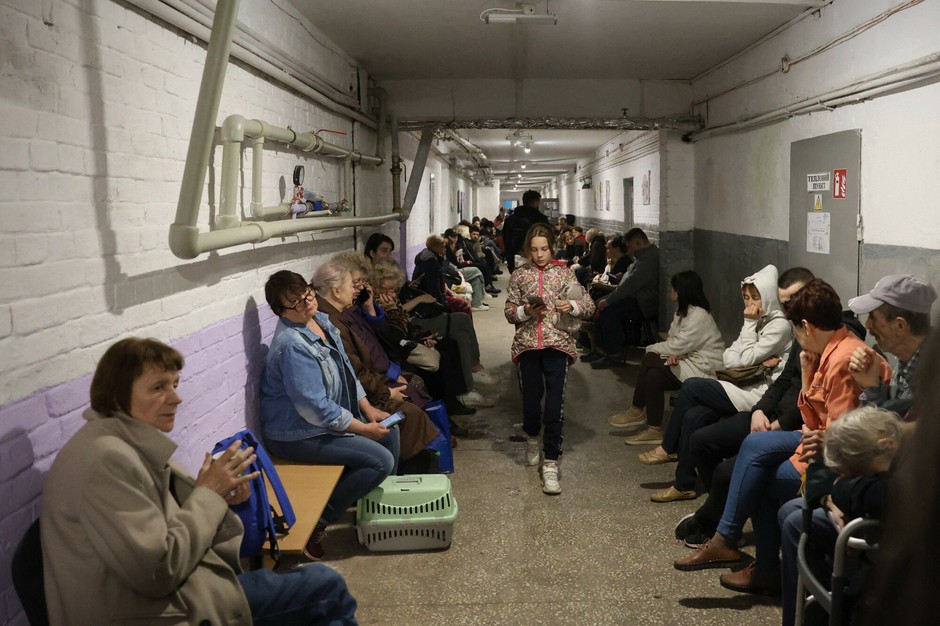
Ukrainians in the shelter in KievStringer/AFP/East News/East News
Over the past five years, the level of subjective stress among Ukrainians has increased by 10 percent. In May 2020, we recorded this indicator of 77 percent, and with the beginning of the war in March 2022 he reached 83 percent. And it has been growing since then. In December 2024, the level of subjective stress has already reached 87 percent. Subjective stress is a complex indicator that is determined by means of 10 questions about the general level of stress, certainty about the future and the possibility of managing your own life. 87 percent people belong to groups with a high and very high level of stress, which is a critically high percentage.
What are the signs of burnout?
Man stops sleeping normally, cannot focus and keep high -quality concentration for a long time. He feels apathy or low commitment to what he does. He is not interested in the results and begins to mechanically approach both tasks and all life. In surveys, people most often complain that they are more restless, often check social media and messengers, have sleep problems, notice a deterioration of their eating habits, feel emotional exhaustion after work, and even feel tired at the morning.
Can we talk about the percentage of Ukrainians who, now, in the fourth year of war, feel burnout?
We conducted an analysis and identified five large groups. Only one of them is people who remain highly motivated, engaged and do not observe signs of professional burn. The other four groups, or 75 percent our respondents show signs of professional burnout. This applies not only to work, but also for personal life. This may be indifference when a person is not involved in the results achieved, or balancing between inspiration and burnout when a strong mood swing is felt. The third large group is a chronic overload. Such a person is still functioning, but he understands that these are strength reserves. The latter are exhausted and demotivated. They are indifferent to everything and do not want anything. This group is 18 percent. respondents. That's a lot.
Or maybe a person burned out at work, but at home is in a normal condition?
If we are exhausted, it is everywhere, despite the fact that the family home remains a place where people try to regenerate. 29 percent respondents indicated the family as a support and a positive resource, because as part of the family people can still get stability, which is a deficit commodity for Ukrainians.
Ways of Ukrainian business to fight burnout
Currently, business in Ukraine faces many challenges, including those that relate to human resources. There is a serious problem of frame deficiency because people go to war or abroad. It is obvious that in such conditions it is important to fight the burnout of specialists. How does Ukrainian business react to this problem and what, according to respondents, can help them?
According to our study, financial motivation is primary. 64 percent surveyed Ukrainians said that this is the most important factor for them because they are very sensitive to economic threats and instability. It also results from historical memory. In the past, people lost savings and salaries, and the Ukrainian economy is now not stable in terms of perspectives. War is underway, people lose their assets, move to other cities, and our soldiers, mostly men, give their lives on the front. Added to this is inflation, through which prices are rising. Going to the store today is not the same as a year ago. This is also a factor that causes great stress.
In addition to finances, everything that allows man to maintain mental health is important. When it is hard, and in the night you sleep in the subway with the sounds of shot Shahed drones, you can not stand a toxic attitude at work. Therefore, the second in terms of importance is a positive environment at work, which indicated 39 percent. respondents. Internal communication and climate in the team are important here. For Ukrainian employers, this is currently an important issue that they should deal with much more than before the war.
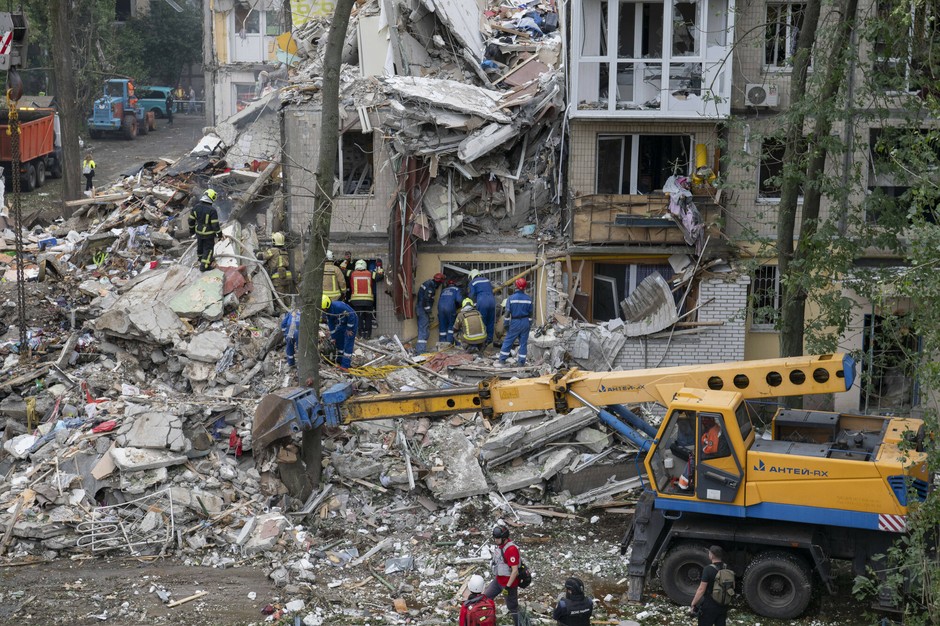
Damaged apartment block after the Russians' attackNastassia Kantorowicz Tor/Sipa/Sipa/East News/East News
People are also motivated by career development (36 percent), professional development (35 percent), as well as a flexible work schedule, the possibility of remote work (also 35 percent of respondents). It is important not to go to the office for safety. Firing can begin on the way or in the workplace. Ukrainian employers understand that their responsibility for employees' safety is behind the requirement to go to the office. In addition, the labor market has also changed. Many people have been internally resettled to other regions and work outside their place of residence. The bands become multi -Generalonal and even multi -state, because many Ukrainians abroad also work for domestic companies.
After a fire, when a man spent all night in an ancient shelter, it will be easier for him to work from home than from the office.
Yes. After the intensive fire of Ukraine, it is difficult to require people from a full day of work. Many employers give additional days off or half a day of rest. This is due to care, which is currently very important for Ukrainians.
Our employers do not have experience how to support people's mental health during the war. We go through this path and learn in real time. Currently, our companies are more and more often trying to give people pleasure in small steps. They give a massage certificate, a small gift for the holidays, they award an additional day off once a month, and this also affects the employee's mental state. They also help the possibilities of detachment from the military and professional context. This allows enterprises in some way to maintain employee efficiency and balance the situation in favor of stabilizing the mental state.
How does people's behavior change in a stressful situation?
During the war, it is significantly different from that in a peaceful situation. For example, 71 percent respondents noticed that they were constantly checking social media and news, even during work. This is both a reaction and a cause of stress. Neurosis that drives itself. People sleep worse (36 percent of respondents), have eating disorders (34 percent), they are emotionally exhausted (31 %). Every fourth of the respondents stated that he was losing interest in matters that had fascinated him before.
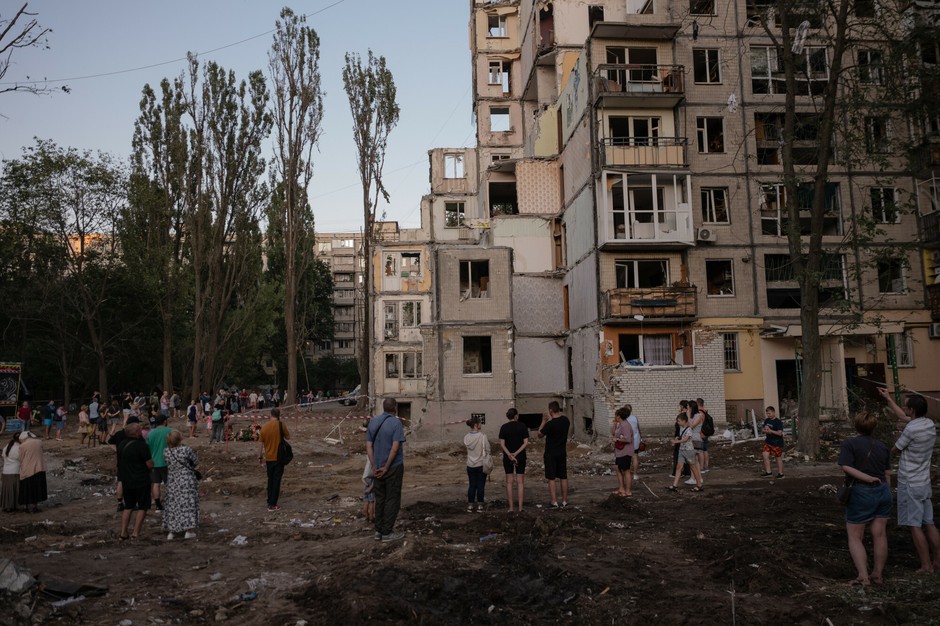
Russian attack on UkraineRex Features / East News / East News
In addition, both in Ukraine and abroad, some groups, especially young people, are easier to communicate online than live. It is easier to write than to call. It is easier to call than to organize a meeting. The situation is aggravated by the fact that because of the war people went to various cities and countries. Offline meetings are now like a holiday. People changed communication circles – old ties were broken, new ones appeared. People have become less tolerant of other people's opinions because they have no resources to argue.
Can it be considered that burnout affects primarily young people, not an older generation?
Yes. Young people burn more, especially the Z generation, which is not only caused by war. Life during the aggression of another country affects all generations. All Ukrainians live in stress, regardless of their place of residence, but young people have additional unique behavioral patterns at work. They are more sensitive to discomfort. In every situation they choose themselves and their comfort. The average period of work for them in one place is a year or less. They are more susceptible to subjective stress and burnout. We also saw this in research conducted among office workers in European countries. This is a multicultural feature that young people are more sensitive.
In my opinion, the burning level can also be influenced by the fact that the war prevented long -term planning. Career development prospects can be important in this case.
Yes. Lack of prospects is one of the main factors determining going abroad. If someone wants to build a career, they are looking for stability. And if she is not there, she looks for her abroad. Our study also shows a correlation with age: the younger a person, the greater the desire to develop a career. Among the respondents aged 18-24, 83 percent He wants to build a career, unlike the 55-60 age group-56 percent.
“The symbol of victory will be open sky and planes”
By discussing staffing problems in Ukraine, we cannot ignore the topic of emigration. Do you know how many Ukrainians can still go abroad?
The latest data indicate that the vast majority of those who wanted to leave have already done. If there is no violent exacerbation and dramatic deterioration of the security situation, there will be no large migration wave. Rather, there is a trend of “living in two countries”, i.e. having space abroad, where you can survive particularly difficult periods, for example during breaks in electricity supply in winter. In addition, maintaining the center of life interests in Ukraine, where friends, business and families remain.
If the security situation gets out of control, then 10-12 percent. people can leave, primarily from large cities. The main factor in choosing a country to which new migrants will go, will be the presence of relatives or friends. That is why countries with numerous Ukrainian communities, such as Poland or Germany, will potentially become a priority directions of migration waves.
To sum up, we say that Ukrainians are currently extremely difficult to maintain a balance between stress and mental health. What next? Do people still believe in the end of the war?
Yes, Ukrainians do not abandon hope. At the emotional level they react to every positive signal. Then their hopes grow and then fall. This is an emotional swing on which we all live. Currently, most people believe that the war will last a long time. By the way, we conducted research on the dreams of Ukrainians after the war. Most believe that the main symbol of victory will be a re -connection with loved ones, an open sky, and civil aircraft on it. It's very touching.


