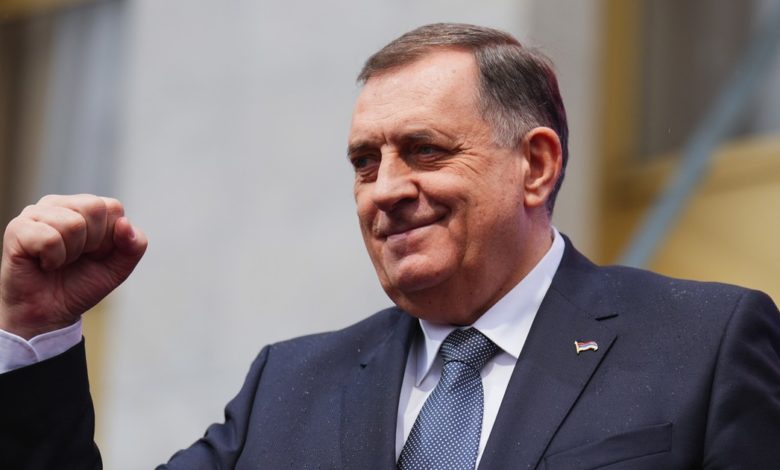
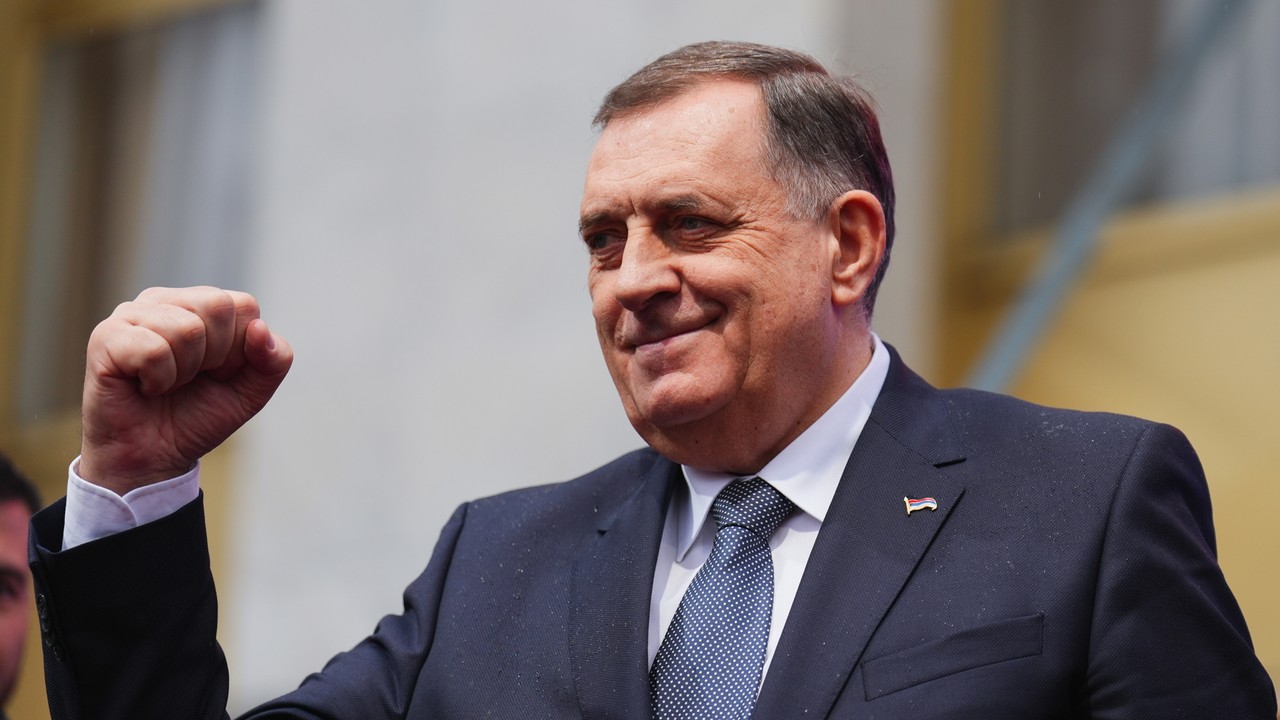
Until the resignation or removal from office, Dodik remains the leader of the Serbian Republic, part of Bosnia with the Serbian majority, the platform, which he used to confront the international envoy for peace in this country, the high representative of Christian Schmidt. “Dodik has long been one of the main sources of instability in the Balkans,” the political analyst SRDJan Blagovčanin told us.
This saga stretched for most of this year, ranging from the February judgment of the court, which sentenced Dodik to a year in prison, converted to a fine, for disobedience to the Constitutional Tribunal and inciting separatist activities. However, it is the ban on political activity that may shake the future of Bosnia, a candidate for membership in the EU, as well as the entire region.
In March, local authorities issued a detention order for Dodik, and in April he escaped to Moscow to meet Russian President Vladimir Putin. Dodik, commonly considered the main ally Putin in the Balkans, openly used the Kremlin's influence to fuel divisions in his country.
Dodik suggested that he would reject Wednesday's decision, saying that “surrender is not an option … resignation does not exist.” There is no certainty who would enforce this decision if Dodik ignored it, and this problem is intensified by the fact that Dodik increased the salaries and purchases of weapons for the police forces in the region he managed mostly inhabited by Bosnian Serbs.
– He perceives the police as a support system, not only in the case of potential escalation of the crisis, but above all for their own protection – emphasizes Blagovčanin.
This year, the EU has expanded its peace mission in connection with the crisis around Dodik, but so far he has abstained from direct intervention to arrest it, probably because of the “silent consent of the international community, that the mandate [sił pokojowych] EuFor should be interpreted very narrowly, “adds the analyst.
The escalation of Dodika's actions is considered a direct consequence of changes in the US, where Trump's allies, such as Rudy Giuliani and the compromised state of the Illinois Rod Blagojevich state, support Dodik as a hero of the cultural war, presenting him as a persecuted Christian leader in a country with most of Muslim.