Tesla and Elon Musk have sued by shareholders because of statements about the robotaxes produced by

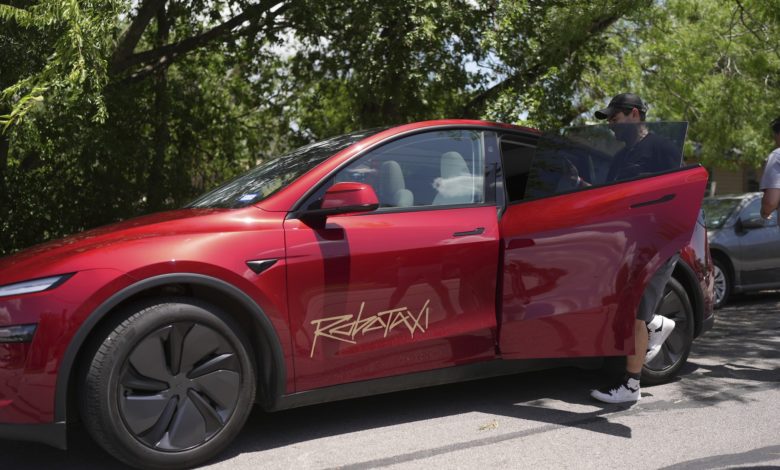
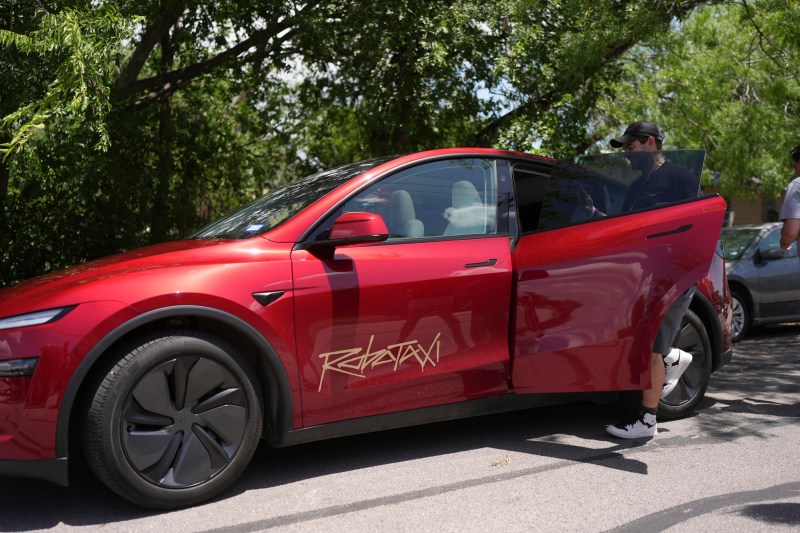
Passenger climbing in a robotaxi tesla, in Austin, photo: Eric Gay / AP / Profimedia Images
The manufacturer of Tesla electric cars and his CEO Elon Musk were sued by shareholders who accuse them of fraudulent values on the grounds that they would hide the significant risks associated with the company's autonomous vehicles, including robotaxes, reports Reuters.
The collective complaint was filed on Monday night at a federal court in Austin, Texas, after the first public test of Tesla robotaxes, held at the end of June, showed that they were traveling at excessive speed, braking, climbing on the curb, entered the wrong strips and left the passengers in the middle of the roads.
The price of Tesla shares decreased by 6.1% within two trading days after the test started. The shareholders accused the manufacturer of electric vehicles of that he overestimated the efficiency of his autonomous driving technology, thus inflating the prospects and the price of the company's shares.
The process requires unspecified damages for shareholders who held shares between April 19, 2023 and June 22, 2025.
Tesla launched in June his service of robotaxes, autonomous taximeters without a driver, in Austin – the capital of Texas where Musk relocated the company headquarters in 2021.
The billionaire sees robotaxes as one of the future projects of Tesla
Musk has predicted since 2019 that one million autonomous Tesla taxis will run on the streets of America.
In fact, the service has only debuted now, with about ten models Tesla model Y rebranding, according to reports in the American press.
Tesla has restricted the operation in an area delimited by geolocation in Austin, a city in the US state of Texas, and, for now, operates only during the day. There is still no sign of the robovan concept, which Musk presented at an event last year.
Tesla invited a small group of influences, passionate supporters of Elon Musk's car business, testing the service launched in Austin.
Although the resulting reviews were almost universally positive, the videos filmed in the taxi show that a passenger – described as a “safety monitor” – was in cars to provide technical support and probably to press an emergency stop button.