The Nordic countries are hit by a “truly unprecedented” heat wave. Reached 30 degrees Celsius at the Arctic Circle

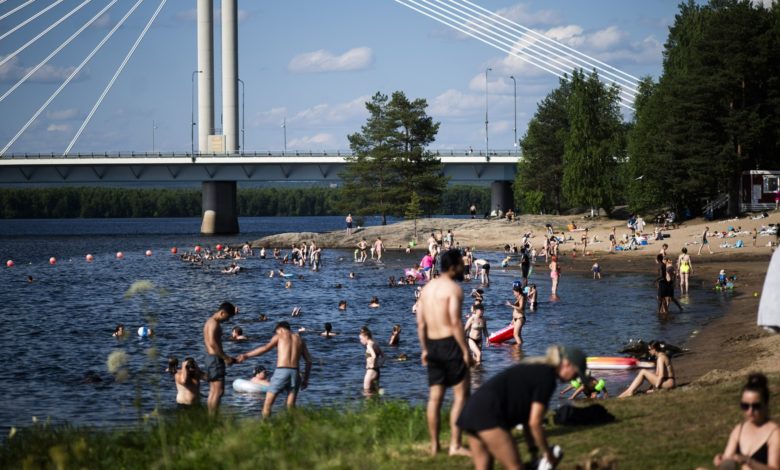
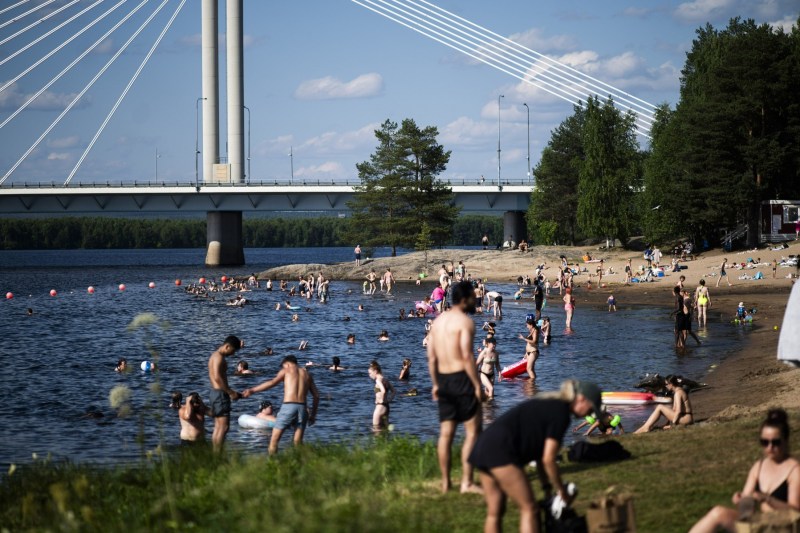
People take a bath on a beach in Rovaniemi, Finland, Polar Circle, on July 23, 2025. Credit Line: Porsanger / Lehtikuva / Shutterstock Editorial / Profimedia
The northern countries, usually cold, melt under a wave of heat “truly unprecedented”, as the hot weather, intensified and prolonged by carbon pollution, continues to affect Northern Europe, The Guardian reports.
A weather station from the Norwegian part of the Arctic Polar Circle recorded temperatures over 30 degrees Celsius in 13 days in July, while Finland had three consecutive weeks with temperatures of 30 degrees.
Scientists say it is the longest period of 1961 registered heat and is 50% longer than the previous record.
“The truly precedent heat wave continues in force, with maximum temperatures of about 32-33 Ceslius,” said Mika Rantanen, a climatologist at the Finnish Meteorological Institute, in a post on social networks.
“Even the Arctic regions recorded three weeks over 25 degrees Celsius,” the climatologist said.
The Norwegian Meteorological Institute said, in turn, that temperatures above 30 degrees Celsius were recorded in 12 days in July by at least one station in the three northerniest regions of the country.
Although the country had a short break last week, when the hot weather went to the north and east, the Institute said that the temperatures of 30 degrees Celsius would be reached again on the weekend.
In Sweden, meteorologists said that persistent heat waves have been recorded at several stations in the north of the country, a weather station in Haparanda registering 25 degrees Celsius or even longer than 14 consecutive days. In Jokkmokk, Lapland, the heat wave lasted 15 days.
The hot weather surprised the people from one side of the continent better adapted to the cold. Researchers say that countries such as the United Kingdom, Norway and Switzerland will face the highest relative increase in the number of days with uncomfortable temperatures as the planet warms up and warned that their infrastructure is not appropriate to cope with this situation.