The life of a small community in Albania, given over a mass exodus abroad: “See you in London”

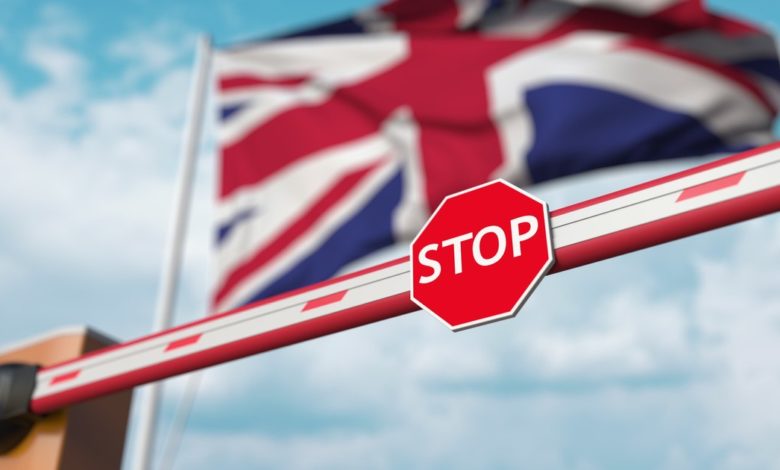
Has, a municipality in northern Albanie with only about 5,000 inhabitants, is deeply affected by the phenomenon of mass migration of men, especially of young people, reports the Daily Mail.
The British publication cites the testimony of Besmirei, 32, who has not seen his four-year-old husband after he entered the UK. It paid in 2021 5,000 pounds to illegally cross the sleeve channel in a small boat, leaving France.
After working as a gardener, he finally settled at Manchester, where he works on a site. He rented a small room and works12 hours a day, six days a week, to earn enough money to send them home to his wife and his relatives.
Besmira is not the only one in this situation after most of the men have left Has, where there is a high unemployment rate.
According to statistics, only in 2022 13,000 Albanians illegally entered the United Kingdom, in search of opportunities to earn their living on the black market.
At that time, almost four out of ten migrants who went up in the craftsmen of the traffickers on the sleeve channel came from Albania. But the biggest exodus was probably from Has, a municipality with only 5,000 inhabitants, who are three hours -driving to the north of the Tirana capital.
As a testimony there is a monument erected in the main market, in the center of which there is a heart decorated with both the flag of Great Britain and with the flag of Albania, as a tribute to the connections between the two countries, even if many Albanians do not work with legal forms there.
At the same time, an imposing statue of the late Queen Elizabeth II was built near the town hall and, after its death, the community held a day of mourning. At first glance, it would seem to be a tribute to a small community distant to a country that offered them so many citizens. But the social consequences are devastating.
A community composed mainly of women
After completing 10 classes, teenagers take their soles, breaking up with teachers with the formula “See you in London”, rather than the traditional “See you later”.
Remaining behind, teenagers spend their time wandering around the city, in their cafes, with those of their age, but in their group the boys are rare.
“They don't have to work because their brothers send them money from England. In the meantime, the boys who should court or take men are in England.”said a bartender from the city.
After the boys and men left the community massively, the family heads remained. Even street sweatmen – a traditional male job in Albania – are women.
Children grow up without fathers, which I see only on a screen when they communicate on the zoom.
Besmira is familiar with this form of remote communication. “I am depressed, like many of the women left here,” she says.
“The emigration of men destroys family ties. Families are turned back. There is an increase in divorces, while once they rarely happened in our united society. The city has been transformed. Money comes, of course, sent from the United Kingdom. But the money is not everything.”
Besmira has taken into account to move to the UK, but the costs of illegal entry into this country are beyond its powers.
In fact, there are risks. In the last two years, the Conservative Government has taken drastic measures against the boat crossings of the sleeve channel by Albanian economic migrants, deporting many of them in their “safe country” by plane.
Therefore, Albanians are increasingly using trucks on the ferries on the sleeve channel to enter the UK in France – this is a much more expensive enterprise. The price of a ticket for this trip has reached the huge amount of pounds 22,000, according to Has inhabitants, the Daily Mail reports.
The story of a couple of Albanians separated from immigration
“All the money my husband sends to his parents, with whom I live, or the other relatives he maintains,” she says. “There is nothing left for the trip to England.”
Besmira and Arben met in Has while they were 24, married and lived together for four years before he left. They love each other, she says. “We want children, of course,” she adds, while her eyes are filled with tears.
“We know that we are wasting this time. The idea was that it will return, but that never happens because of the money they have to send us. There are no jobs for him in Albania.”
An official of the municipality works on a project that hopes to stop the phenomenon locally and even convince those who left to return: a tourist village a few kilometers from HAS.
“There are 300 sunny days a year, so the development of tourism is the future,” says Jahir Cahani, a former 50 -year -old teacher, who witnessed the city's dramatic demographic change.
“The natural cycle in which a boy and a girl meet, get engaged, after which they get married and then the children have been interrupted,” he says.
“It is difficult for the girls here to meet boys. They are in the United Kingdom.”
Another former teacher intervenes in question.
“Men leave and it is something positive for the family economic situation,” explains Festim Dauti.
“It is quite the opposite of the family unit. For teenage boys, it is a problem if they do not have a paternal figure here. They need a father and mother to grow up and happy as good citizens.”
He also emphasizes that women carry the burden of raising children alone. But they also have the responsibility to take care of their parents, as is used to Albania, but also in -laws.
“It's too much for them,” he says. “I do this huge work that their husbands should share with them.”
The wedding season
July is the wedding season in Has and it is the time when men who have the right to stay in the UK-and therefore can fly back to Albania, return to marry the girls they left behind.
But after the ceremony, the brides do not automatically receive the right to live in the United Kingdom.
In order to obtain a so-called “husband/wife visa”, they will have to meet various criteria, including a minimum revenue threshold.
Therefore, many formalities will be needed, so many brides will not be able to follow their spouses a few weeks after the wedding.
At the Has wedding dresses store, the 19 -year -old Doriana sales assistant is very busy. “After the boys finish the school, they no longer work here, but emigrate,” she says.
“The girls I receive here are always alone or with a friend. They are waiting for their brides from England. In high school, the girls with me, in the 10th grade, had difficulty even to find a lover, because they had all left in the UK. These boys wanted more to make money than to have a relationship.”
Doriana, who studies medicine at the university, adds: “I am alone.”
“The migrants of men who return on vacation have enough money to spend, so we make a nice profit when they return in summer to get married,” says her boss.
“They have the necessary documents to work in the United Kingdom. They can return not like the illegal ones who can't come to marry, because once they go, they can no longer return.”
“In order for a marriage to work, there must be the left hand, the woman, and the right hand, the man,” says a 30 -year -old woman. “The right hand often lacks in an Albanian family now. The father is not there,” she adds, who has many masculine relatives.
According to the testimonies of the locals, in each Albanian city there is an agent who, for a certain amount, arranges the illegal transport of a boy or young in England. He embarks the future migrant in a visa flight to the EU, then organizes a truck or ferry trip to the United Kingdom.
Edmir, 29 years old, was deported in 2022 from the UK after nine years he worked in black in construction.
But his story proved to be a happy one. After returning to Albania, he felt without prospects. But he knew the future wife shortly after, and now she is waiting for a child.
“We will be a real family, but I lack the money I have earned in the UK,” he admits with regret, adding that he does not have a stable job.
But Besmira, who gave up the demographic service at the town hall, feels that life passes by her.
“I feel like I live a life in the second hand. While waiting for the husband to return, it is not good for my mental health and in the same situation there are hundreds of other wives and loved ones. Whenever Arben does not work, we talk on the phone. But we are married, we love each other.