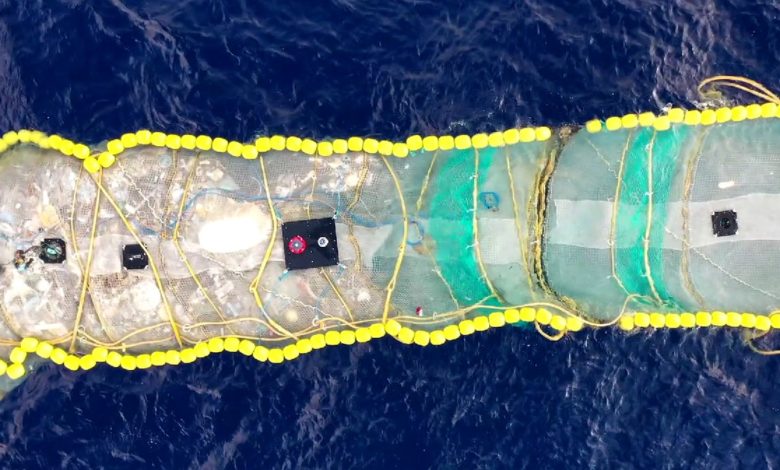
Read also at Business Insider
Narrator: In 2012, a teenager developed an ambitious plan to eliminate plastic from the ocean. Boyan Slat wanted to use natural currents to collect floating garbage inside a giant U -shaped barrier.
Boyan Slat, founder and general director, The Ocean Cleanup: I believe that a large pacific rubbish stain can completely clean up in just five years.
One plastic garbage truck goes to the ocean
Narrator: This schedule did not work, and on average one plastic garbage truck still goes to the ocean. The Ocean Cleanup, however, made progress. The non-profit organization removed over 200 tons of garbage from the Pacific.
Boyan: Many people claimed that it could not be done, that it was stupid, a fantasy.
Narrator: To really reduce plastic pollution, the organization is approaching its source. Most of the plastic in the oceans come from rivers, so The Dutch entrepreneur invented those large machines that capture waste before they reach open waters.
Boyan: The rivers act like arteries that transfer garbage from land to sea.
Narrator: These machines were called interceptors, and the founder plans to arrange a thousand of them. Some experts are afraid, however, that these machines can deprive the river and oceans of what should be there. So can garbage barriers clean the most polluted rivers in the world? And are the cleaner rivers a key to the plastic -free ocean? The Rio Ozama River in the Dominican Republic falls into the Caribbean Sea. This is one of the most difficult rivers in the world, and Carmen Encarnacion has lived near it for 24 years.
Carmen Encarnacion, craftsman: This has an emotional influence on us. It actually affects our whole life.
Narrator: In 2020, the Ocean Cleanup installed the capture of about 1.5 km down the river from her house.
Carmen: The river is cleaner. Feel that he is less polluted.
Garbage interception. How does it work?
Narrator: The idea is that the electricity will do most of the work. When the garbage flows down the river, the 213 m arm redirects it towards the machine hole.
Boyan: Barriers pass water, but stop everything that floats on it. On the roof there are solar panels that are connected to energy storage batteries, thanks to which We can capture plastic even at night.
Narrator: Tape conveyors transfer waste to one of six garbage cans. In the rainy season they can fill up in just three days. Many of today's waste are plants. And in this case it is probably not bad. These are invasive water hyacinths. They grow naturally in the Amazon, but in the last century people have introduced them to new places where there are no predators. These are places such as the Ozama River, where hyacinths take control, blocking light and oxygen and killing other plants and animals under them. The plant tends to develop in polluted water, and its roots adhere to the garbage.
Carmen: All toxic waste that people drop, get involved in plants.
From rivers to oceans. What does a global fight with plastic look like?
|
Business Iniser
Local factories and farms contribute to pollution
Narrator: nearby factories and farms have been using this river as a dump for decades. In Santo Domingo, many people living on the banks of Ozama, however, consist in her when it comes to drinking water. Many of them also have limited possibilities of dealing with waste.
Erik Holmbom, operational manager, The Ocean Cleanup: This is related to urban planning, and these communities do not have access roads for trucks.
Narrator: Some residents throw garbage into drainage ditches called Cañadas.
Erik: Cañada Bonavides is right behind me. This is one of the worst Cañadas, which are in the Ozama River. Just as rivers are arteries that transfer plastic to the ocean, so these Cañadas are arteries that transfer plastic to the river.
Narrator: The Ocean Cleanup estimates that Each year, Ozama goes to the Caribbean Sea to 22 thousand. tons of plastic. The organization has deployed 10 other interceptors in rivers around the world. These devices are not able to remove all types of pollution, such as chemicals or plastic, which does not rise on the water. Until the inhabitants have more opportunities to deal with rubbish, they will go to Ozama.
Erik: We work with local partners, such as the Dominican Navy or the United Nations program for development, to solve this problem.
Narrator: The Navy deals with daily river cleaning operations and works with the domestic government to manually collect garbage, which slips through the capture.
Erik: They turned out to be ideal partners for us, and by the end of the year they should become the owners of the intercepter.
Rivers transfer garbage to the oceans. Capture must be customized individually
Narrator: When this happens, The Ocean Cleanup will focus on other rivers, such as Rio Motagua in Guatemala, in which, according to the organization, there may be more plastic than in any other river in the world.
Boyan: In Guatemala, there is so much rubbish to the river that our machines would fill up in a few seconds. That is why we have prepared a different type of capture.
Narrator: The organization built a capture fence to catch plastic in the instant flooding zone.
Boyan: Each river is unique. Therefore, you need to adapt the interceptors to specific circumstances related to a given river.
Narrator: The fence is overwhelmed by some plastics, but Boyan expected to have an updated capture by the end of 2023. In the meantime The founder did not give up his original dream: purification of a large pacific garbage stain. He founded The Ocean Cleanup in 2013, and a decade later the stain is still growing. One of the challenges is that this is not really a stain. In fact, these are two rotating “clouds” of rubbish, which are often not visible on the surface.
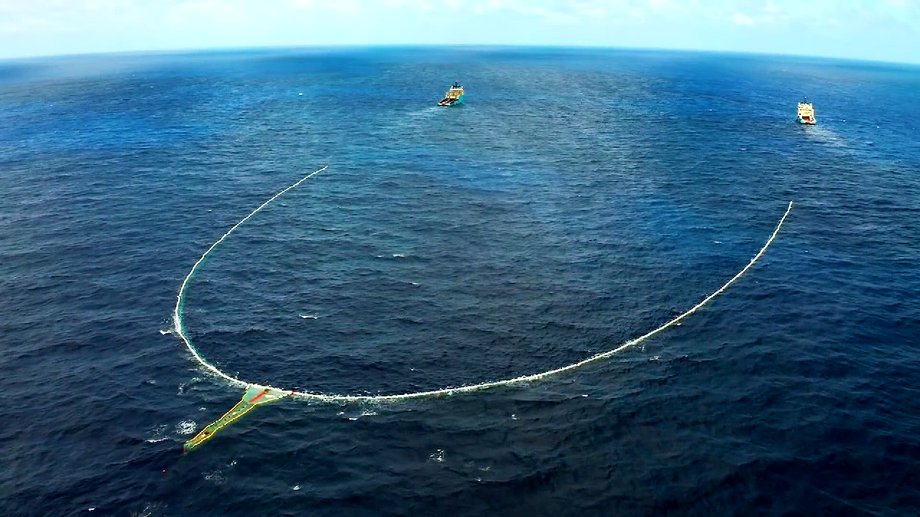
Natural sea currents have created five similar vortices around the world, and each of them accumulates rubbish. The organization is working on cleaning North Pacific Gyre with this. This is a flexible barrier with mesh stretched between two ships. The idea is to consolidate floating plastic, which makes it easier to collect it about once a week. The Ocean Cleanup claims that in total he has removed over 200 tons of plastic from Pacific Gyre. However, this is only about 0.2 percent. all the plastic that can swim here.
Is it possible to clean the oceans of plastic? Boyan Slat claims yes
|
Business Iniser
Impact of ocean purification on ecosystems
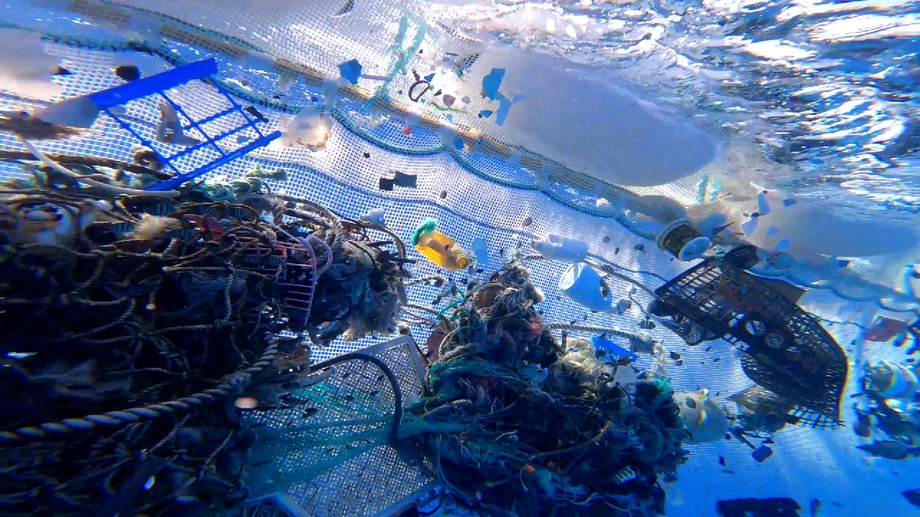
The team worked on a three times larger system. Some researchers are afraid that these cleaning machines can interfere with ecosystems, collecting live creatures along with rubbish. The Ocean Cleanup claims that the screen creates a downward flow that transfers live creatures under it. However, the system still catches some fish, crabs, mustache and other animals. The organization claims that it constantly tunes the device to keep the creatures away, but it is impossible to avoid them fully. This is partly because sea life is mixed with plastic and can even live on it.
Martin Thiel, professor of marine biology, Universidad Catolica del Norte: Sea, starfish, almost everything you can imagine can also be found on these plastics. Many organisms attach their egg to floating plastics.
Narrator: Some critics say that the idea of passive plastic collection is risky.
Martin: When the plastic is in the ocean, it connects to sea life. It is too late to remove it.
Narrator: Aiming is a potential alternative to clusters of garbage instead of combing the entire area.
Rebecca Helm, professor of maritime biology, Georgetown University: Plastic in the open ocean tends to accumulate in one place. Collecting plastic garbage is quite easy when they are accumulated in one place, because at one time you can clean up with an extremely large amount.
Narrator: These clusters are mainly fishing equipment that causes the greatest damage.
Rebecca: It should be focused on things such as abandoned equipment that is really dangerous for marine life. The most harmful ocean plastic is then gatherednot necessarily collecting some of the less harmful plastic things, such as washing baskets or buckets on which a lot of life can grow.
Narrator: The Ocean Cleanup claims that in the long run the ocean systems of the organization will be more scalable than manual cleaning. When it comes to cleansing rivers, experts were more optimistic.
Cleaning rivers and intercepting garbage is crucial
Jennifer Tank, biology professor, Notre Dame University: I really liked the scheme and the way it is done. I consider it the perfect solution. When the plastic is in the ocean, the problem becomes much more difficult to solve.
Narrator: This statement agrees with Boyan's results. His team collected more than 10 times more plastic from rivers than from the ocean. In Santo Domingo, members of the Dominican Navy empty the garbage cans and send waste to Duques's dump.
Boyan: Of course, a dump is not an ideal solution, but this A million times better than throwing plastic into the ocean.
Narrator: Boyan says that plastics from the river cannot be recycled as easily as those from the ocean.
Boyan: It is a larger mixture of plastic, and also much more polluted. Sewage often goes to the river.
How to reduce oceans pollution?
Narrator: Restoring a contaminated ecosystem to its original state requires major changes. The best way to keep the plastic away from rivers and oceans is to reduce its production.
Martin: Everyone can do something, but it is important that companies do what belongs to them. This must be cooperation between all sectors of society.
Narrator: In the meantime, Carmen does what he can to clean his area. In his free time, he collects water hyacinths and transforms them into art.
Carmen: We didn't know what to do with hyacinths. I was motivated to discover it.
Narrator: Carmen will start plants and pay hats, bags and other items.
Carmen: There are many types of decorations that we can make, while eliminating pollution.
Narrator: Like plastic, the plant can be useful, but Carmen still wants it to disappear.
Carmen: So if humanity does not unite and does not start working in recycling, pollution will proceed.
Crowd. Piotr Nazek