Photo “a world of 23 centuries ago”, rediscovered near Mangalia. “As if people had left there yesterday,” describes an archaeologist the moment

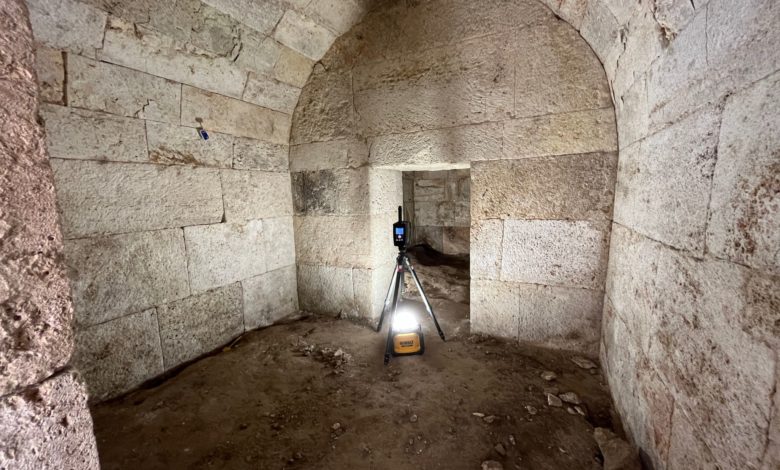
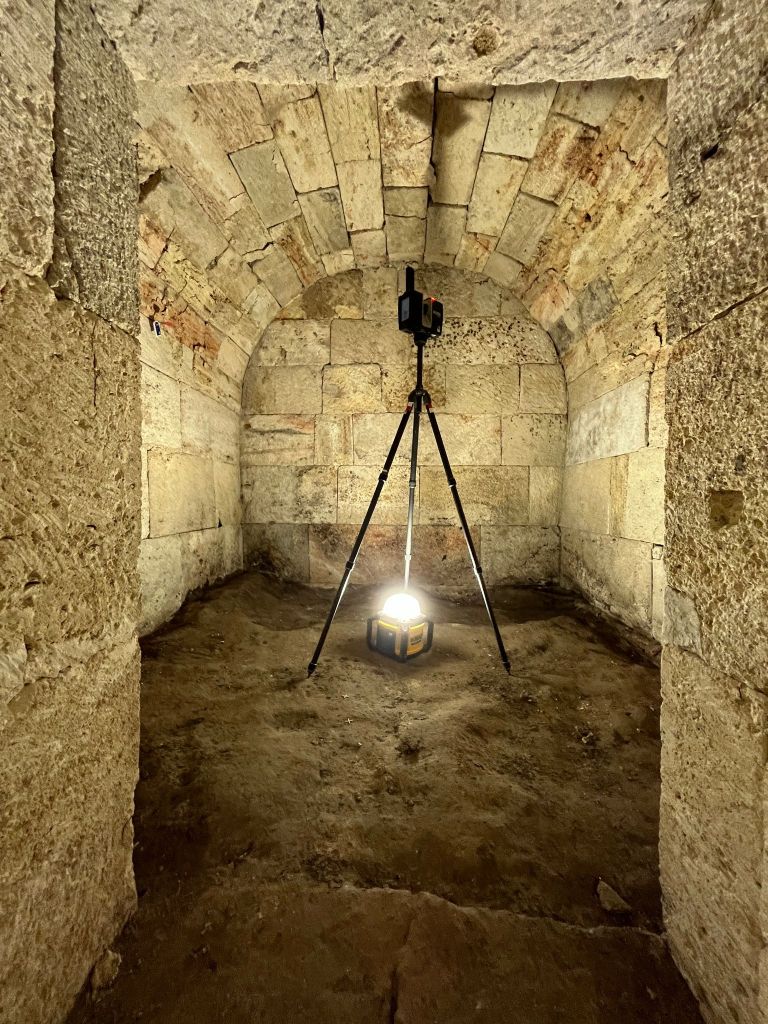
A lavish tomb, of a family of rich Greeks who lived more than 2,000 years ago in today's area, was recently brought to light. The archaeological discovery is a rare one for our country, and HotNews.ro wanted to find out what brings out. The archaeologists involved in the research thus restored the history of the place and talked about the emotions lived during the excavations. “When I entered, there was no silence. The wind was no longer heard,” says one of the researchers.
22 centuries ago, Callatis was not a resort, but it was the richest commercial city in this part of the Black Sea. It had large temples and other stone buildings, there was a large market, the port was flourishing and trade was made with very distant areas.
The richest and most influential families had links with the Macedonian world and allowed themselves to raise the funeral mounds that were over 5 meters high and that the work could take many months.
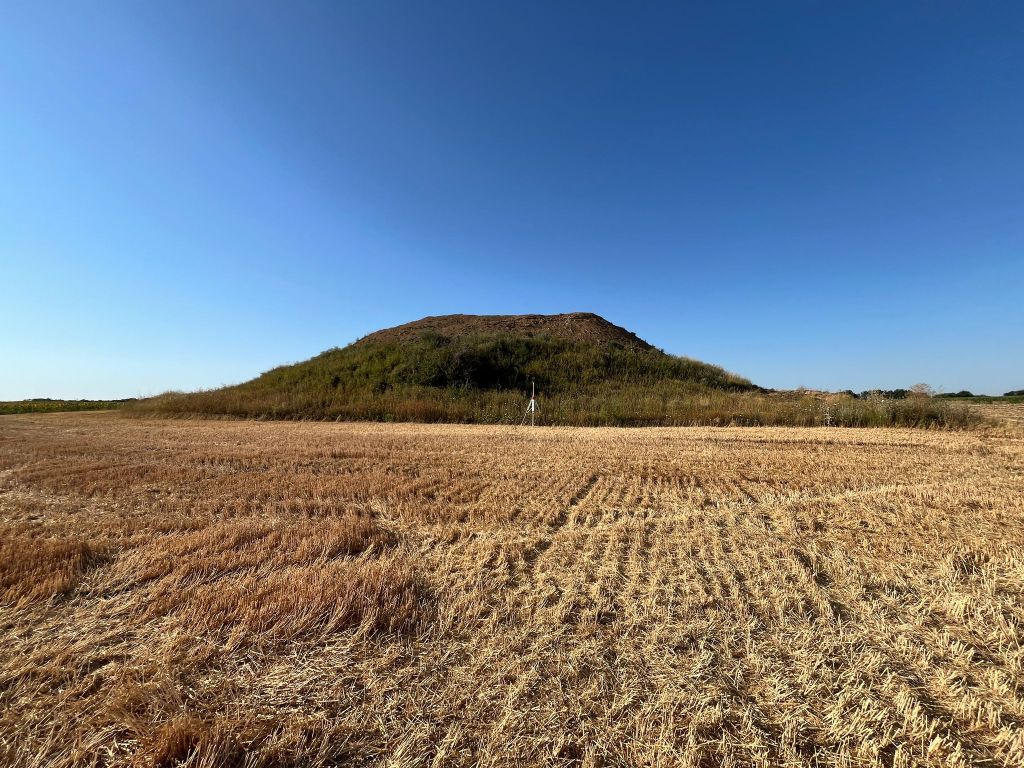
Back in today. The signs of the past come to light. In a large funeral mound, a few km from Mangalia, they were found ornaments that were used by rich Greeks from Callatis, 2,300 years ago. In Bulgaria or Turkey such discoveries are frequent, but not in Romania.
The cave was robbed shortly after the accomplishment, but the mound was immediately repaired. The “beds” of stone were also found on which, 23 centuries ago, the coffins of those deposited there would have been.
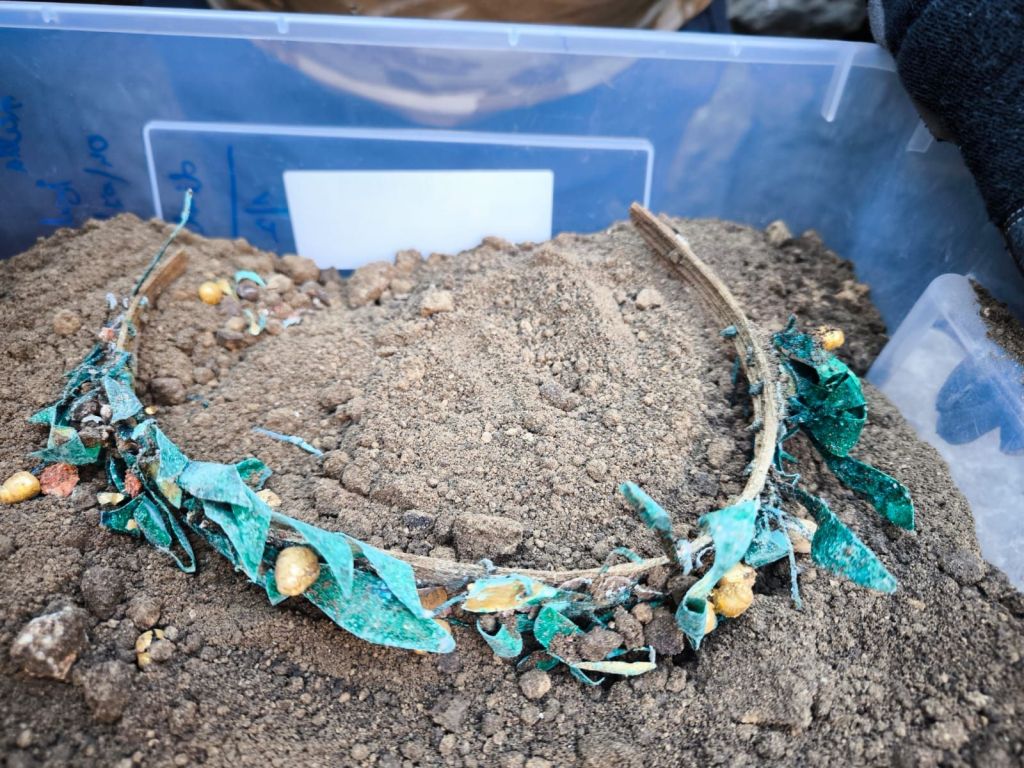
In this mound, in July 2025, gold, glass and bronze were found, the most beautiful being three funeral weddings with golden bronze leaves that mimic the shape of the mart and ivy, mounted on wooden support, with fruits made of gold ceramics.
The excavations began last year, and in the funeral room he entered the first time in November 2024. Since then, various small objects escaped by thieves over 22 centuries have been found. What happened there?
Thieves risked their lives to take as much as possible
“The scenario would sound like this: the family that raised the mound was defeated or lost power and had to leave Callatis. Shortly time came the robbers who knew immediately where to dig and there were probably dozens of people who worked for a few weeks to get down,” he explained to the hotnews.ro.
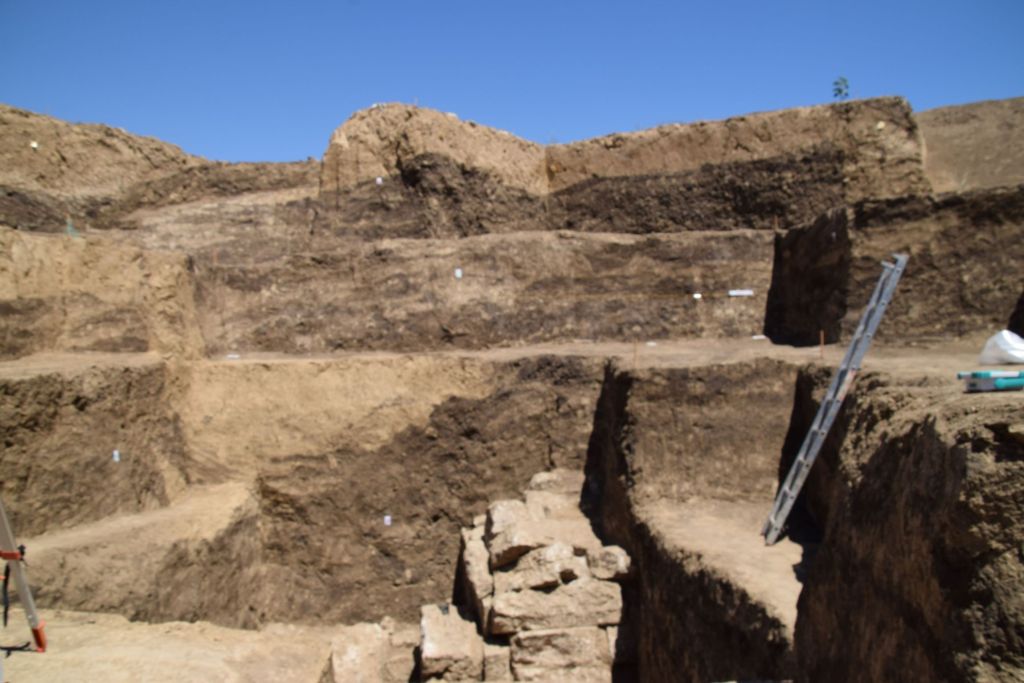
Part of the objects escaped by these robbers over 22 centuries ago have been discovered in the last days, and the archaeologist explains that the thieves 2,000 years ago have risked a lot, because they went down 14 meters below the ground, it was dark there, they opened the coffins and they took what bigger ornaments they found.
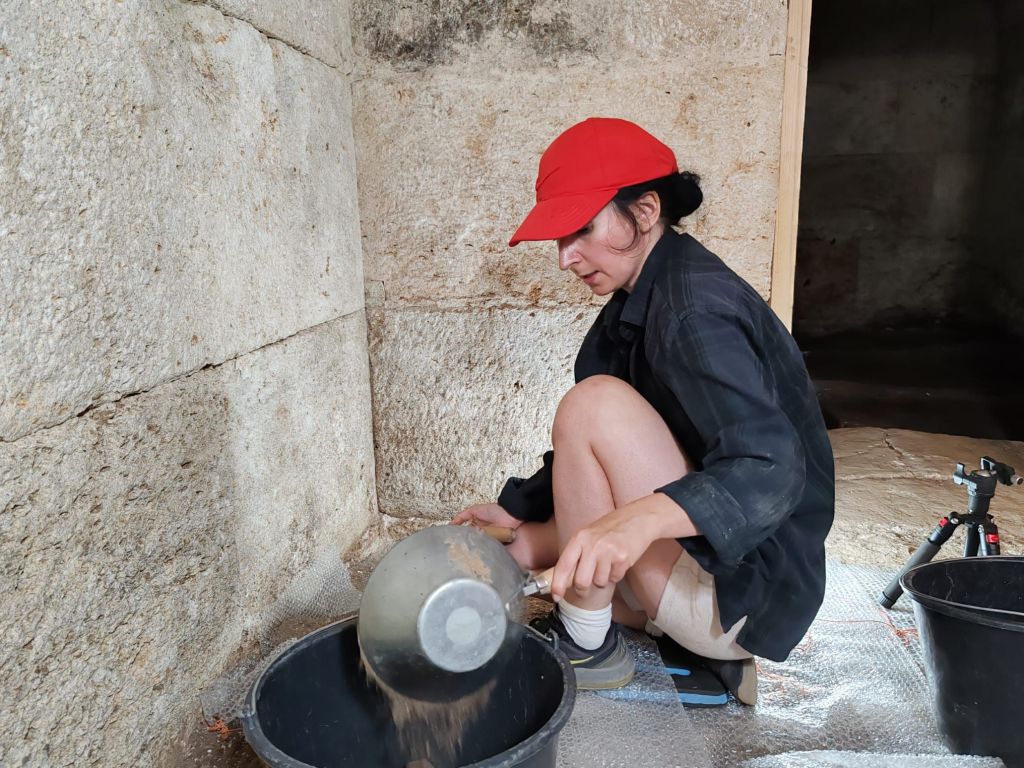
They also escaped their small objects and some of them were now discovered after excavations in the funeral room and at the base of the well where the robbers entered two millennia ago. The archaeologist says that the robbers probably found super-valuable and it is certain that the family that built the tomb had great financial power and was extremely influential in the city, to allow them to pay for such expensive work.
Family returned and made orders
Valeriu Sîrbu says that during a generation, those from the family who built the tomb returned, restored it and raised it a little. “They tried to restore everything as it was at the beginning and then they put the three diadem we have recently found. They were probably the children or grandchildren of those who raised the tomb.”
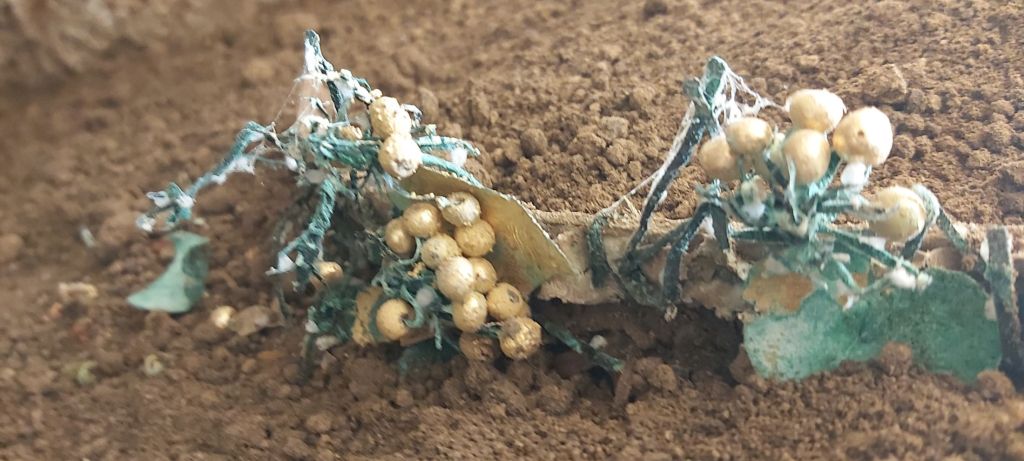
It is possible that a ceremony with alcohol consumption in important quantities, and the funeral wedding recently discovered are then are part of those offerings submitted then and represent a proof of the belief that life continues and after death and that the soul is immortal, archaeologists explained.
Even though the tomb was robbed from ancient times, in addition to the three crowns subsequently deposited with the family robbery, in the last days, other small gold pieces were found: earrings, a pendant, leaves, kidnappings, beads, clothing accessories and golden glass beads. These small gold and glass objects were part of larger decorative pieces.
A moment that cuts your breath
“I saw for the first time the funeral room on November 8, 2024, it was a rainy day, at the seafront was cold and the wind was blowing. When I entered it was quiet. The wind was not heard, and coming from the cold outside, I felt a clean atmosphere. I was after three weeks of difficult excavations, especially since I left the height of 9 meters above the first stone, when I gave the cavou ”, said at a press conference, Magdalena Stefan, archaeologist at the National History Museum, an institution that finances the project.
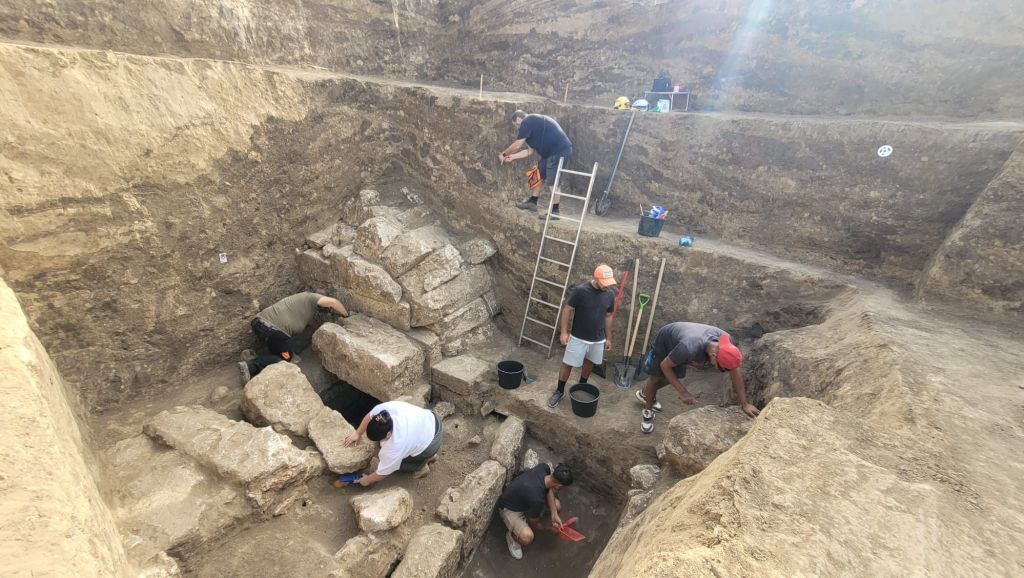
The course was long. “It lasted 15 years to get here. Such discoveries cannot be done by going in a day in the field and wishing you very much to discover a treasure. It takes a lot of perseverance, a lot of study, involvement and courage,” explains Magdalena Stefan.
I asked her how exactly this mound came? “Near her there is another smaller mound, where, since the 1970s, a cavou had been identified from the same historical period, within our project we went to visit it, opened excavations and, next to that mound, at 200 meters, we saw this huge mound,” she explained, adding that the mound is for ten meters.
Hopes the place to be transformed into a museum
The discoveries indicate that the first funeral in the Callatis tumor was made in 275 HR, and the last documented entry was around 225 BC, explained, for HotNews.ro, Valeriu Sîrbu.
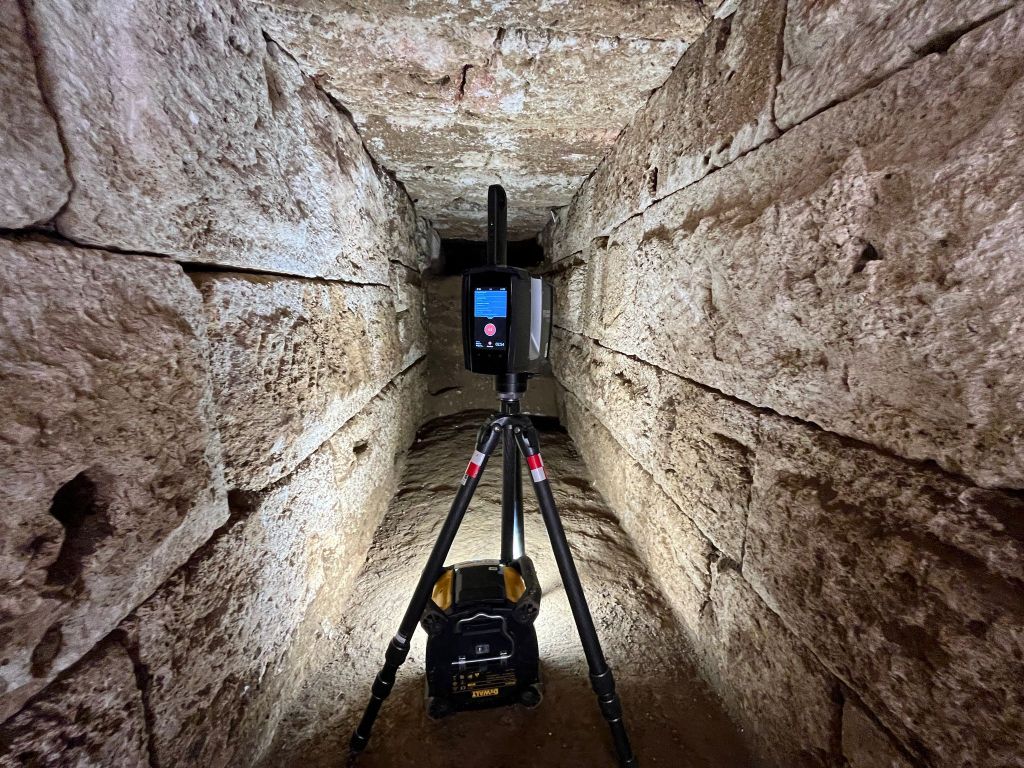
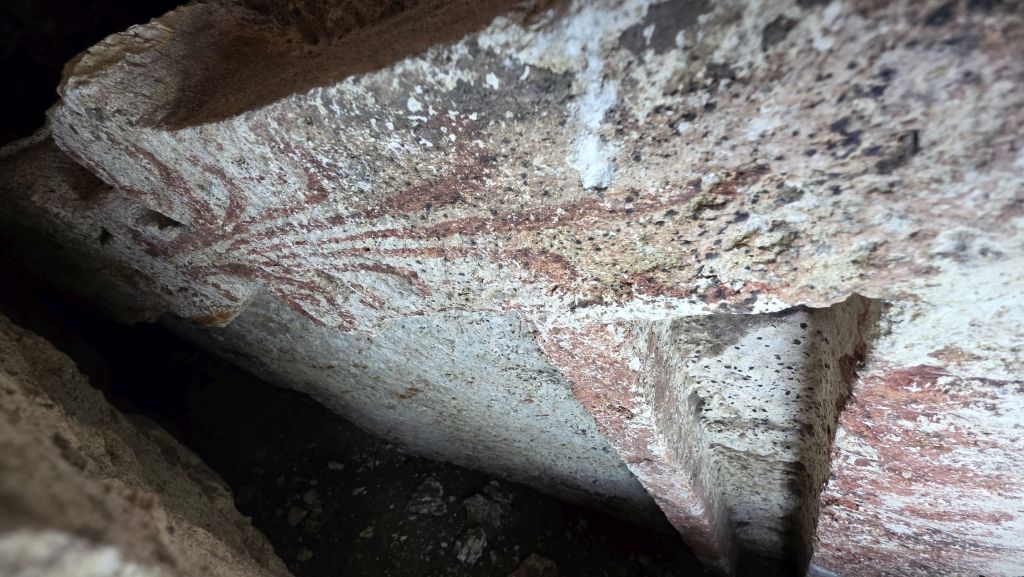
In the last days, the more interesting pieces have been raised, but also the pieces of the funeral “beds” that were taken to the National History Museum, to try to reconstruct some painted pieces of limestone and marble.
The great hope, if there will be money in the future, is for the place to become a museum, to be visited by the public.
Callatis, a rich and influential city 23 centuries ago
The city of Callatis was founded over 2,300 years ago on the Western shore of the Black Sea by Greek colonists in Heracleea Pontica and Megara, and this city was probably the most important urban center in the west of the Black Sea during that period.
The inhabitants of Callatis “were rich, were strong, they were beaten, they were involved in all kinds of wars, and the way they manifested were very colorful, especially in the funeral area,” says Magdalena Stefan.
She explains that for the Greeks, there were laws that regulated funeral behavior. You were not allowed to exaggerate even after death, thinking being that a too big tomb “feeds” a personality, and in Greeks, culture encouraged community and democracy.
“The necropolis was outside the walls. Being democracy, in the Greek cities there were rules and you could not build mausoleums and monuments in the lotisted cemeteries, because only the heroes and the gods were allowed with monuments (…) They were all outside the walls of the city and, like the Romans, they made their tombs.”
Archaeologist Dan Stefan, head of site at this project, says that the discoveries refer to a world of 23 centuries, a world of heroes when, after the death of Alexander the Great, all the cities in the area have been attracted in a complex political game that we currently find.
Huge funeral mounds
The tumular nepopola of the ancient city of Callatis stretched a few kilometers around the old roads, and the people of those times raised at least 1,000 mounds (funeral mounds), many of them of monumental dimensions (heights of 5 m and more). Only a few have survived, because many have been lost in the last century, when modern Mangalia has developed.
Previous excavations in some of these tumors were generally shipped or performed under rescue interventions, so it wasn't long.
Documaci, Neptune and the grave next to Mangalia
The excavations are part of a project of exploration of the Dobrogenic mounds, a project led by Valeriu Sîrbu and started 14 years ago with Magdalena Stefan and Dan Stefan.
The three archaeologists began in 2011 to discuss the exploration of some sites from the Black Sea, and in the first five years they did documentaries (archives, Lidar flights, drone research, geophysical works).
In 2017, financing was obtained and the excavations at Movila Documaci (also near Mangalia) began and in 2022 a work was published in the UK. There were also excavations at the Neptune Movila.
From 2023, the National History Museum of Romania organized within the site “Tummer necropolis of the ancient city”, in the continuation of the Kalla project a distinct sector. The researched mound is part of this sector, and the discoveries were possible due to the funds provided by MNIR and the Ministry of Culture.
“The discovery now, among the extraordinary and fascinating”
For the mound in which the excavations are made now, the most impressive that has been kept in the necropolis Callatis, four years lasted the geophysical research, explains the archaeologist Valeriu Sîrbu.
In 2024 they first entered the funeral room. “This year marks the 50 years since they do archaeological research and I can tell you that the discovery now is among the extraordinary and fascinating.” Why? Because beautiful and valuable objects were found relatively quickly, in a place that had been trampled by thieves and seemed not to promise much.
Movila is the largest at present in the south of Dobrogea, measuring 12 m high and 70 m in diameter, being visible from the sea, an important landscape.
The cave is the work of an experienced architect who has designed everything carefully, in a fine game of proportions, is also noted for its dimensions. So far, the stone construction has been identified on 18 m long, but the research continues, especially in the access corridor sector, say archaeologists.
Human bones were also found from at least three different individuals: a baby of at least two years, a 16-18-year-old teenager and an 8-11-year-old child, at least one of the individuals can be assumed to be female, because an earring and part of a swollen kit was found.