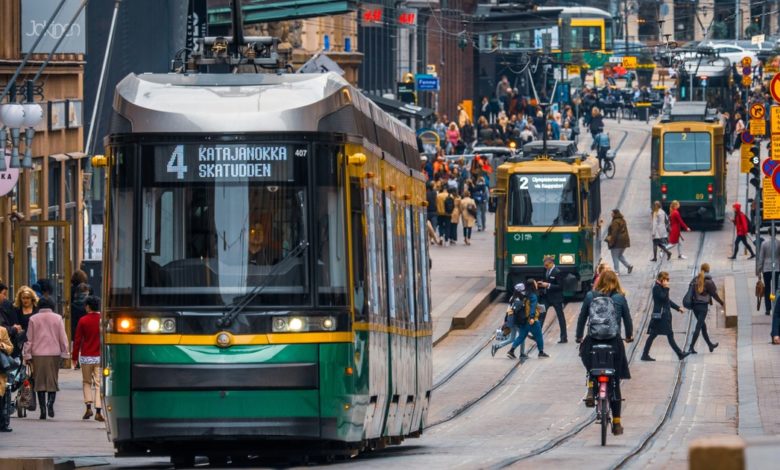
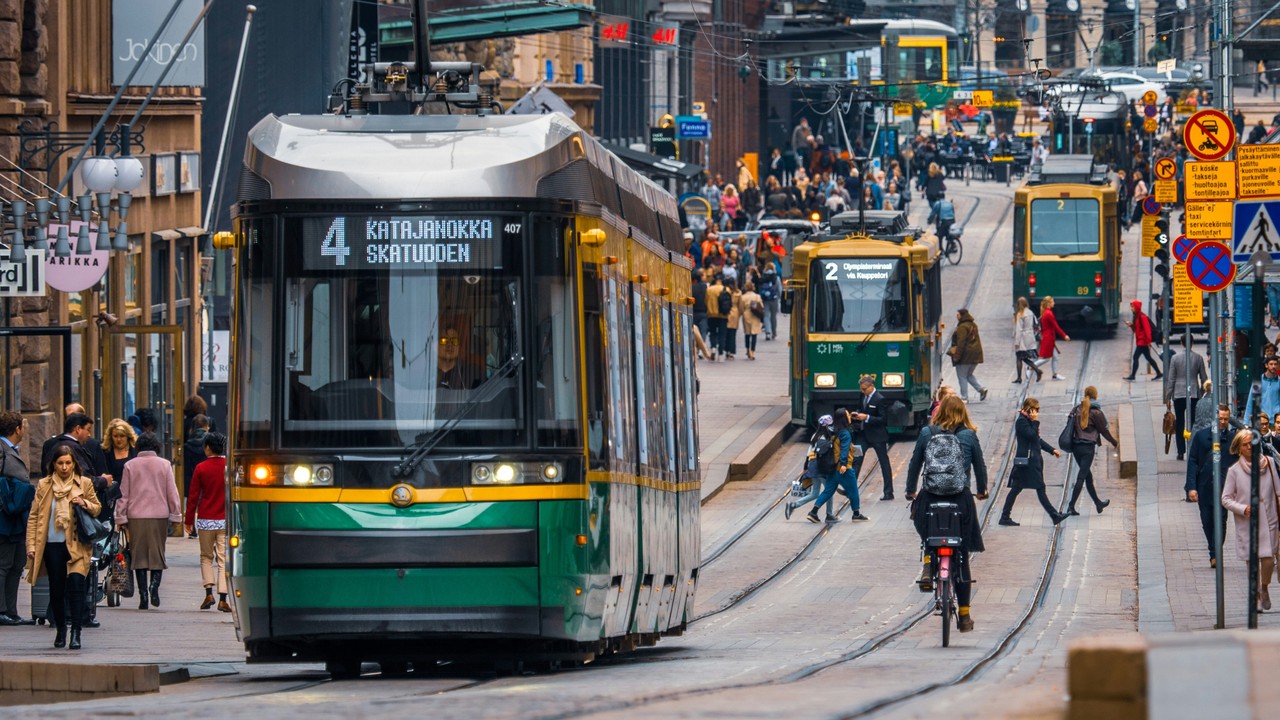
Although the number of fatalities of road accidents in the entire EU is falling – in 2024 a 3 % decrease was recorded. – These accidents with tragic effect are still common in metropolitan areas. All year without a single accident is an extraordinary achievement for most cities, and even more so for the European capital.
In 2023, 7807 people were killed in road accidents in EU cities. Last year, 55 people were killed in road accidents in Berlin, in the last 12 months nine people lost their lives in the Brussels region, and in Warsaw in 2024 11 people were killed on the roads.
Although Helsinki belongs to the smallest EU capitals, slightly less than 690 thousand. residents, about 1.5 million people come to work in the agglomeration. Roni Dressinen, a traffic engineer in the Municipal Department of the Environment, told the Finnish press that this achievement results from “many factors, but speed limits are one of the most important.”
Citing data indicating that the risk of fatal pedestrian accidents is reduced by half due to the limit of cars from 40 to 30 km per hour, the city authorities introduced in 2021 such restrictions in most residential districts and in the center of Helsinki.
The restrictions were introduced with 70 new speed cameras and a police strategy, which aims to completely eliminate road accidents and fatalities. Data collected by Likentenurva, a Finnish Road Safety Agency, show that since then the number of fatalities of road accidents in Helsinki has been decreasing.
European model
The Helsinki authorities spent the last five years, trying to repeat the miracle, which they first reached in 2019, when no pedestrian or cyclist died in car accidents.
Dziainen emphasizes that the success of this mission is based on data -based, long -term mobility policies and urban development strategies, which have once transformed the capital -oriented cars. In many parts of the city, roads were narrowed and trees were planted so that drivers feel less comfortable – the justification for this decision was the belief that complicated urban buildings forces drivers to drive more carefully in densely populated areas.
The city also invested in a new infrastructure for pedestrians and cyclists, including a vast network of bicycle paths over 1500 km long. The public transport network has been strengthened thanks to the non -emission and autonomous buses, and the city authorities obtained financing from the European Investment Bank for the construction of a new tram line.
Ubiainen adds that the modernization has helped “limit the use of cars, and with this number of serious accidents.” Statistics show that in the years 2003–2023 the number of road accidents victims in the city fell from 727 to just 14.
Helsinki's success was noticed in Brussels, where the European Commission presses to limit the number of fatalities of road accidents. At the beginning of this year, the EU Commissioner for Transport Apostolos Tzitzikostas noticed that most of the Member States are not on the right track to reach the EU goal of 2018, which is a reduction by half the number of fatalities of road accidents until 2030.
Hanne Cokelaere cooperated in writing this article.