NATO's “non -e banished aircraft carrier” is 180 degrees. Putin is chained. The fall of the taboo causes a shock in the Kremlin

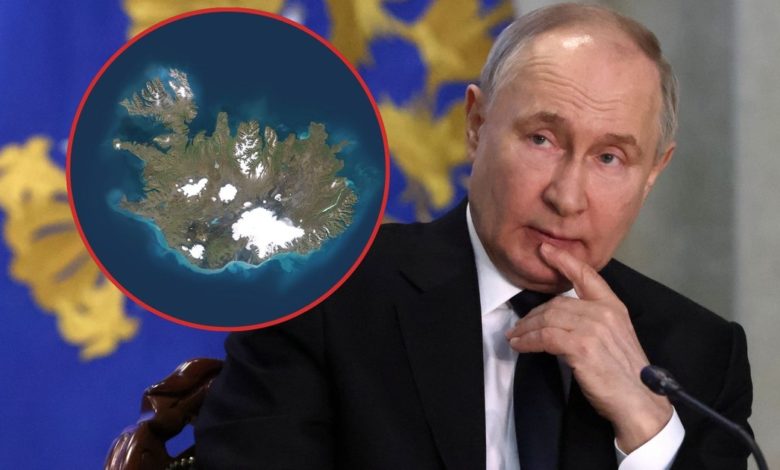
The Arctic was in the center of world politics. Not only because of geopolitics, but also because faster melting ice reveals new natural resources and new routes in the North Sea.
In addition, there are important cables in the Arctic, which are necessary for communication between Europe and North America. Moscow's hybrid attacks on NATO critical infrastructure have become new everyday life. At this key moment, the sleeping Nordic country wakes up from the “winter sleep” – causing nervousness in Moscow.
Hundreds of people gathered in front of the parliament building in Reykjavik. They protest loudly, throw eggs and stones at the building, knock off windows. The police stand in their way, using tear gas to prevent them from invading parliament. It is March 30, 1949 – the day when Iceland voted for joining NATO. This country is the only of twelve founding members who has experienced mass protests against membership in the alliance.
Only 400,000 residents and a small GDP make this country simply not able to finance its own defense. At least that was a common consensus.
However, then Russia attacked Ukraine, and Donald Trump returned to the White House. The US President openly questions the sovereignty of allied countries. The change in the world situation has changed the way of thinking in Iceland, which, like no other state, depends on the US military support. Suddenly the defensive budget is to be repeatedly increased, and some voices even demand that their army create. Even a taboo membership in the EU may soon fall.
Little Iceland belongs to NATO, but it does not spend any funds on defense and there are no soldiers. Now there is a change in attitude – and not only because of the aggressive war of Russia. Even the EU taboos has been collapsed for decades.
And yet the special role of Iceland was beneficial for both sides for a long time. According to the compromise, Iceland does not contribute in the form of soldiers and money, but above all it contributes to the implementation of NATO's geostrategic goals.
Iceland provides the necessary military facilities and infrastructure free of charge to NATO partners, and they provide defense of the island in return. From 1951, the United States ran an air base at the airport in Keflavik, but in 2006 they withdrew to focus more in the Middle East. In response, Iceland approached European partners and concluded defense agreements with Denmark and Norway.
Iceland was excluded from a new expenditure in the amount of 5 percent. Nevertheless, after the NATO summit, the government announced that in the future it would allocate at least 1.5 percent. for investments related to non -military defense – i.e. ten times more than today. The money will not be allocated to the construction of the army, but for the appropriate infrastructure: Keflavik Airport, Coast Guard, Population protection, energy and communication networks.
Fight for influence in the Arctic
Soldiers do not stand permanently in Iceland, and only for a few weeks in the year Member States lead to change maneuvers aimed at supervising the aircraft and water around the island. The country's own capabilities are very limited: there is no defense ministry, special services – only a civilian coastal guard and a small unit for crisis, consisting of police officers and coast guards.
In the event of a serious threat, Iceland would be completely dependent on the support of NATO partners. After the Cold War, this was not a problem – now the situation has changed clearly.
The new interest in the Arctic is carefully tracked in Iceland, as is the threats of US President Trump towards neighboring Greenland and his explicit contempt for NATO countries that do not meet their financial obligations.
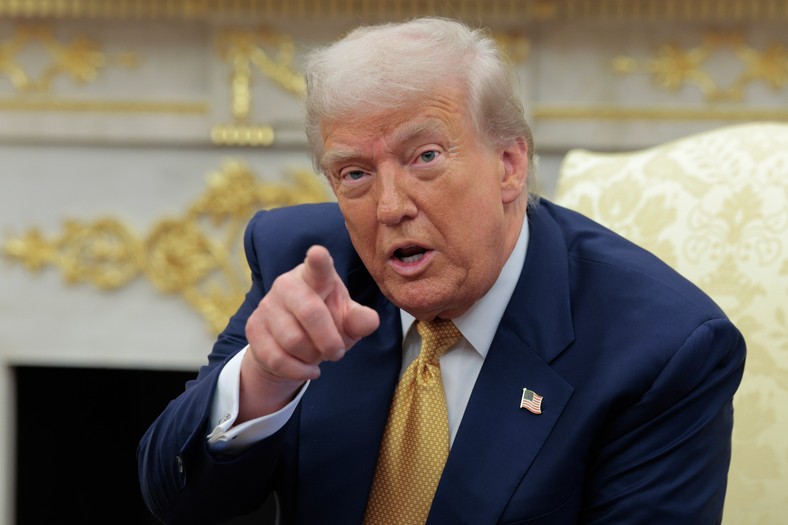
Donald Trump
Iceland has always tried to demonstrate its value for the alliance. In addition to regular maneuvers on the island, the Icelandic crisis unit also took part in NATO missions in Afghanistan and Kosovo.
But is it enough to be able to count on US help if necessary? Or maybe just in case you would need your own safety network? Just a few years ago, almost no one would dare to ask such questions in Iceland.
“We considered many things to be obvious, because we are in a strategically important position,” said Prime Minister of Iceland Kristrun Frostadottir in an interview with the newspaper “Tagespiegel”. “Consciousness and issues related to NATO are changing are discussed more openly.”
Message for Washington
“For Iceland, it makes no sense to get involved in the arms race now,” Frostadottir added. “We have different advantages and it is important that every country properly uses its possibilities.” Until autumn, the inter -party working group is to develop a new security and defense strategy. The message, probably also directed to Washington, is clear – Iceland is ready to perform its part of the task.
These are significant steps for a country that has opposed all forms of militarization for decades. However, some are not enough for some. A former representative of Iceland in NATO, Arnor Sigurjonsson, was in favor of creating an Icelandic army.
“It is always said that there are too few of us and we are too poor. But this is simply not true,” he said in an interview with The Economist. Iceland diminishes its meaning, still passing its defense to allies.
It used to be a minority opinion, but now more and more security experts share this view. The government has not sent any signals in this direction so far – probably also because the vast majority of society is not ready for it.
Current study of the Gallup Institute [najstarszy instytut badania opinii społecznej na świecie] shows that almost three quarters of respondents reject the idea of having their own army, and only 14 percent. He was in favor of this solution. However, this step does not seem excluded – Foreign Minister Thorgerdur Katrin Gunnarsdottir recently pointed out that Luxembourg and Malta also have small armies, and said: “I'm not afraid of this debate.”
On the other hand Another debate has been going on for a long time – it concerns the EU joining. The state has always been skeptical about the perspective of giving part of sovereignty.
During the financial crisis, Iceland took a step towards the EU for the first time, but the talks were interrupted as a result of the dispute over fishing rights. Currently, the security situation is different – the EU has recently played a greater role in the security policy and compared to the United States seems to be a more reliable partner.
The first step towards rapprochement is already getting ready. After meeting with the chairwoman of the European Commission Ursula von der Leyen Premier Frostadóttir announced that Iceland is seeking to enter into a partnership in the field of security and defense with the EU.
The talks are to be completed by the end of the year. Thanks to this, Iceland, like Norway or Great Britain, could use the SAFE program, which is to enable Member States to invest in defense and infrastructure.
The new public opinion also shows that the vast majority of respondents are in favor of a new referendum on the resumption of conversations with the EU. Ok 45 percent respondents would be in favor of joining the EU – five percentage points more than before – and about 35 percent. It would be against.
The rest is undecided. The government, which started the term in December, promised to carry out a referendum by 2027. However, in the face of faster geopolitical changes, this may occur much earlier.