“What David Popovici feels is a psychological self -sabotage!” »Two psychologists about the shocking statements of the Romanian swimmer


Article by Oana Enemănescu – published on Wednesday, July 30, 2025, 13:30 / Updated Wednesday, July 30, 2025 13:34
Andrada Vincze and Irina Bodnariu, psychologists working with performance athletes from Romania, analyzed for GSP.ro the statements of the Romanian swimmer David Popovici, who defended the title at 200 meters free, in the World Natation Championships from Singapore.
In a series of unexpected denominations, David Popovici said that he was about to abandon the World Championships and return home because of “fear of reaching his potential.”
“I felt I couldn't continue. And, as I said to them earlier, not out of a fear of losing or not going in the times the world was waiting for, but from a fear of reaching my own potential. And precisely because this year I started to feel very good in training, to reach some times I never touched, to have an excellent competition in Slovakia a month ago … “.
In the public space, it was said that David Popovici confessed that he would have a mental health problem, which made him as hesitant. Specialized people do not agree.
What psycholoaga Andrada Vincze says about David Popovici's statements: “It's just a psychological challenge, not a mental health problem”
“First of all, I would like to say that this is not a mental health problem. It was just a moment of psychological challenge, these are thoughts that athletes are very often facing. To have a mental health problem, there should be other signs: Intensive intensity of sensations, inability to train, to eat, to sleep, a higher degree of affect.
Everything I saw in Popovici contradicts these signs, were just questions that he put at this time of his life, ”said Andrada Vincze.
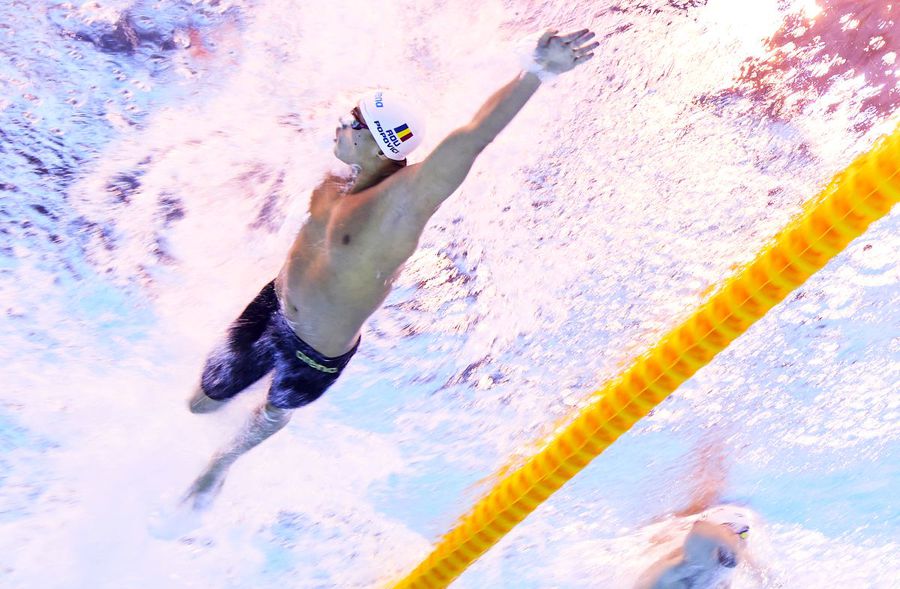
David Popovici is unstoppable in Singapore. Photo: Guliver/Gettyimages
The psychologist also said that, immediately after the press appeared the confession of David Popovici, one of the athletes who are in charge of sending him the link with the statements of the world champion, along with the comment: “If they knew how often this happens …”
“Yes, this often happens to the athletes. Many of them ask themselves if this was all they can do, if they have not reached the end of resources of any kind.
Touching the maximum potential is for some a reason for joy, for others a reason for fear. The latter ask the question: “Who am I after?” That is, for some they turn into a true existential crisis, ”Vincze explained.
What differentiates him from David from other athletes is the “voice”.
“David Popovici has the platform from where he can be expressed, because he is known and benefit from exposure. There are many athletes who do not have this resort, to speak and to be listened to. David Popovici also has the courage to tell the states that he went to a certain moment in his life,” added psychologist Andrada Vincze.
“Sometimes we can accomplish things that we cannot conceive, but we have blockages. It is not something unnatural. Some exceed them, as Popovici did, others do not – and never reach that maximum potential,” concluded Andrada Vincze.
Irina Bodnariu, sports psychologist: “This form of blockage is called successful anxiety or self -sabotage”
Irina Bodnariu, another sports psychologist, appreciated the opening of David Popovici to speak of fear.
“When a world champion acknowledges that he wanted to abandon, not because he was afraid he would lose, but because he was afraid he would succeed, we are dealing with a rare lesson of psychological lucidity.

Irina Bodnariu, psychotherapist and sports psychologist
The confession of David Popovici after the gold from Singapore is perhaps one of the most important statements made public by a Romanian athlete in recent years. Not because it is vulnerable, but because it is true, deep and relevant to all those who live in the performance arena, ”said Irina Bodnariu.
“In sports psychology, this form of blockage is called successful anxiety or self -sabotage. It appears when the athlete is not afraid of defeat, but the responsibility that comes with the victories.
The human brain is set to prefer the familiar – even if that familiar means limits. And when success becomes real, deep defense mechanisms are activated: avoidance, escape, blockage, distrust. The athlete does not “give up”, but defends something that seems bigger than it can lead to emotional, “explained the specialist.
“You need a solid group around you to remember you deserve.” This phrase should be placed on the walls of each training room, because the athletes are not robots. There are people.
And even the biggest champions need someone to say, when I can't: «You are enough. And even if you do not win, you do not lose yourself ». David Popovici did not offer us only a performance, but a public lesson in emotional hygiene.
Made visible what was happening behind the scenes. And he reminded us that, beyond gold, records and applause, the most important gain is not to abandon yourself in the chase, “Bodnariu said.