This crisis may plunge the Russian economy. The fall would be catastrophic

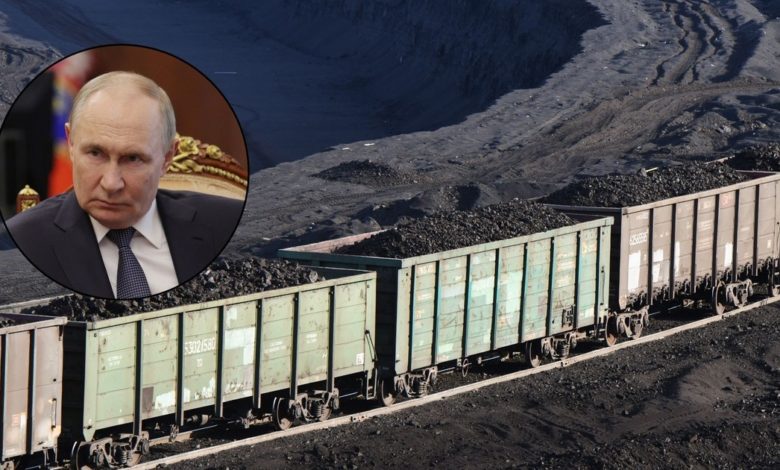
Prices of both energy coal, used for the production of electricity and metallurgical coal, necessary for the production of steel, increased rapidly in 2021–2023 as a result of economic recovery after Pandemic and uncertainty of supplies caused by war in Ukraine.
However, this boom has already passed.
Production has increased all over the world, especially in China, India and Indonesia, while Global demand has dropped. The increase in consumption has dropped from 4.7 percent. in 2022 to just 1 percent in 2024, causing a drop in prices from $ 400. (at the current exchange rate PLN 1.4 thousand) for a ton at the end of 2022 and at the beginning of 2023 to approx. $ 100 (PLN 367) per ton in May 2025.
Russian coal is sold with a big discount.
Russia, which in 2021 sold about 22.6 percent its coal to the EU was affected by the European embargo, which forced producers to redirect deliveries to Asia, where buyers used disturbances in supplies to negotiate lower prices.
According to the business daily, Wedomosti, at the end of June, Russia's export prices fell to $ 69. (PLN 254) The lowest level from 2020. Under FOB terms, the seller covers the costs of delivery to the port, but not the costs of maritime transport.
“Production is completely unprofitable”
The cost of producing and transporting one ton of energy coal is estimated on 6,000. up to 6.5 thousand rubles (271 to 293 PLN). This means that with the current strong ruble rate, the sale price of $ 70. For a ton (approx. 5.5 thousand rubles, i.e. PLN 257), it does not cover the costs of many companies located away from the Far East ports.
– At current prices, currency courses, financing costs as well as rail and sea logistics, the production of energy coal in Kuzbas is completely unprofitable – says Roman Gołowin, strategy director at Siberian Coal Energy Company (SUEK), a mining company that is the largest coal producer in Russia.
He adds that Four out of 10 SUEK carbon enterprises have already limited their operations or are considering closing.
According to official statistics, the share of lossy carbon enterprises increased from 31.5 percent. in 2023 to 53.3 percent in 2024
Why is this industry important?
Despite the challenges, the government is unlikely to allow the coal industry to fall.
Ok Half of the annual coal production in Russia is consumed for domestic needs. In 2023, coal was responsible for 12 to 13 percent. electricity and plays a huge role In regions such as the Far East and Kemerowo in western Siberia, where it sometimes provides 50 percent. or more energy.
Jakow & Partners, a Moscow consulting company, predicts that the share of coal in the basket of primary fuels of Russia will remain at 10 percent. until 2050
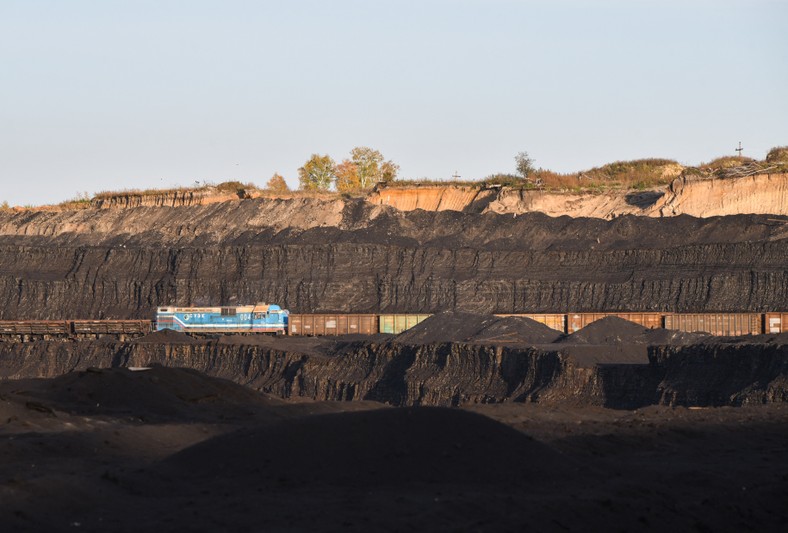
Coal Mine in Krasnoyarsk, Russia
As for exports, the demand for Russian coal may increase in the event of serious gas shortages in connection with geopolitical tensions. Similarly, the increase in production in countries such as Vietnam and India can slightly increase coal prices.
This industry also has Social significance. In Russia, around 146 thousand are employed in the coal industry. people, and about 30 cities, mainly in Kuzbas, are economically addicted to coal. The fall of this industry would be catastrophic for these communities.
The Russian government supports the coal industry through tax subsidies and concessions. In May, President Vladimir Putin approved Aid Package of the Ministry of Energy aimed at stabilizing exports.
The anger of the Russians
The ministry estimates that this year the industry will need 178 billion rubles (PLN 8 billion), i.e. more than 112 billion rubles (PLN 5 billion) of losses recorded in 2024.
Losses in 2025 can reach 300 to 500 billion rubles (PLN 13 to 22 billion), and the total debt of the sector is to reach 1.5 trillion rubles (PLN 67 billion) by the end of the year.
Analysts say that although government support can keep the industry on the surface, it does not solve deeper problemssuch as global market competition or global transition to renewable energy. This means that state aid will have to remain unchanged or even increase.
However, this does not have to mean re -evaluation of the federal budget, especially since coal has a relatively small share in the state's income – says The Moscow Times, a former Russian official dealing with market regulation, who did not want to reveal his name. At the same time, this can destabilize regional finances in Kuzbasa and the Republic of Chakasia, where coal taxes constitute over a third of local income.
Economist Vladimir Inoziemcew says The Moscow Times that it is more social problem than financial.
He argues that although the government could probably cover the annual support costs of up to 300 billion rubles without financial breakdown, the real challenge is to quickly find a new economic role for the Kemerowo region, which is responsible for over 50 percent. coal production in Russia.
– Concentrated dissatisfaction among specific professional groups or regions is a greater threat to the authorities than the general frustration caused by a decrease in the standard of living in society – adds the expert.
Financial crisis
However, as the economist Aleksandra Prokopenko claims, the dilemma related to coal was affected by the government in adverse political momentwhen public finances are already strained.
– Budget revenues are decreasing, financial reserves melt, and the Fund of the National Welfare of the Russian Federation will be exhausted in just three years. From a political point of view, this means that the government will have to support wealthy owners of inefficient enterprises that do not meet the current requirements – says the expert.
Russia recorded record budget deficit In the middle of the year in the amount of 3.7 trillion of rubles (PLN 167 billion) after a 20 % increase in expenses in the first half of 2025, the analysts responded by the Central Bank expect that the deficit for the whole year will be 4.4 trillion of rubles (198 billion), i.e. 2 percent. GDP.
Chairwoman of the Federation Council Walentina Matwijenko and chairman of the Budgetary Committee Anatolij Artamonow called for cuts of expenses and greater fiscal discipline to prevent further deficit growth.