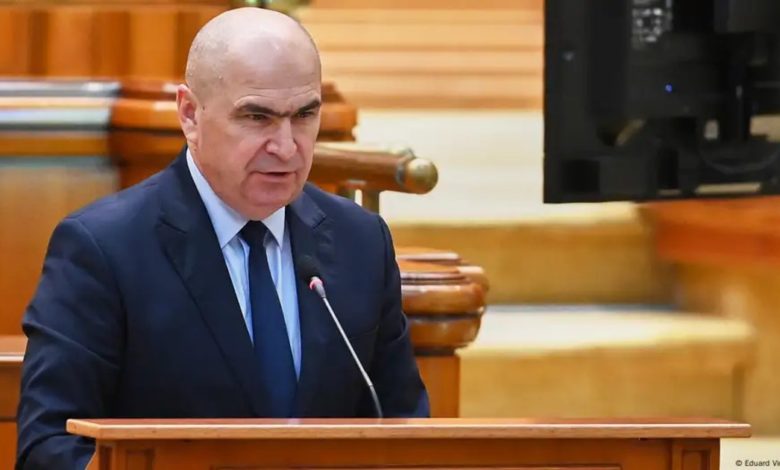
Ilie Bolojan suggests that the scheme by which his resigning deputy prime minister has bribed to a tax inspector, for eight years, continues to be used successfully.
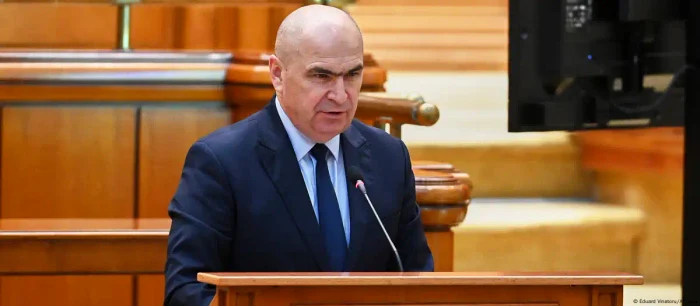
The Prime Minister of Romania Ilie Bolojan
Prime Minister Ilie Bolojan told G4Media that he has data showing that “decision-making people from Romania's finance structures have affini, close, spouses, sisters who have accounting companies or companies that also offer consulting to companies that are controlled by the institution or the direction that these people coordinate.” Ilie Bolojan described exactly the mechanism used by Dragoș Anastasiu when he gave the so-called survival bribe to save his company: after the ANAF inspector discovered that they were missing documents related to the taxation of wages, it negotiated with Anastasiu a consulting contract with his husband's company. This is how the former Deputy Prime Minister became the company to turn 2000 euros for eight years to the inspector who protects his illegalities. The resigning deputy prime minister was exonerated by the punishment because together with his partner they were at DNA and made a complaint.
The prime minister therefore knows the system, but says that “he cannot decompose it from day to day.” Ilie Bolojan also assumed the appointment of Anastasiu as Deputy Prime Minister and probably knew each other beforehand. The partner of the dismissal deputy prime minister, the architect Hildegard Helene Brandl is a member of PNL and, according to Gândul.ro, would have obtained in the last seven years a series of contracts by direct entrustment with municipalities in the west of the country, led by Liberals, including Oradea. The prime minister has not yet entered such details. However, there is, beyond the personal reasons, a tendency to protect the businessmen to do politics, as explained by the foreign minister, Oana Țoiu, who spoke about a high risk of “discourage people in the deprived environment.”
Inside the government, however, there are other outbreaks of crisis: (I) one of them includes the Social-Democratic Deputy Prime Minister, Marian Neacșu, sentenced in 2016 to six months in prison for conflict of interest, after hiring his daughter at his own parliamentary office and then approved the employment contract. The interim leader of the PSD, Sorin Grindeanu says that Neacșu's situation cannot be compared to that of Anastasiu, while the Minister of Health, Alexandru Rogobete states that “it is not a continuous form” and that “it takes balance” to continue the reforms; (ii) The next outbreak is at the Ministry of Education, where Daniel David is accused of censoring a document by the Institute of Education Sciences that analyzed the measures taken by the Bolojan Government in the education area. Edupedu.ro has published the whole text of the researchers, and the document contradicts most of the statements of Minister David and states that the teacher of teachers in Romania is not below the average of the European Union, that in Germany the payment with the hour is between 23 and 40 euros/hour, and in France 88% of the teachers have at least a rule of overtime paid with 40 euros/hour and that the money must be kept; (iii) The Minister of UDMR of Culture Andras Demeter threatens that from autumn theaters and museums could be closed on Saturdays and Sundays and blames unions, who deny that they would have asked for money instead of free days. However, the minister compares the situation of the employees of cultural institutions, who should work on the weekend, with the waiters, who are aware that their New Year “will almost never overlap with the New Year's Eve” and therefore there is the “New Year's Eve”.
Like all the reformist governments of the last 35 years and the executive led by Ilie Bolojan will be pushed to make mistakes, all the hidden skeletons will be removed in the cabinets around the prime minister, old Kompromat schemes will be used, they will be incited, the dissatisfaction will be multiplied on all social platforms. The Prime Minister could try to defend himself, if he knew where the danger came from: a useful exercise would be to understand from the documents of the secret services that happened to the presidentials of November 24, 2024, to what extent he worked against the country inside or outside. And especially who were the enemies.
Sabina Fati – DW