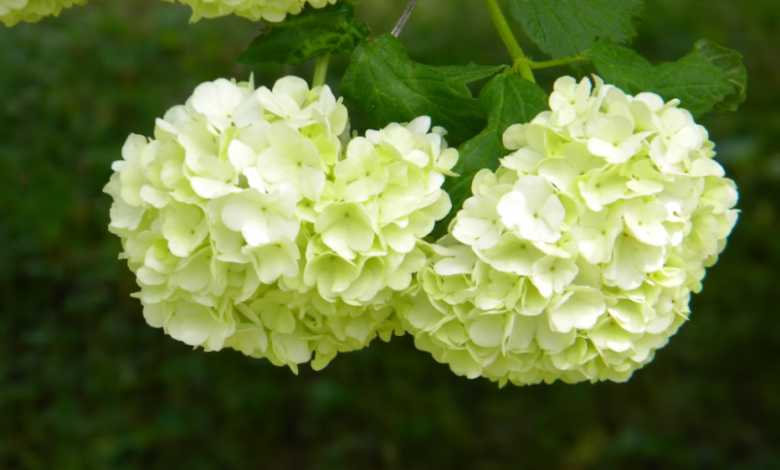
The end of summer is ideal for cuttings. The heat retreats, nights become cooler, more often rains go. Such conditions contribute to good rooting. How to propagate hydrangea correctly told the channel “Antonov Sad – Dacha and Garden” on Dzen.ru (16+).
Choosing and harvesting cuttings
Side shoots with a lignified lower part and a green top are best taken into account. For slicing, use a sharp, clean tool, a coach or scissors. It is more convenient to work on a cloudy day or in the evening, so that the cuttings do not lose moisture.

The optimal length is from 10 to 16 cm with 2-3 internodes. The lower cut is made obliquely under the knot, the upper should be straight, half a centimeter above the node. The lower leaves are removed, and the large upper leaves are shortened by half. After cutting, the cuttings are treated with a growth stimulant in the form of a solution or dry powder.
Landing and conditions for rooting
The mixture for planting includes peat, sand and a little vermiculite. You can root in cups or in a bed under shelter. In the landing hole, the stalk is buried to the lower node, the soil is compacted, the substrate is watered and added. It is important that he holds tightly in the ground.
Create the effect of mini-twells: cover the cups with bottles, and the beds are non-woven material. The optimum temperature is about 23 degrees, the humidity should not be below 80%.
Carriage for cuttings
Watering should be frequent, but moderate. Watering is harmful. Improte the cuttings twice a day for 10-15 minutes. Gradually accustom them to the open air, removing the shelter for a longer period.
If buds appear, they need to be removed, since flowering will weaken young seedlings. A month after planting, you can check the presence of roots, and after 1.5 months, the plants should be transplanted to a permanent place or to a larger pot.
Selection of a landing site
Hydrangea prefers partial shade. Drainage, a layer of crushed stone, sand or bark are placed in the landing pit. The soil should be acidic. Neutral soil improves crushed pine bark and gray. The seedling is neatly exceeded, watered and mulched with coniferous opad.
Previously reported About how to protect hosts from pests, so that not a single hole appears on them.