China made a “monthly brick” manufacturing machine. The tests were done on rock samples on the moon

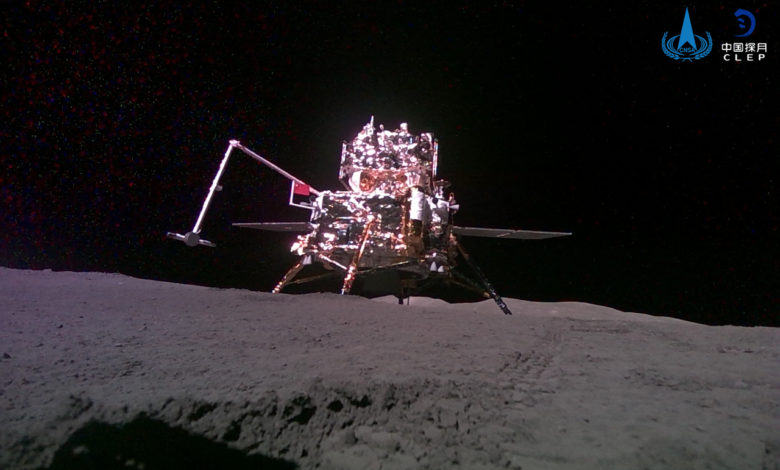
A China research team has developed “a monthly brick manufacturing machine” that will be able to produce bricks from the monthly rebellion, thus bringing the science-fiction vision to be brought to the Moon with local materials, “informs the Xinhua press agency, taken over by Agerpres.
The 3D in situ printing system of the monthly soil, developed by the distant space (Dsel – Dsel), based in Hefei, a city in eastern China, uses concentrated solar energy and modeling the monthly rebel, the Science and Technology Daily reported Monday.
Manufacture of bricks per month
According to Yang Honglun, chief engineer within Dsel, the monthly brick manufacturing machine uses a parabolic reflector to concentrate solar energy. This concentrated energy is then transmitted through a beam of optical fibers. At the end of this beam, the solar concentration ratio can exceed 3,000 times the normal intensity. A high precision optical system concentrates that concentrated sunlight at a small point, heating it to over 1,300 degrees Celsius to melt the monthly rebel.
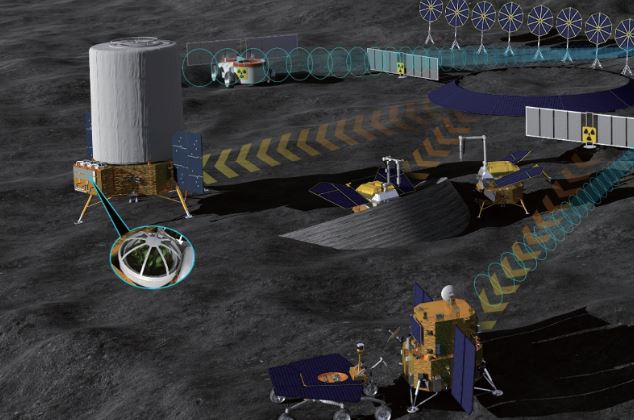 China wants to include a nuclear boiler on the basis they are planning on the moon
The bricks produced by the machine are made entirely from monthly reef resources in situ, without additional additives. Moreover, these lunar reemas have a high resistance and density, which makes them suitable not only for building buildings, but also for infrastructure needs, such as platforms for equipment and road surfaces.
From the conceptual design to the development of the prototype, the Chinese research team took about two years to find solutions to multiple future technical challenges, such as efficient energy transmission and the transport of the monthly rebel.
For example, the mineral composition of the monthly rebel varies significantly in the different regions of the Moon. In order to ensure that the new machine can adapt to different types of monthly rebel, Chinese researchers have developed several simulated samples and performed extensive tests on the car before completing its design.
Building houses per month
“Although the monthly brick manufacturing machine has made significant progress, the construction of habitable structures per month still requires exceeding other technological barriers,” said Yang Honglun.
He explained that, under the extreme conditions on the Moon, such as the cosmic vacuum and the reduced gravity, the monthly rebellion bricks cannot support the construction of habitats.
“The bricks will first serve as protective layers for habitats. They must be integrated with rigid structural modules and inflatable modules with soft coating to complete the construction of a monthly base,” he added.
The Chinese engineer mentioned a series of technological developments, including the manufacture of monthly bricks, the assembly of the architectural components and the evaluation of the structure of the building, together with the operational validation of both the car and the construction processes under real conditions on the surface of the Moon.
The habitable modules are designed to withstand the atmospheric pressure needed to occupy them by people and are also equipped to integrate with the monthly bricks and surface building robots, creating a complete construction system, he added.
China has initiated the International Monthly Research Station (ILRS), an experimental scientific installation composed of sections located on the monthly surface and on the monthly orbit. It is expected that it will be built in two stages: a basic model, which will be built until 2035 in the monthly southern pole region, and an extended model, which will be built in the 2040s.
Until April 2025, a total of 17 international countries and organizations, as well as over 50 international research institutions, joined the ILRS project.
Chinese scientists manufactured simulated bricks from the monthly reevere and sent them aboard the Chinese space station (Tiangong) with the help of the Tianzho-8 cargo spatial vehicle, launched in November 2024.
Astronauts on board the Chinese space station will carry out experiments to expose these bricks to the real conditions in space to evaluate the mechanical properties, thermal performance and their radiation resistance, in order to obtain essential data for future monthly constructions.