Beautiful artificial. The first model of Vogue arouses revolt in the world of fashion. The advertisement was created by a company founded by a British and a Romanian

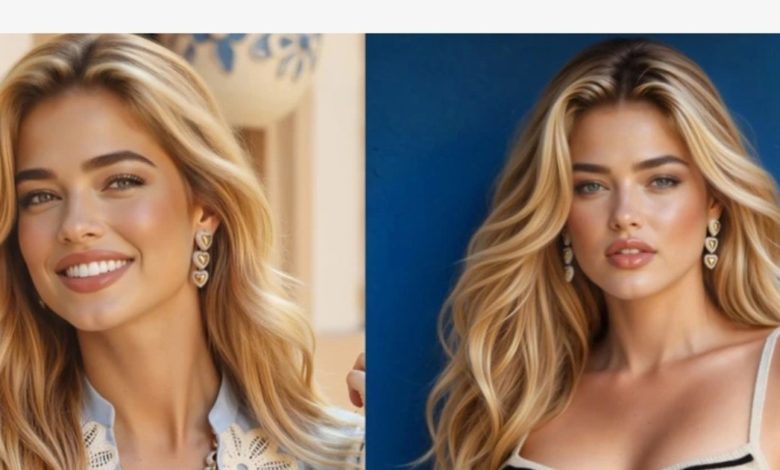
In a magazine that dictated decades in a row the standards of feminine beauty, there is now a figure with all the features of a “perfect beauty”: carved cheeks, impeccable skin, silhouette drawn through the ring. It's just not a man. It is an artificial creation, generated by algorithms, and was chosen by the Guess brand for an advertisement published in the August printed edition of Vogue magazine.
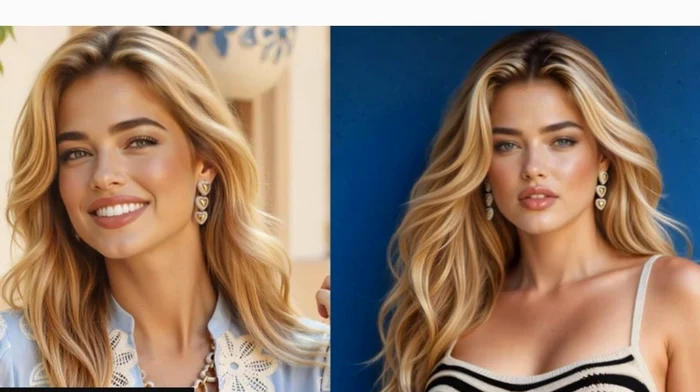
Model you created for Guess and published in Vogue/Photo: X
Little, in a discreet corner, the mention appears: “image generated by AI”. It is the first appearance of this kind in the pages of the publication, but the reactions did not delay. The fashion industry, already ground by ethical dilemmas, discrimination and aesthetic pressures, now wonders not only what it means “beautiful”, but also if the real models take place in the equation.
What (no) see in the picture
The blond model, with a maxi dress in stripes and a floral jumpsuit, does not exist. It was generated by Seraphinne Vallora, at the request of co -founder Guess, Paul Marciano, who found the “inspiration” on Instagram. Valentina Gonzalez, and Andreea Petrescu, the founders of the startup, claim that the process is not at all-it takes up to a month to create an image, and the cost amounts to tens of thousands of dollars.
Valentina, of British nationality and Andreea, of Romanian nationality, are both architects, graduates in London. The two have a training in art and design, plastic art, photography and digital media. Their story took an unexpected turn when I discovered a goal on the market that wanted to be filled.
Felicity Hayward, a big and activist model, says things by name: Guess decision “is lazy and cheap.” It is not just about low costs, but about canceling the efforts made by industry for diversity. In the years 2010, the podiums were finally starting to reflect the reality: Valentina Sampaio became the first trans model for Victoria's Secret, Halima Aden Defila wearing Hijab, and Savage X Fenty brought bodies of all forms.
Now, says Hayward, these real figures no longer take place. “They are simply no longer called.” And the models generated by AI, all young, white, thin and without imperfections, only deepen the gap. Including in terms of mental health.
Vanessa Longley, the director of the Beat organization, who deals with food disorders, is categorical: “Unrealistic images can have a devastating effect on self -perception. We risk an increase in eating disorders, especially among young people.”
Even labeling is problematic. In the UK, there is no legal obligation to mention clearly whether an image is generated by AI. Guess did it, but in a tiny font, on the edge of the page. The image is so realistic that an uninitiated reader does not even suspect he does not look at a man.
Sinead Bovell, a former model of technology entrepreneur, points out that the lack of transparency is “exceptional problem”. And he recalls: Currently, teenagers ask for cosmetic operations to sow with social media filtered faces. What will happen when these faces do not even belong to a real person?
Guess, Vogue and Double Standards
Gonzalez and Petrescu insist that the image chosen for Guess is not “unrealistic” and that the industry has always relied on perfection in commercials. However, I admit that the images have published by them on Instagram do not include diversity – “I tried, but users do not react well,” they say. “After all, we are a business.”
And about the plus-size models or with other less “mainstream” features? “The technology is not advanced enough to create them,” says without hesitation. An excuse that says more about intention than about technical limitations.
On the website of their company, Seraphinne Vallora praises with “reducing production costs”-without locations, without make-up artists, without photographers or models. And Vogue, the magazine that once dictated the trends, chose to shut up, limiting to say that it is an advertisement, not an editorial decision.
A future without people?
Sara Ziff, a former model and founder of the Alliance Model organization, says things by name: “This campaign is not about innovation, but about despair and the desire to reduce costs. ” In her opinion, the AI can bring benefits, but only if real measures are taken to protect the people who make the industry possible: from models to stylists and photographers.
On the other hand, the creators from Seraphinne say that the AI does not replace, but complete-an additional alternative for brands. However, beyond good intentions, reality looks different: real women become useless in an industry that replaces them with perfect but empty versions.
When the real is no longer in search
In 2024, the Dove brand launched a campaign meant to expose the algorithmic prejudices. An image generator was asked what the “most beautiful woman in the world” looks. The result? Almost identical women – young, thin, white, with blond hair and blue eyes. Basically, the digital variant of the toxic beauty standard that has dominated for decades.
Sinead Bovell believes that we do not go to a completely artificial future, but that we will see more and more such models. Some may find useful to create a personal avatar to prove the virtual clothes, but for many others, the digital reality will simply become repulsive. Too perfect, too false, too far from who we are.