The most modern and dangerous form of dictatorship in history. How did he use the psychology of the masses to dominate and kill

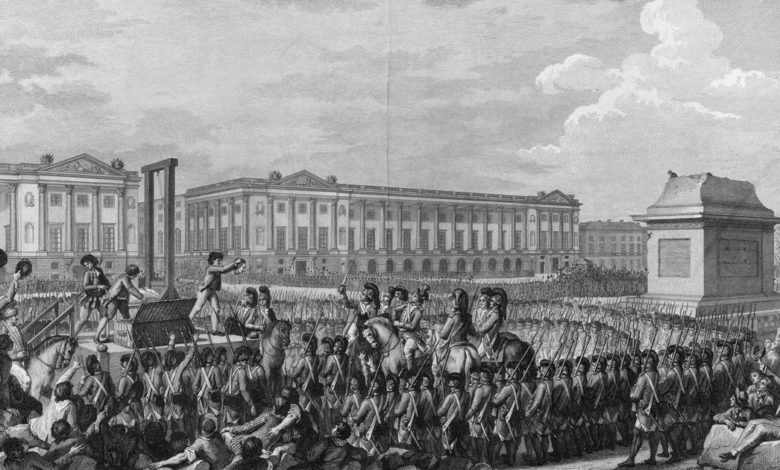
The popular revolutions, born especially from frustration and despair, most often bring to power. The examples in history are multiple, most of the popular revolutions having as objective the removal of oppression or inequity turning into bloody, more oppressive tyrants.
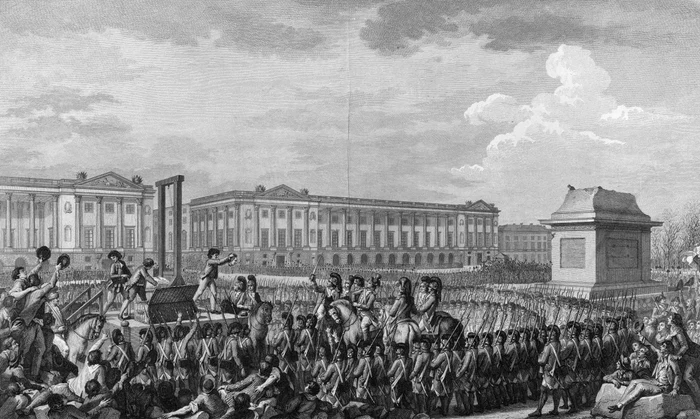
The execution of King Louis XVI Lea Photo Wikipedia
The history of the world has been marked by numerous revolutions. Some were non-violent and ensured the progress of humanity, others left behind corpses. The most violent were usually the popular revolutions, those in which large, largely poor masses were involved, abandoned by a corrupt or abusive state. These were the revolutions in which the despair, frustration and oppression made the people act dominated by the emotion of the moment, quickly transforming into an easy-to-handled and ideologized maneuver. Historical specialists and realities show that almost all these popular revolutions ended, turning into tyranny and totalitarianism, followed by genocide.
Paradoxically, the masses who wanted to change an oppressive, abusive or corrupt regime, hoping in a better life and society, did nothing but fall from the lake to the well. Instead of prosperity they were chosen with a dictatorship and a regime even more oppressive than the previous one. Sociologists or political science specialists defined these dictatorships of the modern world, a part of popular revolts, as “millennial tyrants”, the most dangerous that have ever existed in the history of humanity. They say that in the 21st century modern democracy is assaulted by specific ideologies that can lead to the establishment of millenial tyrants
A history marked by tyrants and people thirsty for power
Tirania, in a broad sense, refers to a political regime in which power is held and exercised by a single person or a small group, often by abusive, oppressive and unfair methods. She has dressed different forms from ancient times. Tirania was a common political regime found in the history of humanity. For example, in ancient Greece, tyranny was a form of governance, characterized by taking power by usurpation and maintaining it by strength and violence, often in order to establish a despotic regime. The specialists have identified over time three main types of tyrannical regimes or tyrants. The first category is that of noble vines, classic tyrants that history abounds.
“The first can be called” varieties “tyrants, at the same time the oldest and still the most familiar type. These are people who have a whole country as if they were their personal property, exploiting it for their own profit and pleasure and for the advancement of their own clans and acolytes. The examples in history abound, from Hiero in Syracuse and Emperor Nero to General Franco of Spain, Somoza in Nicaragua, Saddam Hussein and Bashar al-Assad ” says Waller Noull, professor of political science and philosophy at Carleton University Ottawa (Canada), in the work “Understanding Tyranny and Terror: from the French Revolution to modern Islam.
The second category is that of the reforming tyrants. It is the most honorable category of tyrants, if you can say that. They do not seek the supreme power necessarily for their own benefit, but they are even animated by the desire to change things for the better, to do well to the country and the people, but through constraint and unlimited authority. There are such patriotic tyrants, considered by many “parents of the nations” in many states. “They are not mere hedonists and wealth seekers. They truly want to improve their society and people by constructive exercise of their unlimited authority. Examples include Alexander the Great, Iulius Caesar, Tudori and” illuminated despot “such as Frederic the Great, Napoleon and Mustafa Kemal. Often, they are perceived not as tyrants, but as champions of ordinary people ”, adds Waller Noull in the previously mentioned work.
The most dangerous form of tyranny in the history of the world
The third main category of tyranny is the most dangerous, but also the most recent. Experts say that including modern democracies are facing its threat. In a first phase, through an ideological assault meant to win followers and to exploit popular frustrations and dissatisfaction. It is called millennial tyranny and is characteristic of the modern period.
It began with the French Revolution and the “great terror” established by Maximilien de Robespierre, continuing with the best known and infamous dictatorship of contemporaneity, such as communism, Nazism, Mao's regime in China or Pol can in Cambdodia. Many of these tyrannical, dictatorial regimes have been established as a result of popular revolutions to change a regime considered despotic and corrupt, with a new world of egalitarianism, equity and prosperity. Obviously, instead of prosperity and equity, the people were chosen with dictatorship, strict rules, political police, numerous restrictions and in some cases with a genocide triggered against those perceived by the respective regime as the “enemies of the people”.
“Although tyranny has existed in all eras, modern democracies are now facing a millennial version that aims to impose by revolutionary force a monolithic collective in which all individual freedoms will be submerged. Starting with the” Jacobine terror “of 1793, it continued through Bolshevism, Nazism, Maoism, Maoism,”adds the specialist in Political Science in Canada.
This type of millennial tyranny appears against the background of vulnerabilities and syncope of democratic societies or in regimes marked by corruption and poverty for most population. The “pending” tyrants or the organizations that want to put on power take advantage of the vulnerability of the society offer empty hopes, they know where to marry and set up in the true rescuers of the nation. Those “new people” who have solutions to everything and can reset the society by transforming it into something ideal where the people will thrive.
“These leaders are not satisfied neither to be tyrants in the classic way, nor to be reformers who bring constructive improvements. They are led by the impulse to impose a millenarian model that will bring a society in which the individual is submerged in the collective and all the privileges and alienations will be eradicated forever.”states Waller Newlyl. But these utopian societies are imposed by millennial tyrants with excessive brutality. All those who oppose the proposed model become “enemies of the people” and are purified. The “army of the people”, “Political Police”, is established, by terror, to impose the social and political models supported by the dictator and his political group. Rights and freedoms are canceled, either directly or subliminally.
The psychosis of the “state under siege” is established and the illusory enemies of the nation are invented. Ideologization and mass indoctrination by different methods follow. Everything is presented propagandistic as being in the interest and for the well -being of the nation. “We must stifle the internal and external enemies of the Republic or to lose with them. Terror is nothing more than a prompt, severe and inflexible justice. It is therefore an emanation of virtue.”Tuna Robespierre during the revolutionary terror of 1793. The Nazis, in turn, took the scapegoat to the Jews. Communists on “Ciocoi” and so on.
Revolution, reform and genocide
Millenarian tyrants sometimes do for their countries important things that lead to the modernization of the nation. For example, both Hitler and Stalin have contributed to the technological development, especially industrial, their countries. However, their vision is utopian, say the specialists. For them, society and human nature must be completely reformed.
They present democratic regimes as something unfair, selfish, materialistic, degenerate, removed from tradition. They want to destroy everything and to rebuild egalitarian societies, pure spiritual and sometimes racially. To return to an illusory “golden age of the nation” lost in the blacks of time. As, for example, Hitler relates to the northern mythology, to the ancient Germans. A report to an idyllic, imaginary past. “In essence, however, their purpose goes beyond the policy: they want to destroy today's world to bring Nirvana” communism “,” one thousand years “or” world caliphate “. (…) Among his guiding ideals are the return of the” people “to the simplicity of its origins, a collective of the pure debt, and the pure, Individualism, class status, religious faith and property rights ”states Waller Newlyl.
In order to reach their goal, millennial tyrants resort to genocide, persecution, terror. A feature of these regimes is to identify a class enemy whose extermination or re -education is the crucial step for cleaning the world. The first example of millennial tyranny in history was the “Jacobin Terror” during the French Revolution. It was the zero point of millennial tyrants. From the eighteenth century they returned with the beginning of the 20th century and dominated the first half. As a result of these millennial tyrants, tens of millions have lost their lives, either directly killed, or in prisoners, camps or work camps.