Sand extraction in Cameroon. How does it affect people and the environment?

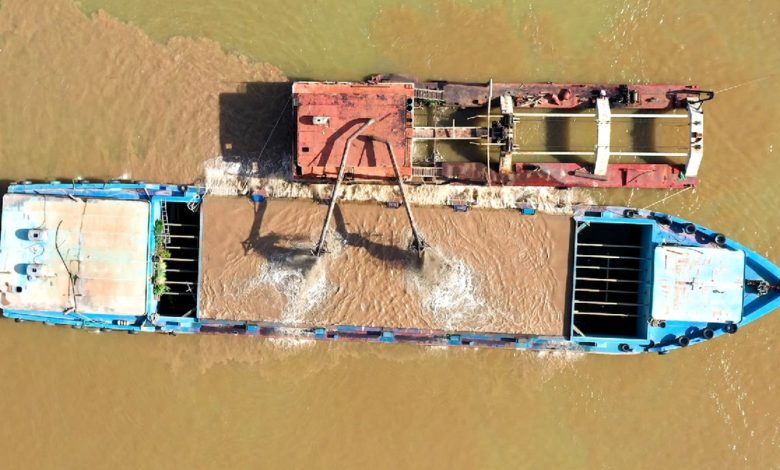
Read also at Business Insider
Sand is the most common material in the world. In this part of Africa, miners like Yona Elvis, They dive up to 300 times a day, wearing few clothes or not wearing them at all, and pull out buckets weighing 15 kg.
– Only I can do it in the family. No one else has the courage – says Elvis, “River Górnik”.
60 percent sand used for concrete production around the world comes from riverbeds such as the one in Cameroon. The global demand for sand has been tripled over the past two decades.
Satellite photos from China show how it changed the shape of a large water reservoir. Currently, experts say that The sand is extracted much faster than it can be replaced. So how can the world avoid the “sand crisis”? And what does this mean for people like Elvis who rely on him to survive?
Manual sand extraction. What does miners work look like?
Yony Elvis's house in a southwestern Cameroon is made of the same sand that brings out every day. He lives with the family and monkey Curtis.
– When I get up in the morning, I feel gratitude for my children and what I have. In this way I am mentally set to the coming day – he says Yona.
The house of Yony is located at a distance of a short walk from the quarry. He meets his NJOMBE diving partner on the spot. They can rely in emergency.
– This work requires physical fitness, courage and perseverance. If someone has these three features, then our work will not seem difficult to him – describes Yona.
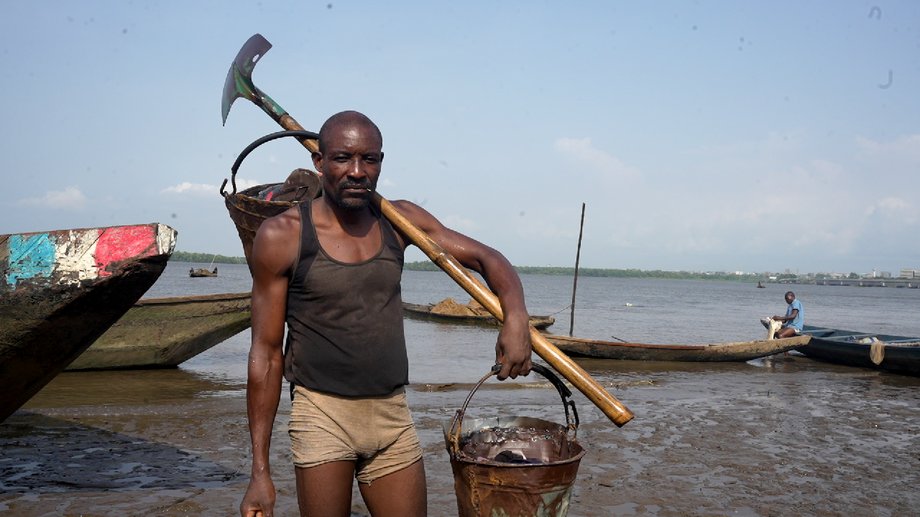
Manual sand extraction requires physical fitness and strength
|
Business Insider
A miner with a bucket
Wouri is one of the largest rivers of Cameroon, flowing through almost 160 km. It is known as the “river of shrimp”, but fishermen record their number due to sand extraction. When the miners reach the deepest place, Njombe sticks a stick to anchor the boat. Elvis jumps into the water in the tight shorts to make it easier to swim. Then uses a steel bucket to collect sand from the bottom of the river. The water is so cloudy that Elvis would see nothing, even if he put on the glasses.
– I work blindly. I sense where the stones are, and where something else. The work has become my routine because I do it every day – says Yona.
After 12 years of work, Yona claims that he has mastered the art of controlling breathing and saving energy.
– I can hold my breath for over a minute. I have to work quickly to immerse and emerge – he reports.
Manual sand extraction is associated with danger
Elvis and Njombe alternately pour water that fills the kayak. After two hours of diving and pouring water, fatigue begins to take their toll. Locals say that Deaths are commonplace here. This is an unregulated profession, so there are no official provisions regarding injuries or fatalities. Elvis has almost drowned once, helping a new diver.
– The boat fell over, I jumped into the water, and he immediately grabbed me. I tried everything to free myself from the handle, but it was impossible – describes Yona.
At the end of the four -hour change, Elvis mining is 9 tons of wet sand. That's what two African elephants weigh. His boss, who owns the kayak, will sell this sand to local performers and pay each of the miners About $ 12 for a work day, i.e. the equivalent of PLN 43. That's more than Elvis can earn fishing, But it's almost not enough for three meals a day. Elvis and his family of four barely make ends meet.
– I dream of being able to work, save a little and discover what I could do to keep my beloved family – he says.
Sand extraction as a way to increase strength
Some work in this profession for other reasons, for example, Górnik Nckg Jean Simon, who treats it as a sport. He participates in local sand extracting tournaments and claims that he has won the title of champion.
– I received nicknames such as “Big Arms” or “Animal” – informs NCONG Jean Simon.
Every morning, NCONG spends 30 minutes at exercise. It even runs to the quarry. His role model is the first African UFC champion in heavy weight Francis Ngannou. He is seen as a local hero in this region. He managed to escape from life in poverty and become one of the best MMA players in the world.
– I am happy to see so many people here. Everyone who has come here, welcomes me very warmly at home – he says Francis Ngannou, heavyweight master in 2021-2023.
The NCONG is immersed to a depth of seven meters to test your strength and earn enough for yourself, your wife and two children. Part of the sand is exported to countries such as South Africa, the Central African Republic and even France. However, the construction boom currently has a place in Cameroon, so most of the sand is used locally for concrete production.
Demand for construction sand is growing at a record pace
The global demand for sand is 50 billion tonnes per yearwhich would be enough to build a nine -story wall around the entire planet. The sand located in the riverbeds comes from the rocks that fell apart in millions of years when they flowed down the river. Coarse residues are sharper and They can carry more moisture than desert sand, which makes them an ideal binding material for construction.
In 2022, the global construction sand market was worth around $ 23 billion. It is expected to be by 2031. Its value will increase to $ 46.5 billion. The United States is the world's largest producer, and China is the largest consumer, but they also produce their own sand. Lake Poyang Hu in the province of Jiangxi is the largest sand mine in the world.
Satellite photos show how much the excavations changed the northern branch The largest freshwater lake in the country, more than twice increasing its area in 1997-2019. The lake is also a key mouth of the Yangtha River and its tributaries, which are also excessively exploited.
Mining causes that the water level in the lake decreases in the winter months, threatening water animals such as porpoise and migratory birds. Other countries face similar problems. On the Mekong River in Cambodia, the shoulders bring out more sand than it can be replaced. Bagring on a large scale resulted in the collapse of the river in 2021 twice.
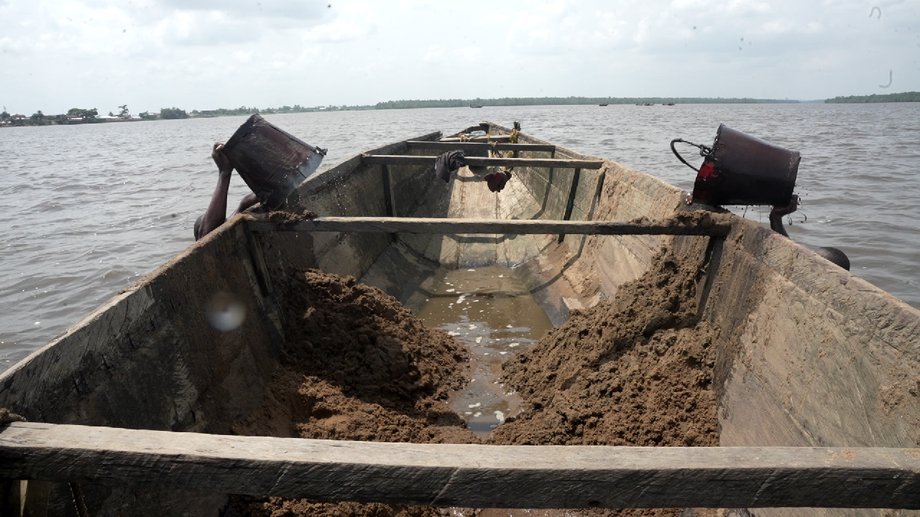
The impact of sand extraction on the environment is colossal
|
Business Insider
The impact of sand extraction on the environment is huge
– The river becomes deeper and will flow faster or slower depending on how its shape suffered. This affects river flows and potential floods or drought-describes Pascal Peduzzi, director of UNEP/Grid-Genewa, UN environmental program.
The dams in the upper river gear also reduced the flow of sludge to the lower part of Mekong. Experts say that mining is also guilty of erosion along the Cambodia coast.
– Everything we get from the environment has an impact on them. If we take sand from the rivers, it will not reach the shoreline, what This will lead to the erosion of the coast – emphasizes Pascal Peduzzi.
Mining also reflects on local fishing villages. Tin Yusos lives on a boat with his wife and granddaughter. He earns life fishing in the nearby Tonlé Sap and Mekong rivers. He says that work is hard lately because Bagrowanie disrupted fish populations.
– The water level is much lower than in the last two years. The difference is about three meters – he indicates Tin Yusos.
Due to the decreased water level, TIN may have problems with earnings.
– We've never caught as few fish as today. There are fewer and fewer and I'm worried about how to survive from this work – complains Tin.
They cover the rivers to make room for villas and shopping centers
In the capital of Cambodia, sand drives a housing boom. Since 2003, developers covered 60 percent with sand lakes in phnom penh to create the best areas for villas and shopping centers. People who lived and worked on these lakes for decades, They have now faced the eviction, Because trucks full of sand and gravel are increasingly approaching their homes.
Cambodia also exports sand. UN data for the last decade shows that The country sent sand worth $ 27 billion. to countries such as: Singapore, Thailand and China. The violent urbanization all over the world drives demand.
In India, 25-30 people migrate from rural areas to cities every minute. By 2030, the urban population in this country will probably reach 600 million. They will all need apartments. That is why India also extract sand.
Here, miners get it out of the Beki river using basic equipment. This pollutes water and destroys rivers and fish populations. For some, however, bringing sand is as valuable as finding gold. Many people work illegally in dangerous conditions, because the money is worth it. For a boat full of sand, they can earn up to $ 15, which is four times the average daily pay in India.
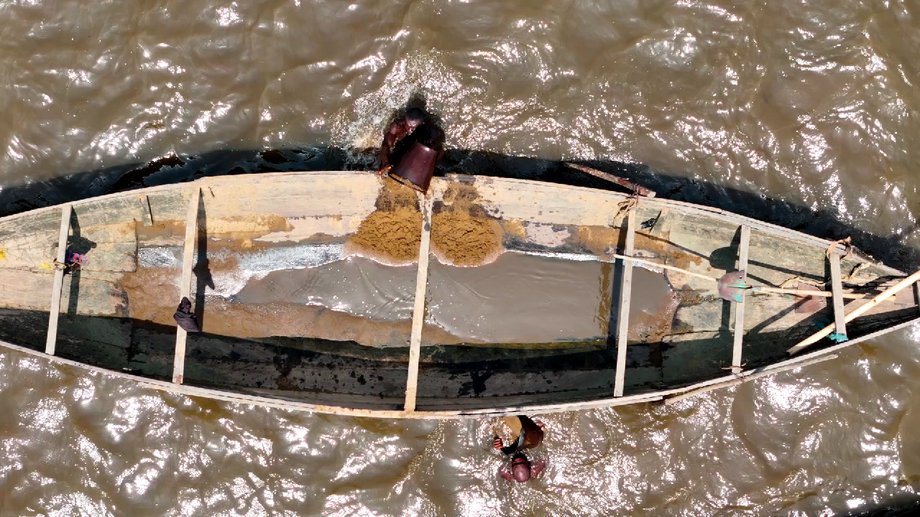
Sand extraction is sometimes the only opportunity to earn money
|
Business Insider
Nature is unable to keep up with the changes
Currently Sand is extracted faster than it can be replaced as a result of natural geological processes. Therefore, some companies deal with its production to reduce the impact on rivers and lakes. They crumble the home rock, often from old construction sites or demolition waste.
In this way, particles with a size similar to sand are formed. They are filtered and washed to remove impurities, such as mule or clay, which can damage concrete. Therefore, experts say that the sand produced is even better for construction than natural sand.
Crushing and grinding of produced sand can, however, contaminate the surrounding soil and water. It is also more profitable, because it is often produced closer to construction sites, which reduces transport costs. In Cameroon, people still bring sand out of riverbeds.
Manual sand extraction is “to be” or “not to be” for many families
– If technology replaced us, most of us would have nothing to do – says Yona.
After a long day of work, the muscles are sore. He rests and relaxes with his friends at a local bar.
“I like the people around me the most in this work,” he points out.
Yona is blurred when she thinks about what really motivates him to do this work.
– My favorite moment of the day is to return to my beloved family. How are you? – he says to his son.
– Good – he answers.
– My family never knows if I will come home. That's why I feel great when I come back and we're all safe, “says Yona.
Crowd. Piotr Nazek