How a Mercedes limousine came to Kim Jong Un, subjected to international sanctions. And why does this give us an economy lesson

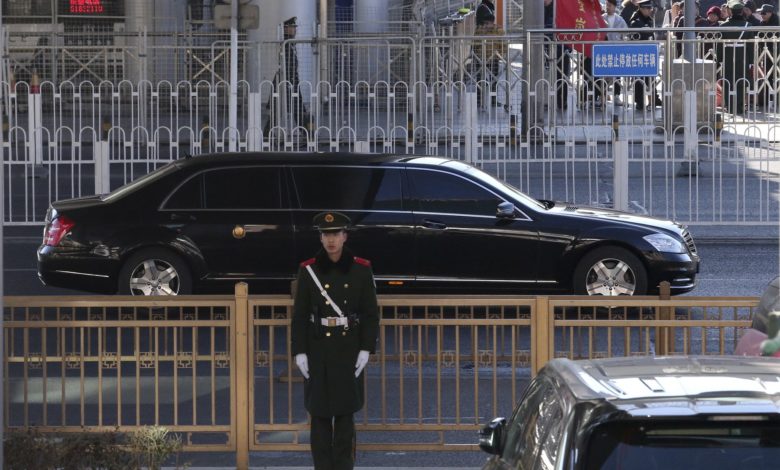
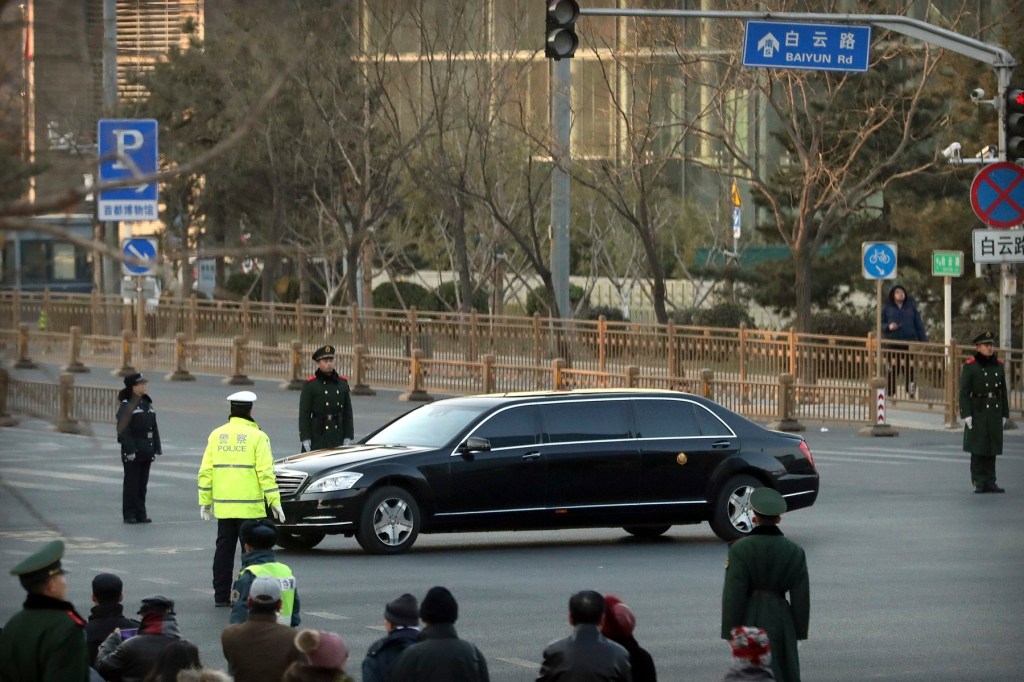
The newest limousine of the North Korean Prime Minister Kim Jong Un, a Mercedes-Maybach S600, with which he appeared for the first time in February 2019, was illegally introduced in a route that included stops in China, Japan, South Korea and Russia.
The purchase and delivery of this vehicle, together with a second S600, underlines the North Korean violation networks, used by intermediate traders that have introduced over 800 cars and trucks in the last 10 years.
Daimler, who currently holds the Mercedes and Mercedes-Maybach brands, checks the background of all potential buyers and publicly denies the sale of any cars to people- a defendant for North Korea.
In June 2018, the cars, each in separate maritime containers, arrived in the Rotterdam port in the Netherlands, according to C4ads.
A Dutch shipping company, Slavenburg & Huyser BV, then put them on a ship to Dailan, China. After arrival in the Chinese port, another Japanese company, Zuisyo Company, signed the Containers' contract and sent them again to Osaka, Japan.
While in Japan, Mino Logistics Japan later assumed the responsibility for containers and then sent them to Busan, South Korea, where the South Korean company Mino Logistics Company signed the contract for them. C4ads says he could not check if these two companies are related, despite their almost identical names.
What happened after the cars arrived at Busan on September 30, 2018 is somewhat in the fog. The dochers loaded the cars on DN5505, a freight ship with Togolian pavilion belonging to the Dou Young shipping company, whose headquarters is registered in the Marshall Islands.
Shortly after taking over the cars in Busan, the DN5505 started on the road to the declared destination Nakhodka, Russia, and the estimated date of arrival is October 5, 2018. However, the ship stopped the transport on October 1, and the signal reappeared on October 19, after 18 days.
When the ship's transport began to transmit, the ship was heading back to Busan. C4ads found no information that the ship would have arrived in Nakhodka or any of the other five Russian ports in the Far East, around October 5th.
Also, on October 7, 2018, Air Koryo, North Korean state airline, sent three Cargo IL-76 Candid to Vladivostok, Russia. C4ads states that Air Koryo's IL-76 aircraft, which are capable of transporting vehicles and often bring limousines and other cars, make travelers to Vladivostok, but make it irregular. The visit from October, which was otherwise not scheduled and was the first after several months.
Four months later, the North Korean state press published a video recording in which Kim was walking in one of his new limousines.
Marc Rich- another trader, much more sophisticated
It was on a Friday night in the early 1980s, when one of the ministers of the Jamaican office learned that his country was left without money.
Hugh Hart, the Minister of Mines and Energy, was in Parliament, and around 6:00 pm he learned that an official of the central bank was waiting for him to speak, in a state of agitation. Hart went out. The message of the central banker was simple: Jamaicei Vistieria was empty. The central bank could not raise the money needed to pay for an oil transport.
“And, by the way,” the official added, “we remain without oil on Sunday.”
“I simply didn't know what the hell to do,” Hart recalls, with which Javier Blas and Jack Farchy, the authors of the book “A world for sale”, discussed.
This account of Jamaica's relationships with Marc Rich is mainly based on the interviews of the two authors with Hugh Hart, Manny Weiss, Vincent Lawrence and Carlton Davis. The story of the crisis on Friday evening in the country was told to the authors by the map.
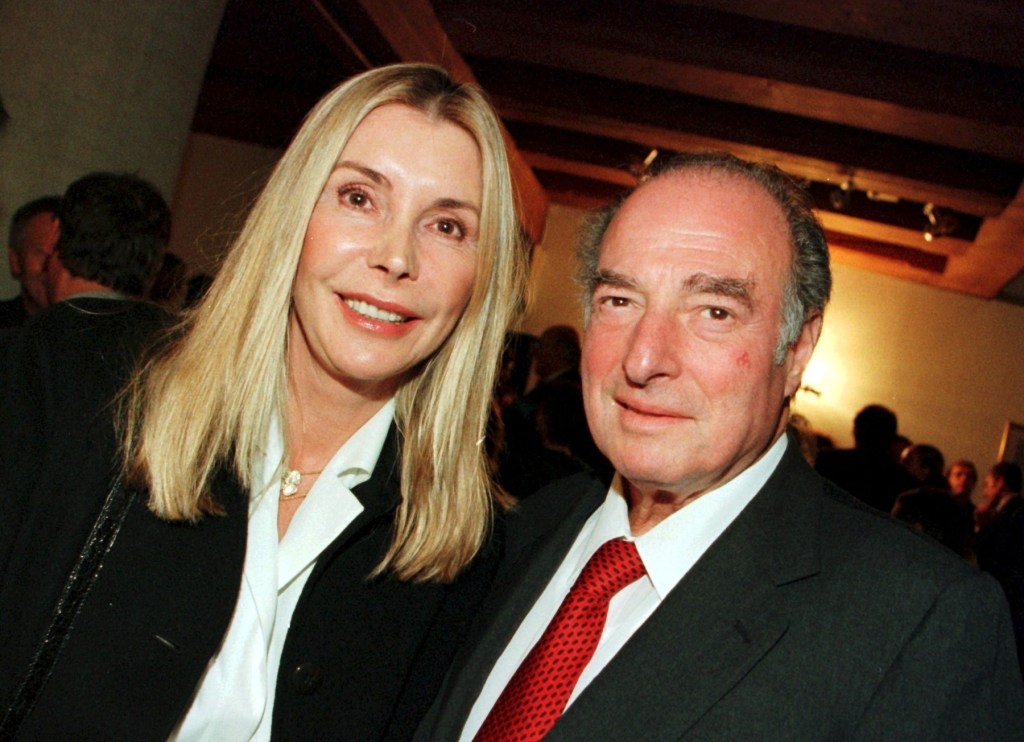
Jamaica bought 300,000 oil barrels every month for the only refinery of the Caribbean island, located in Kingston, the capital. Each month, the central bank offered a $ 10 million guarantee to cover the cost of oil. But this month, the central bank did not have enough money, so there would be no oil. Without oil, the Jamaica refinery would stop producing gas and diesel, and gas stations should have closed.
Hart knew what that would mean. The economy of Jamaica was still recovering after the ravages caused by the oil crisis of the 1970s, which had turned into political violence that had transformed the streets of Kingston into an area of war. In the early 1980s, the most serious moments of violence had passed, but the economic and social structure of the country was still fragile.
Hart called the only person who could help avoid the crisis: Willy Strothotte, the German trader leading the Marc Rich + Co branch in New York. The trade house was deeply interested in Jamaica: the picturesque Caribbean island was one of the largest producers of bauxite and aluminum in the world, the minerals used to make aluminum. And Marc Rich + Co was the largest aluminum trader in the world.
“Hugh, I'm very sorry, but I can't help you. I don't think anyone can help you,” Strosthotte said. As the last solution, he offered Marc Rich's home phone number from Zug. “But I warn you, it's two o'clock in the morning in Switzerland, so I wouldn't call it.”
Hart had never talked to Rich: Until then, his business had only been with Strothotte. Tituși, Hart called on the Zug. Marc Rich, sleepy, answered the phone.
“Mr. Rich, I'm Hugh Hart,” he began. You probably don't know me.
“Oh, yes, I know everything about you,” Rich replied. “But why the hell you wake me at two o'clock in the morning?”
“Well,” Hart said. “It's a matter of life and death.” And explained the difficult situation of Jamici.
“What do you expect to do about it? It's two o'clock on Friday night, and your central bank can't raise $ 10 million. What the hell?”
Hart begged. Left a moment of silence.
“Call Willy in an hour,” Rich ordered and closed the phone.
When Hart rang on Stroothotte back to New York, a full oil was already on the way to Jamaica. Rich had arranged for a transport of Venezuelan crude oil, which he delivered on the US East Coast to stop at Kingston on the road. On Saturday evening, less than 24 hours before Jamaica stays completely without reservation, it downloaded 300,000 barrels of oil.
The transaction was a demonstration of the massive power that Marc Rich owned on the oil market. The petroleum shocks of the 1970s had filled the treasure of merchandise traders, and they combined new financial power with a boldness that few other investors could equal. Until the 1980s, the placement of money where other companies or states would not have dared was the registered mark of traders.
Jamaica was an excellent example: the country was on the verge of bankruptcy, bypassed by all creditors. And Rich had just delivered to the Oil Government worth $ 10 million without even signing a contract. But the risk is worth it. The Jamaican government would not forget how Rich had saved her from the ruin. The Caribbean island would become a source of profit for Rich and its successors in the following decades.
“It was one of the most stressful moments we had,” Hart recalls. “Honestly, I think the government would have taken off.”
Marc Rich's agreements with Jamaica were emblematic for the changes that took place in the world economy in the 1970s and 1980s.
From Jamaica to Saudi Arabia and from Guyana to Peru, decades of global economic growth have stimulated massive investments in the production of goods worldwide. The governments of the Middle East, Africa and Latin America had switched to a wave of nationalizations.
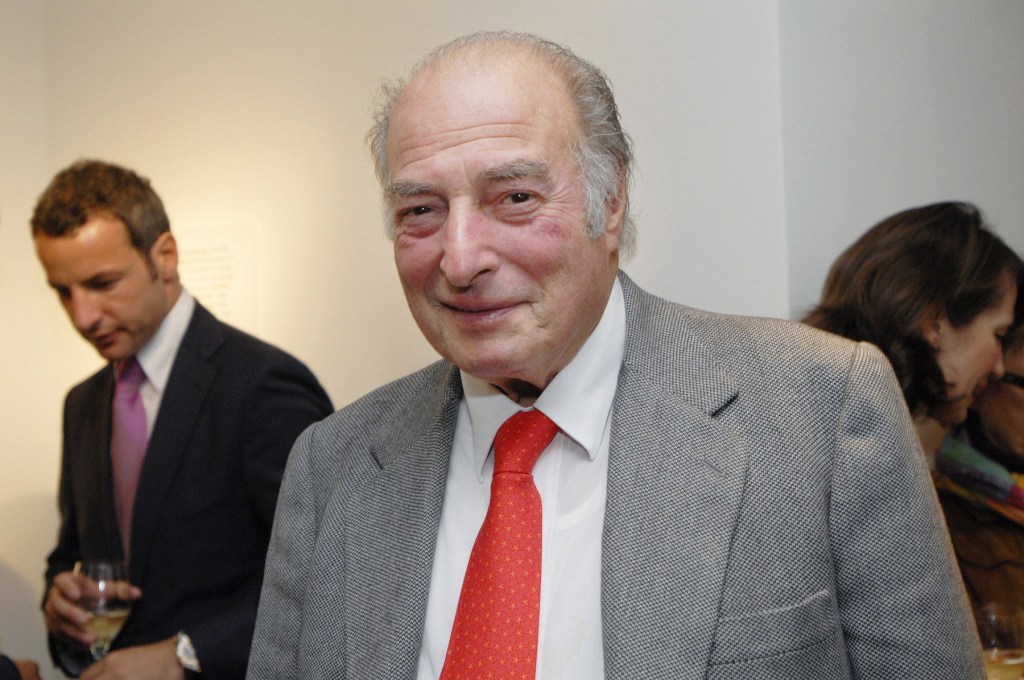
And the passage of power from the hands of the big foreign oil and mining companies in the hands of the world's governments opened a window of opportunities for the traders of goods they exploited with enthusiasm.
Nowhere was this clearer than in the aluminum industry. The economic boom that followed the Second World War had transformed aluminum into the most popular metal in the world. Cheaper than copper, easier and more versatile than steel, aluminum consumption has increased vertiginously due to the wide range of uses in planes, cars and appliances, which were the symbols of the new consumerism.
By the end of the war, the aluminum industry had the ability to supply the consumer boom to appear. Production increased from 1 million tonnes in 1945 to 10 million tonnes until 1970, which stimulated a world chase for bauxite, red-brown soil found in Guinea or in the famous blue mountains in Jamaica.
A tendency to “resource nationalism” encompassed the world, as the recently independent post-colonial states have insisted on greater autonomy than their former leaders, and the increase of prices has transformed the raw materials into a profitable target.
In the aluminum sector, nationalizations started in Guyana, a state on the border with Venezuela, which was the fifth largest bauxite producer in the world.
On March 1, 1971, the Guyana Parliament legislated the nationalization of the country's bauxite industry, including a branch of the Canadian Alcan giant, which at that time was the country's largest company. This movement sent a shock wave to the Board of Directors and the Western capitals.
The CIA was convinced that nationalization would turn into a failure. But do not consider an intermediary: Philipp Brothers. Two executive directors from the Trade House flew to the capital of Guyana and convinced the government to allow them to sell the entire production of bauxite and alumina.
A year later, CIA noted that Guyana's efforts to sell her alumina were helped by “her new aggressive marketing agent, Philipp Brothers in New York,” writes Helmut Waszkis in the book “Philipp Brothers: the history of a commercial giant”