The British daily The Telegraph published the testimonies of former and current Russian officials who describe, Like Putin's regime, he turns against his own citizens. Arrests, sudden deaths or confiscation of property are no longer an exception, but an instrument of power. In a country that wages war not only with Ukraine, but also with its own representatives, trust becomes a commodity with a short warranty.
Secret arrests, unexpected deaths, many years of judgments. List of people who have been in a lot in recent weeks, quickly extends And it shows that purges do not even bypass the high -ranking officers or billionaires. The last case that the world was suicid was the suicide of the former transport minister Roman Starowojt. He was to shoot in his car.
Starowojt was also a governor of the Kurski District and was considered a loyal officer with close connections with Russian oligarchs, Rotenberg brothers. In recent months, old However, he found himself under growing pressure. Investigators suspected him of embezzlement 38 million pounds (PLN 185 million) intended for the construction of defensive lines on the border. He also testified against him his own deputy, Aleksiej Smirnow.
Shortly afterwards, the old man was dismissed from his position, and disappeared from public life a few days before his death. Neither President Vladimir Putin nor Prime Minister Mikhail Miszustin spoke publicly about his death, which many observers perceive as a cool signal for the elite: Nobody is inviolable anymore.
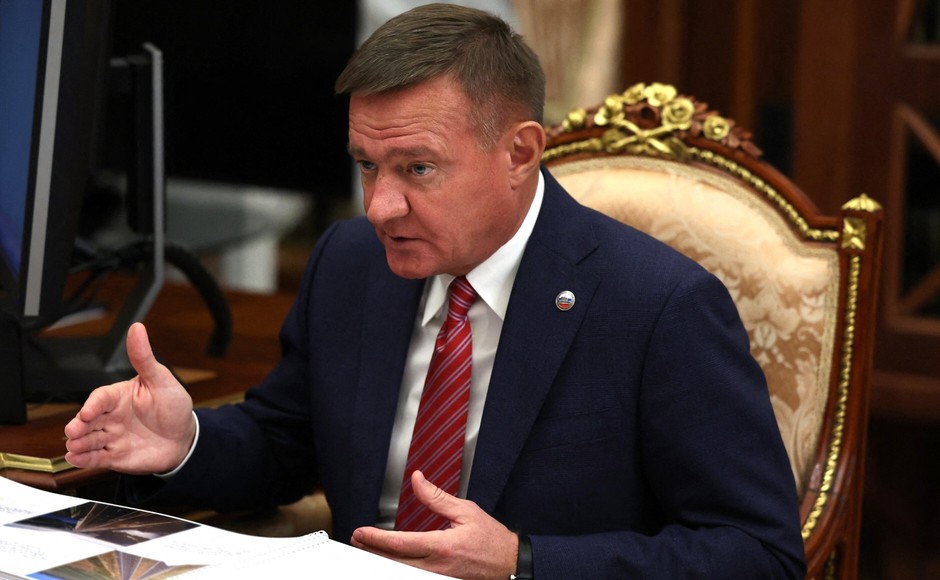
Russian Defense Minister Roman Starowojt during a meeting at the Kremlin in Moscow, January 30, 2025.Kremlin Press Office / Handout / Anadol Agency / Anadol Agency via AFP / AFP
Suicide of a high -ranking politician, who recently sat at Putin's table, caused terror and surprise even among those who considered themselves loyalists. However, the death of the old man was not an isolated case. Only a few days earlier Andrey Studyłow, the vice president of the State Naftowa Transnieft, died.
According to official sources, it was an unfortunate event, a fall from the balcony of his own apartment. However, in the context of a rapidly growing number of suspicious deaths among Russian officials, this case also aroused suspicions that in the current atmosphere of fear even accidents may not be completely accidental.
Campaign against oligarchs
Meanwhile, at the other end of the hierarchy of power there are long -term sentences for high -ranking officials. The former deputy minister of defense Timur Ivanov was sentenced to 13 years in prison for corruption, his colleague, not mentioned by a military name, even for 17 years.
Both were associated with the former defense minister Sergei Szojgu, whose resignation from the function of the head of the ministry last year and the transfer to a formal position in the Security Council began a deep purge in a military apparatus. Putin sent a clear signal in this way that old merits and loyalty no longer mean immunity.
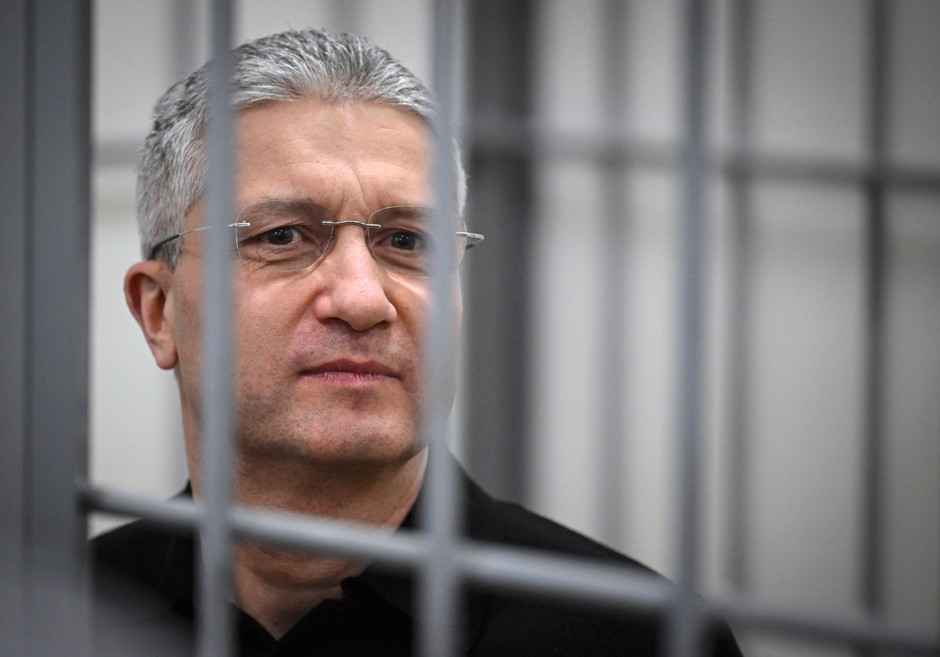
The former deputy minister of defense of Russia Timur Ivanov listens to the sentence during a trial in a court in Moscow, on July 1, 2025.Alexander Nmenov / AFP / AFP
And while some officials fall out of the windows or land behind bars, others try to escape. The Golden Gold and billionaire Konstantin Strukow, the owner of the mining company Yuzhuralzoloto, found himself in the crosshairs of the authorities when he tried to leave the country.
His private plane was detained directly at the airport, and the businessman was prevented from starting. Although the reasons for such activities were not officially announced, the pins are probably It will become another victim of a large -scale campaign against oligarchsin which the state examines the behind -the -scenes connections of rich businessmen and nationalizes property.
Continued article under video material
These interventions are part of a wider strategy that combines repression with the redistribution of large -scale wealth. From the beginning of the war in Ukraine, the state has nationalized dozens of private companies and, according to the data of prosecutor general Ivan Krasnow, acquired assets worth almost $ 29 billion. (over PLN 105 billion). It is not only at strategic sectors – airports, car dealerships, warehouses and even distilleries of vodka have been nationalized. Pretext are different: alleged connections with enemy countries, privatization failures from the 90s, failure to comply with social obligations or even suspicion of financing Ukrainian branches.
Green light from Putin
“The Telegraph”, which was the first to inform about the last wave of purges, points out that such interventions require the direct consent of the highest authorities.
“The arrest of the deputy minister or a high -ranking official in a state -owned company cannot take place without green light from the prime minister, and often from Putin himself,” one of the former government officials told the British journal. The goal is not only to intimidate the elites, but also the redistribution of power and property between those who prove to be more loyal during the war.
According to the analyst Andrei, the Kremlin is based mainly on the Federal Security Service (FSB), which intentionally accumulates compromising materials about officials, managers and regional politicians. – When the institution is to be cleaned, they first arrest person number two. He testifies against the boss and the avalanche begins. Everyone in the system knows about it and everyone is afraid – he said in an interview with “The Telegraph”.
Fear can also be felt during public events. For example, at this year's Economic Forum in St. Petersburg, a key event for Russian business, no one dared to mention the recent nationalization of the Moscow Domodedowo airport. Even during the main panel, which was led by an energetic chairman of the Duma Budgetary Committee, Andrey Makarov. The silence was eloquent.
The chairman of the Russian Association of Industrialists and Entrepreneurs Aleksander Szochin was equally cautious, who in March gently tried to address Putin on the rights of “honest ownership buyers”. However, he ended his entry with an apology.
I’m Ashley Davis as an editor, I’m committed to upholding the highest standards of integrity and accuracy in every piece we publish. My work is driven by curiosity, a passion for truth, and a belief that journalism plays a crucial role in shaping public discourse. I strive to tell stories that not only inform but also inspire action and conversation.