
“The project of the century”: China began the construction of the largest hydropower in the world, in Tibet

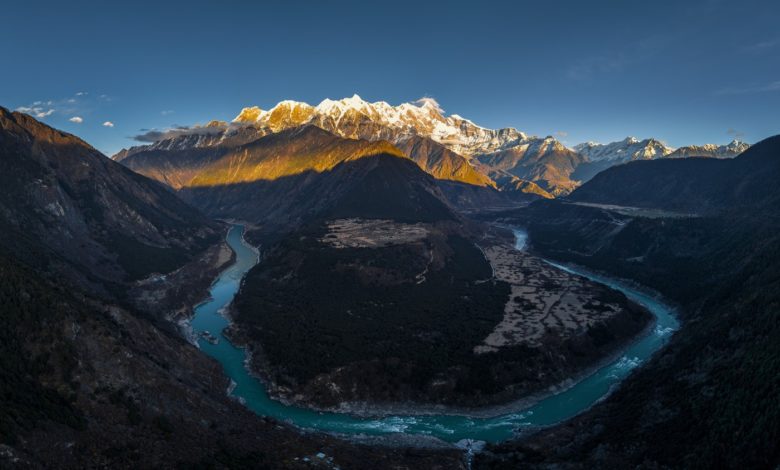
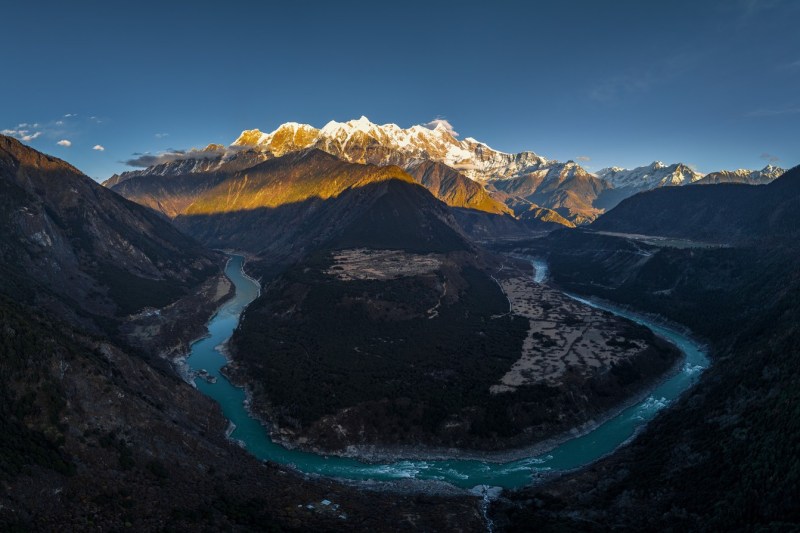
The Yarlung Zangbo River, at the foot of Mount Namjagbarwa, in the Tibet Autonomous Region of southwest China. Photo source: Jin Meiduoji / Xinhua News / Profimedia
Chinese Prime Minister Li Qiang announced the beginning of the construction of the largest hydroelectric dam in the world, located on the eastern edge of the Tibetan plateau and estimated at about $ 170 billion, Xinhua's official news agency, quoted by Reuters.
The project is part of China's efforts to expand renewable energy and reduce carbon emissions.
Made of five hydroelectric power stations in the waterfall, the dam will be located in the lower course of the Yarlung Zangbo river and could affect millions of people downstream, in India and Bangladesh.
Li described the hydropower project as the “project of the century” and said that “special attention should be paid to prevent environmental damage,” Xinhua informed.
The authorities did not indicate how many people will be relocated as a result of the project in Tibet and how it will affect the local ecosystem, one of the richest and most varied on the set.
However, according to Chinese officials, Tibet hydropower projects will not have a major impact on the environment or on downstream water supply. India and Bangladesh expressed concern about the dam.
NGOs, including the International Tibet Campaign, state that the dam will irreversibly affect the Tibetan plateau and that millions of people will face serious disturbances of subsistence.
The dam has an estimated capacity of 300 billion kilowatt-outs of electricity per year and it is expected to contribute to satisfying the local energy demand in Tibet and the rest of China.
The project will play an important role in achieving China's goals on zero reduction of carbon emissions and carbon neutrality, will stimulate related industries, such as engineering, and will create jobs in Tibet, Xinhua said in December, when the project was announced for the first time.
A section of the Yarlung Zangbo river falls dramatically 2,000 meters over a short distance of 50 km, offering a huge hydropower potential.
Yarlung Zangbo becomes the Brahmaputra river when he leaves the Tibet and flows south into the Indian states Arunachal Pradesh and Assam, finally reaching Bangladesh.
China has already begun the production of hydroelectric energy in the upper course of the Yarlung Zangbo river, which flows from west to eastern Tibet.


