2025-07-06 09:29
publication
2025-07-06 09:29
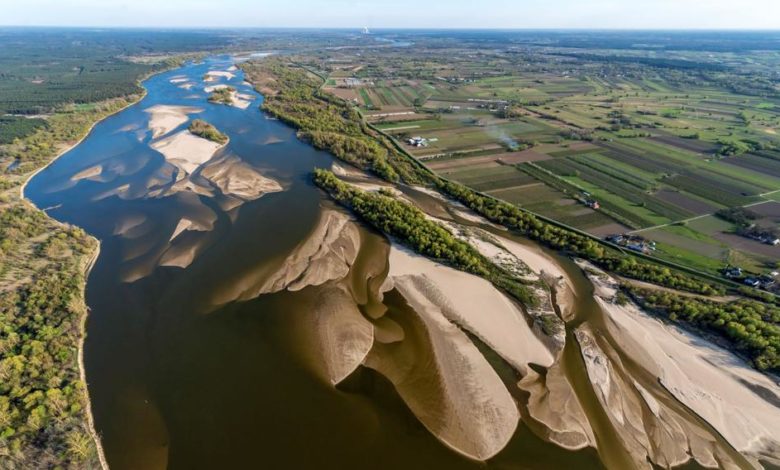
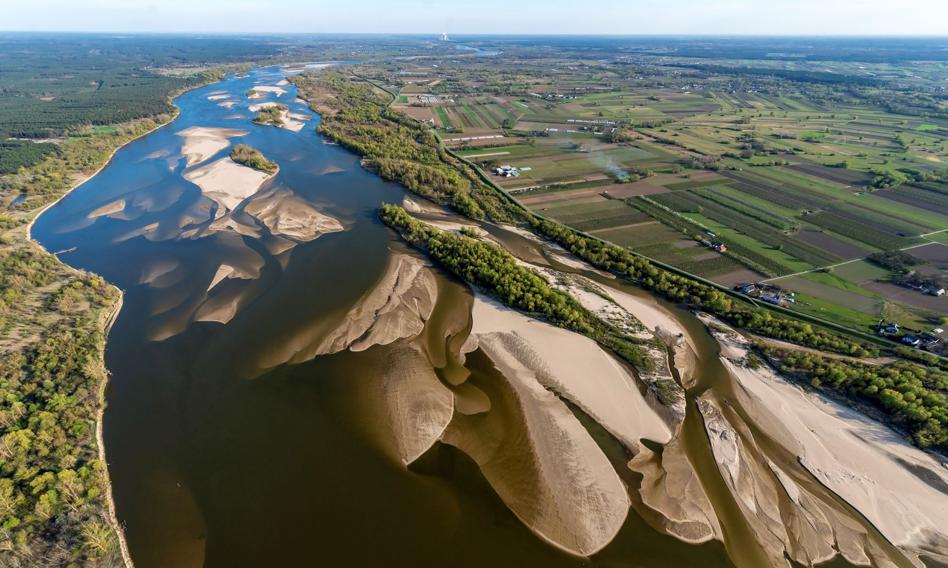
The water level in Wisła at the Warsaw-Bulvar station has fallen to 13 cm, it is the lowest level in this place from the beginning of the measurements. At the Narew Nowogród station, measurements indicated minus 1 cm. Throughout Poland, the water level was recorded below the minimum periodic minimum.
The Institute of Meteorology and Water Management (IMGW) announced that 72 warnings against hydrological drought apply on Sunday. The most dry is in Warmia and Mazury, Podlasie, Lublin region, Silesia, Opole and central Poland, but the areas affected by hydrological drought occur throughout the country – according to a map published by IMGW, the situation is better only in Pomerania and in Podgórskie regions.
The latest data published by IMGW indicated that 300 stations recorded water flow below the SNQ threshold (average low flow). In 29 points, the water level is below the minimum periodic, and the low water zone was recorded at 74 percent. station.
A record low water level was recorded at the Warsaw -Bulvar station – it fell to 13 cm. It is 2 cm less than pointed out on Saturday, July 5 and 7 cm less than the absolute minimum of September 2024. In another place on the Vistula – at the Warsaw -Nadwilanówka station – water is 41 cm, so its level fell by another 3 cm. The absolute minimum recorded at this station until now was 55 cm.
The lowest water level in the country indicated on Sunday the measurement from the Nowogród station na Narew station – its value was minus 1 cm. At the Ostrołęka point, the water in this river is 19 cm, and at the Piątnica -Lomża station – 53 cm.
The values below the absolute minimum also indicated, among others Measurements at Burzenin stations on the Warta (55 cm), Nowe Miasto nad Pilica (31 cm) and birds over Pisa (24 cm). At the Unieście station on the Jamno Lake, the water level on Sunday was 20 cm, and the lowest value in this reservoir so far was recorded in 1972 – the reading indicated 465 cm at that time.
IMGW-PIB Hydrologist Grzegorz Walijewski, commenting on the hydrological situation for PAP in Poland, emphasized that “the situation at this time of year did not look so bad from the beginning of hydrological measurements.” “The effects of hydrological drought will be felt in tourism, agriculture, industry or energy, and losses will also be borne by the natural environment,” he added. (PAP)
ZS/ Mick/